






Description
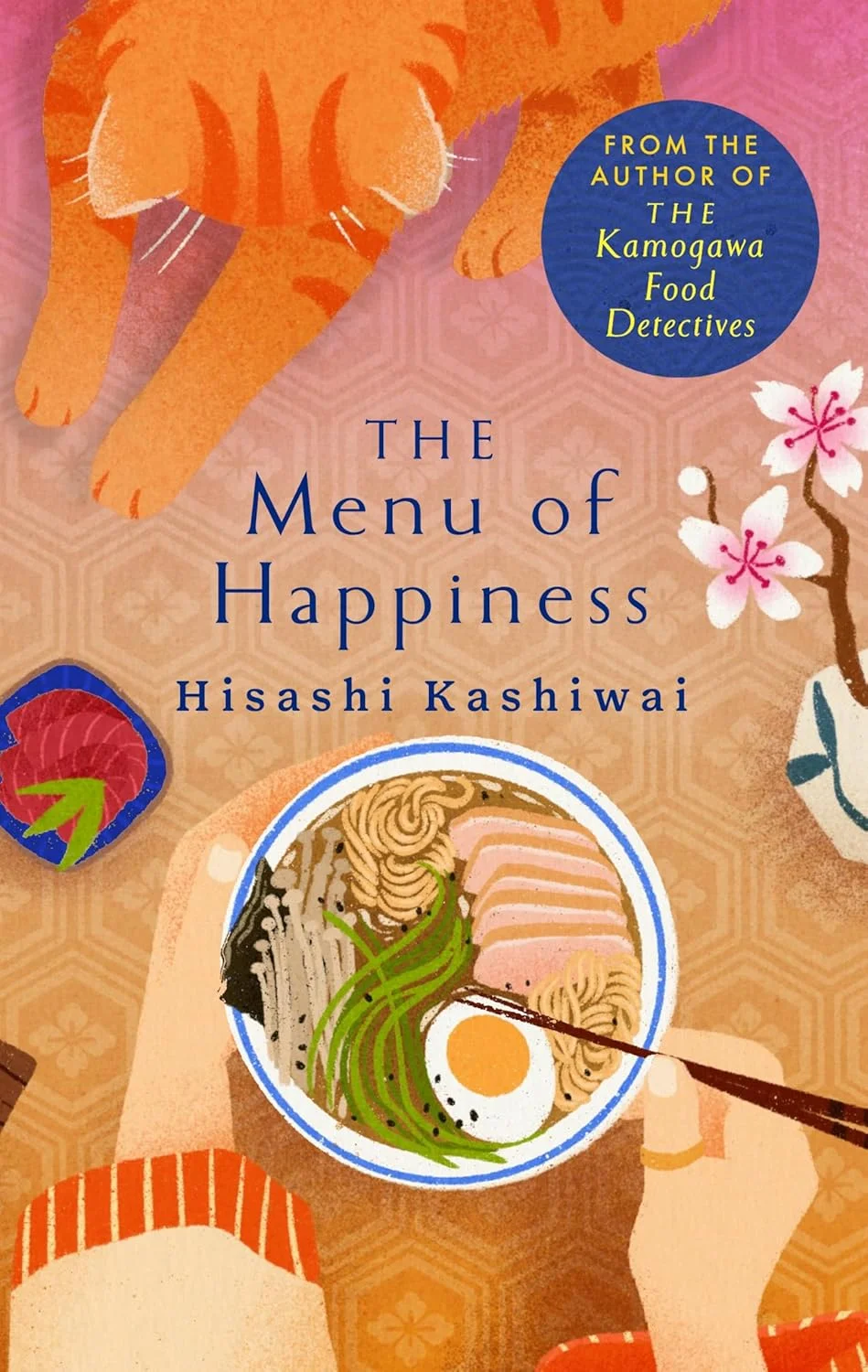
The Menu of Happiness by Hisashi Kashiwai
The Menu of Happiness by Hisashi Kashiwai
The Menu of Happiness by Hisashi Kashiwai is a warm, comforting Japanese novel about food, memory, regret and the extraordinary power of recreating a meal from the past. Translated into English by Jesse Kirkwood, it is the third instalment in the beloved Kamogawa Food Detectives series, following The Kamogawa Food Detectives and The Restaurant of Lost Recipes.
Hidden away on a quiet backstreet in Kyoto is the Kamogawa Diner, a small restaurant run by Nagare Kamogawa and his daughter Koishi.
It is not an ordinary restaurant.
Nagare and Koishi describe themselves as food detectives. Their customers arrive searching not simply for something delicious to eat, but for meals connected to important moments in their lives.
Sometimes a dish was made by someone they loved.
Sometimes it reminds them of a relationship they lost.
Sometimes the flavour is connected to a moment they wish they could experience one more time.
The challenge is that these customers rarely have complete recipes.
Instead, they bring memories.
Nagare and Koishi investigate those memories, track down ingredients and cooking methods, and attempt to recreate dishes that may not have been tasted for decades.
Every Memory Has a Flavour
At the heart of The Menu of Happiness is the idea that food can preserve memories in ways ordinary facts cannot.
You may forget exactly what someone said.
You may forget what you were wearing.
But the smell and taste of a particular meal can suddenly return you to another time.
That is what makes the Kamogawa Diner so special.
The food Nagare recreates is not important simply because it tastes good.
It matters because of who cooked it, where it was eaten and what was happening in someone’s life at that moment.
Each customer therefore arrives with two mysteries.
The first is practical: what exactly was the forgotten dish?
The second is emotional: why does this meal still matter so much?
The Pianist Searching for Yakisoba
Among the people who visit the diner in this instalment is a once-promising pianist whose career was damaged after a self-inflicted injury.
What she wants is not an extravagant gourmet meal.
She wants yakisoba.
But this particular yakisoba carries memories of the only man she truly loved.
For her, recreating the dish means confronting not just a taste from the past, but the relationship and choices connected to it.
That is typical of the stories in the Kamogawa series.
A seemingly ordinary dish gradually reveals an extraordinary emotional history.
Gyoza, Regret and Forgiveness
Another customer arrives carrying regret about a relationship from his past.
His memory centres on gyoza prepared by the parents of a woman he once left behind.
Years later, that meal has remained with him.
He returns to the memory not simply because he misses the food, but because he is searching for understanding and perhaps forgiveness.
Once again, food becomes a doorway into emotions the character has struggled to resolve.
These stories give The Menu of Happiness its gentle emotional power.
Rather than using dramatic action, the novel builds meaning from conversations, flavours, memories and small acts of kindness.
A Comforting Kyoto Setting
The Kamogawa Diner itself is one of the biggest attractions of the series.
Kyoto’s quiet streets, Japanese food culture and the warmth of the father-and-daughter restaurant create a cosy setting readers can return to from book to book.
For readers who enjoy novels such as Before the Coffee Gets Cold, the appeal is similar: an ordinary-looking place contains an unusual service that gives people an opportunity to reconnect with their past.
But The Menu of Happiness gives that idea its own identity by placing food at the centre.
A recreated dish cannot change what happened years ago.
It cannot restore every lost relationship.
But it can help someone remember more clearly, understand differently or finally move forward.
Food as Emotional Memory
Food is powerful because it engages more than thought.
Smell and taste can create immediate emotional reactions.
A bowl of noodles might remind someone of childhood.
A particular soup may recall a grandparent.
A dessert could bring back a holiday or celebration.
Kashiwai builds the novel around this universal experience.
Even readers unfamiliar with Japanese cuisine can understand why these customers are willing to search for a meal from years earlier.
They are not really searching only for food.
They are searching for a person, a feeling or a moment.
That makes the novel both culturally specific and emotionally universal.
The Kamogawa Food Detectives Series
The Menu of Happiness is Book 3 in The Kamogawa Food Detectives series.
The first three English books are:
- The Kamogawa Food Detectives
- The Restaurant of Lost Recipes
- The Menu of Happiness
The books are interconnected, but Pan Macmillan notes that they can also be read individually.
Reading them in order, however, allows readers to become increasingly familiar with Nagare, Koishi and the comforting atmosphere of the diner.
Why Read The Menu of Happiness?
This novel is an excellent choice for readers who enjoy Japanese healing fiction, cosy mysteries, food-centred stories, quiet emotional novels, family relationships and books about memory.
It has a gentle pace and focuses on ordinary people carrying deeply personal stories.
Rather than delivering shocking twists, the pleasure comes from discovering why each dish matters and seeing what happens when the customer finally tastes it again.
For anyone who has ever wished they could return to one meal from their past, The Menu of Happiness by Hisashi Kashiwai offers a moving reminder that food can preserve far more than flavour.
About Hisashi Kashiwai
Hisashi Kashiwai was born in 1952 and raised in Kyoto. He studied at Osaka Dental University, later returned to Kyoto to work as a dentist, and has written extensively about his home city. He has also collaborated on television programmes and magazines.
The English translation is by Jesse Kirkwood, a Japanese-to-English literary translator whose other translations include The Kamogawa Food Detectives, Tokyo Express and A Perfect Day to Be Alone.
With its comforting setting, memorable dishes and emotional stories, The Menu of Happiness is a gentle celebration of food, memory and the people whose presence remains with us long after a meal has ended.






Reviews
There are no reviews yet.