









Description
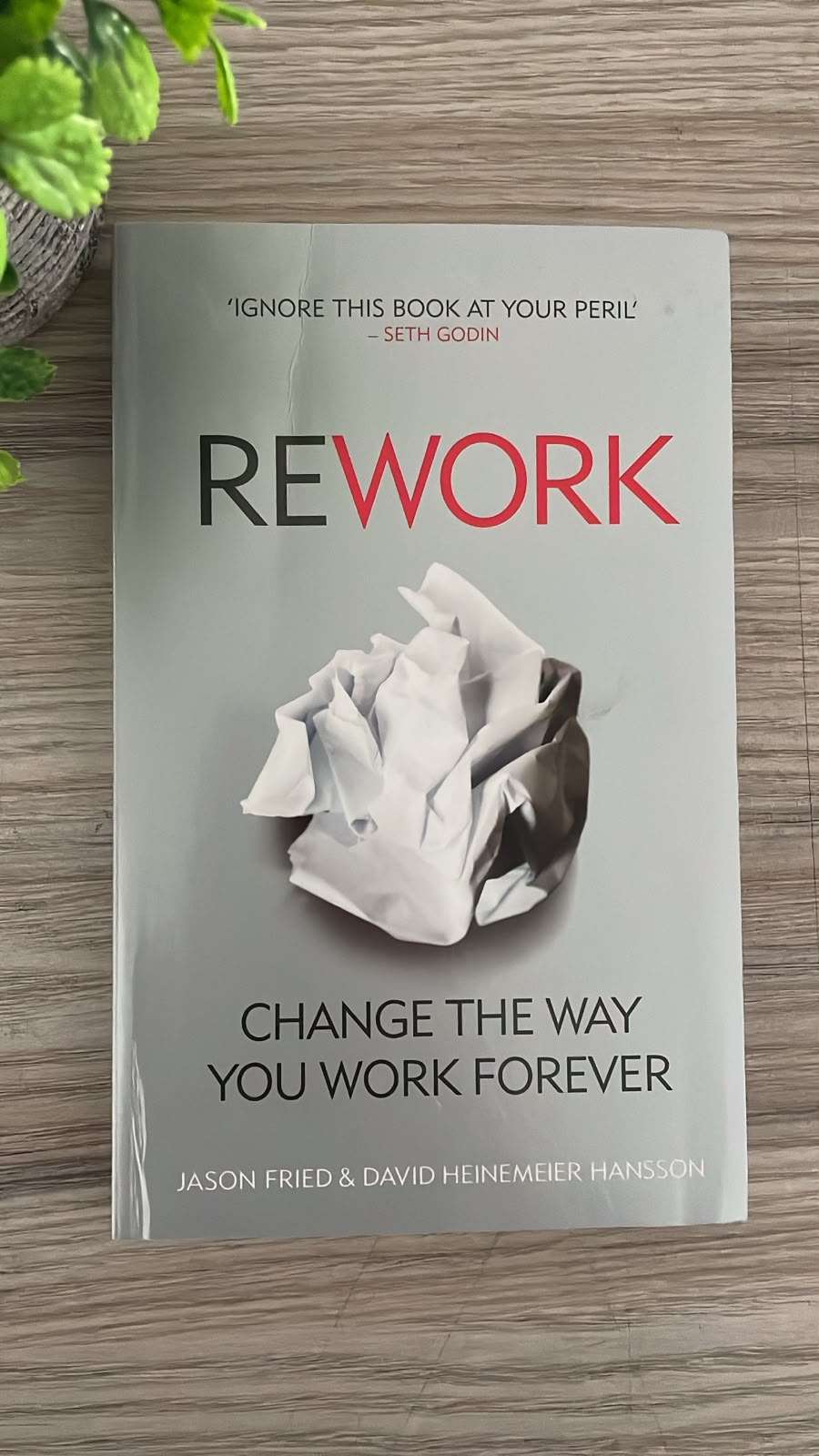
ReWork by Jason Fried and David Heinemeier Hansson is a practical and unconventional guide to starting a business, managing work and creating useful products without following every traditional rule.
Its complete title is ReWork: Change the Way You Work Forever. The book challenges familiar business advice about lengthy planning, rapid expansion, large teams, outside investment, constant meetings and extreme working hours.
Jason Fried and David Heinemeier Hansson developed many of these ideas while building 37signals, the company behind Basecamp. Instead of treating complexity and constant growth as signs of success, they argue that businesses can often achieve more by remaining focused, reducing unnecessary work and solving genuine customer problems.
The chapters are short, direct and designed to be applied rather than studied as abstract theory. The book is particularly useful for entrepreneurs, freelancers, managers, creators and small-business owners who want a simpler and more sustainable way to work.
Why Read ReWork by Jason Fried and David Heinemeier Hansson?
ReWork by Jason Fried and David Heinemeier Hansson is valuable because it questions business practices that are often followed automatically.
Many people believe they must prepare a detailed long-term business plan, find investors, hire employees, rent an office and leave their current job before beginning. The authors argue that these requirements can become excuses that delay useful action.
A business can often begin as a small project. The founder can test an idea, create a basic product and learn from real customers before making larger commitments.
This approach reduces risk and allows decisions to be based on actual experience rather than predictions about an uncertain future.
Start Before Everything Is Perfect
One of the book’s central lessons is that progress begins through action. Research and planning are useful, but they can become forms of avoidance when they continue indefinitely.
The authors encourage readers to build the essential version of an idea and place it in front of real customers. Feedback from actual use is often more valuable than months of internal discussion.
Launching does not mean releasing careless or unsafe work. It means identifying the central purpose of a product and ensuring that this essential function works properly.
Additional features can be added later when genuine demand becomes clear.
You Need Less Than You Think
Traditional business stories often emphasise large investments, specialised offices and rapidly expanding teams. ReWork argues that many businesses can start with fewer resources.
Affordable technology allows individuals and small teams to communicate, sell products, manage customers and reach international audiences without the infrastructure once required.
Constraints can also improve decision-making. When money, time and staff are limited, a business must determine which work is truly important.
Instead of asking how to obtain more resources immediately, readers are encouraged to examine whether the existing resources can be used more intelligently.
Planning Is Guessing
The authors question the certainty often attached to long-term business plans. A plan may look detailed and professional while still being based on assumptions about customers, competitors and future conditions.
This does not mean that businesses should operate without goals or financial control. It means plans should be treated as adjustable estimates rather than permanent promises.
Shorter planning periods allow a company to respond when new information becomes available. Decisions can then reflect current customer behaviour instead of predictions made before the product existed.
Build Something You Need
The book recommends beginning with a problem the creator understands personally.
When founders build something they need themselves, they already possess direct knowledge of the problem. They can evaluate whether the solution is genuinely useful without depending entirely on surveys or imagined customers.
This principle influenced the authors’ own development of business software. Their company created tools to solve problems encountered while managing its projects and communication.
A personal need does not automatically guarantee commercial success, but it can provide a clearer and more authentic starting point.
Focus on the Core of the Product
ReWork by Jason Fried and David Heinemeier Hansson encourages businesses to identify the central purpose of what they are creating.
A new product can become delayed when the team continuously adds features before launch. Every additional feature requires design, testing, support and maintenance.
The authors recommend protecting the essential function and removing elements that do not meaningfully improve it.
A focused product is often easier for customers to understand, easier for employees to maintain and faster to improve.
Embrace Constraints
Limited time, money and staff are commonly viewed only as disadvantages. The authors suggest that constraints can produce creativity and discipline.
A small team cannot pursue every opportunity. It must decide which customers it serves, which problems it solves and which features deserve attention.
Constraints prevent unnecessary complexity and force difficult choices to be made earlier.
The goal is not to celebrate avoidable hardship. It is to recognise that obtaining more resources will not solve a lack of focus.
Do Not Copy the Competition
Studying competitors can provide useful market information, but constant comparison may cause a business to lose its own direction.
Copying another company’s features and strategy can create a weaker version of something that already exists. It also encourages reactive decisions based on the competitor’s priorities rather than the customer’s needs.
The authors advise businesses to develop a clear perspective and build around their own values.
A distinctive point of view gives customers a reason to choose one product instead of another.
Make Decisions and Move Forward
Unresolved decisions can delay projects and consume attention. The authors favour making reasonable decisions with the information currently available.
Not every choice requires a lengthy meeting or complete certainty. Many decisions can be revised when circumstances change.
Quick decision-making does not mean acting carelessly. It means matching the amount of discussion to the importance and reversibility of the decision.
Meetings Should Not Replace Work
The book is strongly critical of unnecessary meetings. A meeting involving several employees consumes the combined time of everyone attending.
Meetings are useful when they have a defined purpose, require direct discussion and conclude with a decision or action.
They become wasteful when they exist only because they are regularly scheduled, include people who are not required or continue without a clear conclusion.
Written communication and smaller discussions can often address routine matters while protecting uninterrupted working time.
Interruption Is the Enemy of Productivity
Meaningful work frequently requires concentration. Constant messages, notifications and meetings divide attention and make difficult tasks take longer.
The authors recommend creating periods during which people can work without interruption.
This is particularly relevant for writing, designing, programming, planning and solving complex problems. Productivity should not be measured only by visible activity or the number of messages sent.
Completing important work is more valuable than appearing constantly busy.
Workaholism Is Not a Business Strategy
ReWork rejects the belief that extreme working hours automatically demonstrate commitment or talent.
Long hours may occasionally be necessary, but depending on them permanently can conceal poor planning, unnecessary tasks and unrealistic deadlines.
Exhaustion can reduce judgement, creativity and the quality of decisions. Sustainable work requires priorities, realistic workloads and opportunities for recovery.
The objective is not to work as many hours as possible. It is to use available time effectively and produce work that matters.
Stay Small for as Long as It Makes Sense
Growth is often treated as the automatic objective of every business. The authors encourage readers to ask why growth is necessary and what it is intended to achieve.
Hiring more people creates additional communication, management and financial responsibilities. A larger company may produce more revenue while becoming less flexible and more expensive to operate.
Remaining small can allow quicker decisions, closer customer relationships and greater control.
This does not mean that no business should expand. It means growth should solve a real problem rather than serve as proof of status.
Hire When the Need Is Real
The book advises businesses not to hire simply because a temporary increase in work creates pressure.
Before creating a permanent position, the existing team should examine whether unnecessary tasks can be removed, processes improved or the workload reorganised.
When hiring becomes necessary, the company should seek people capable of working independently, communicating clearly and taking responsibility.
A strong employee should reduce organisational complexity rather than require constant supervision.
Build an Audience
Traditional advertising can be expensive and difficult for small businesses. The authors recommend gradually building an audience by sharing useful knowledge.
A company can publish explanations, demonstrations, lessons and behind-the-scenes information connected to its work.
This approach allows potential customers to understand the company’s expertise and values before being asked to purchase anything.
Trust grows when the information is genuinely useful rather than disguised advertising.
Teach Instead of Only Promoting
Teaching can become an effective form of marketing. A restaurant can explain cooking methods, a bookstore can recommend reading lists and a software company can share lessons about product development.
Competitors may copy isolated advice, but they cannot easily copy the experience, reputation and relationship built with an audience over time.
Useful educational content can attract customers without requiring the business to compete only through price or advertising volume.
Do Not Treat Every Customer Request as an Instruction
Customer feedback is important, but different customers frequently request conflicting features.
Adding every requested feature can make a product difficult to understand and maintain. Businesses must listen carefully while preserving a clear product direction.
A request may reveal a genuine problem even when the customer’s suggested solution is not the best answer.
The company should understand the underlying need and decide whether solving it fits the product’s purpose.
Launch and Continue Improving
A launch is not the final stage of a product. It is the point at which genuine learning begins.
Real customers reveal which features are understandable, which problems remain and whether the product creates enough value for people to continue using it.
The authors encourage businesses to improve products gradually rather than attempting to predict every requirement before release.
Who Should Read ReWork?
This book is recommended for:
- Entrepreneurs and startup founders
- Small-business owners
- Freelancers and independent professionals
- Managers and team leaders
- Software and product-development teams
- Creators planning a side business
- Students interested in entrepreneurship
- Professionals seeking simpler working practices
The book is especially suitable for readers who prefer concise chapters, practical examples and advice that challenges conventional business thinking.
About Jason Fried
Jason Fried is an entrepreneur, business writer and co-founder of 37signals, the company behind Basecamp and HEY.
His work focuses on product design, business simplicity, communication and developing calmer ways to manage organisations.
He has co-written several business books with David Heinemeier Hansson, including ReWork, Remote and It Doesn’t Have to Be Crazy at Work.
About David Heinemeier Hansson
David Heinemeier Hansson is an entrepreneur, programmer, author and co-founder of 37signals.
He is also the creator of Ruby on Rails, the open-source web-development framework originally developed while building Basecamp.
In ReWork by Jason Fried and David Heinemeier Hansson, the authors turn lessons from building and operating their company into practical guidance for entrepreneurs and managers.
Official book information is available from the
37signals books page.
Edition information is available from the
official Penguin ReWork page.
Why Buy from Book Lounge Sri Lanka?
Book Lounge is an online bookstore serving students, entrepreneurs, professionals and general readers throughout Sri Lanka.
Explore more business and professional books through the
Book Lounge Non-Fiction collection.
You can also browse motivational and personal-development titles through the
Book Lounge Self Help collection.
View all currently available titles through the
Book Lounge online store.
For assistance with availability, payment or delivery, visit the
Book Lounge contact page.
Buy ReWork Online in Sri Lanka
Buy ReWork by Jason Fried and David Heinemeier Hansson online in Sri Lanka from Book Lounge and discover a simpler approach to entrepreneurship, productivity and business growth.
Order ReWork by Jason Fried and David Heinemeier Hansson from Book Lounge today and learn how to start with fewer resources, reduce unnecessary work, launch sooner and build a more focused business.






Reviews
There are no reviews yet.