


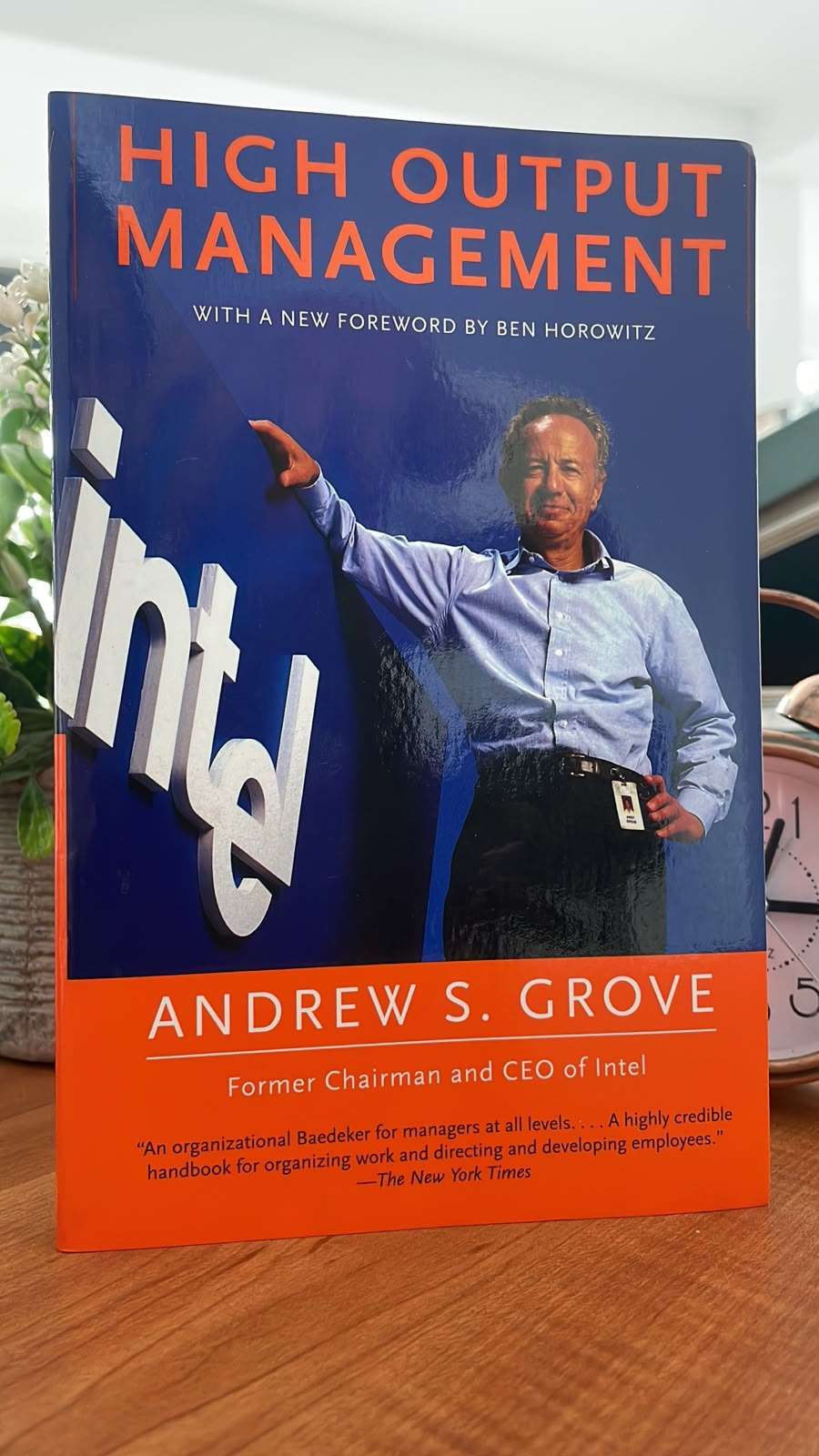




Description
High Output Management by Andrew S. Grove
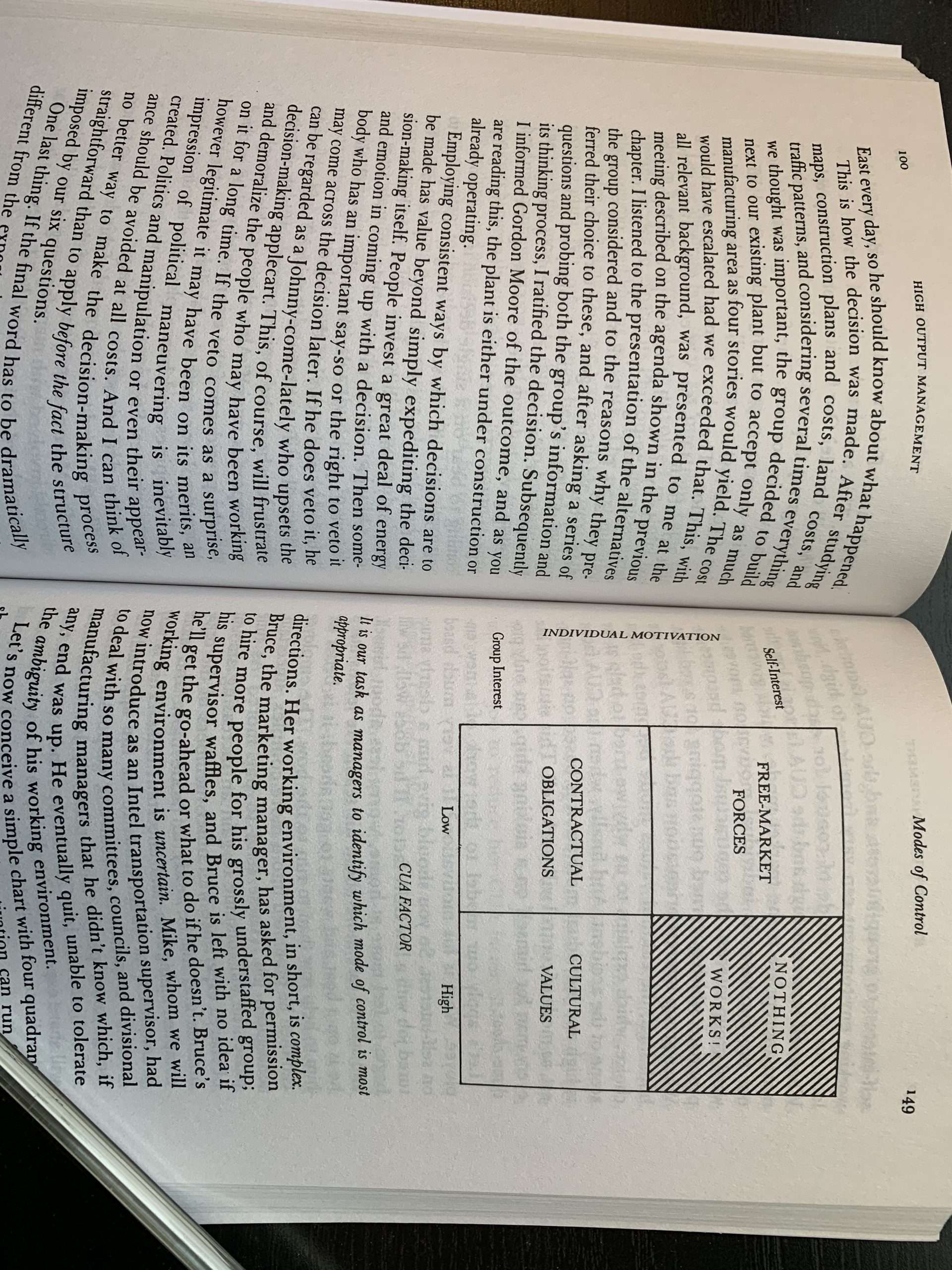
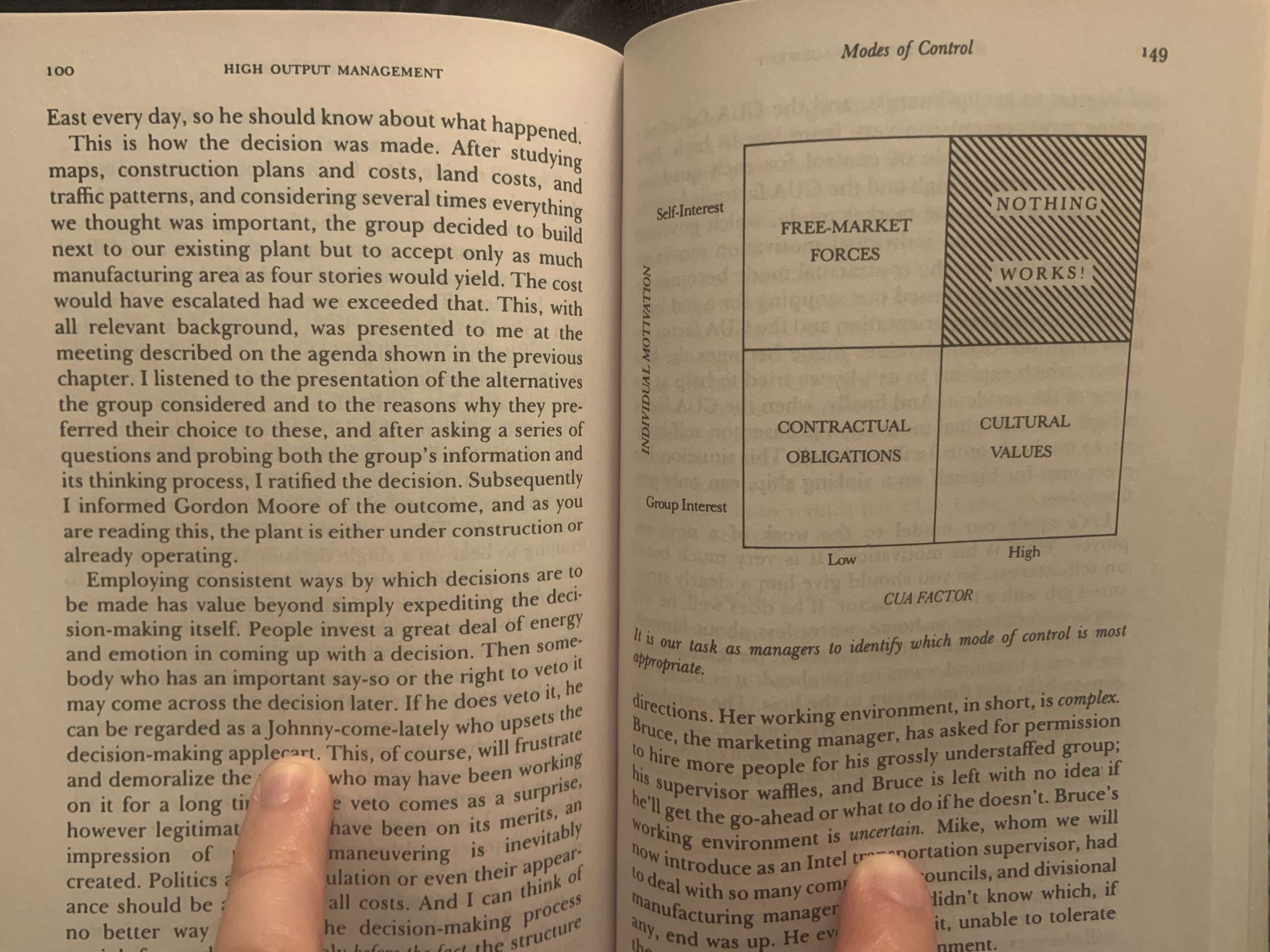
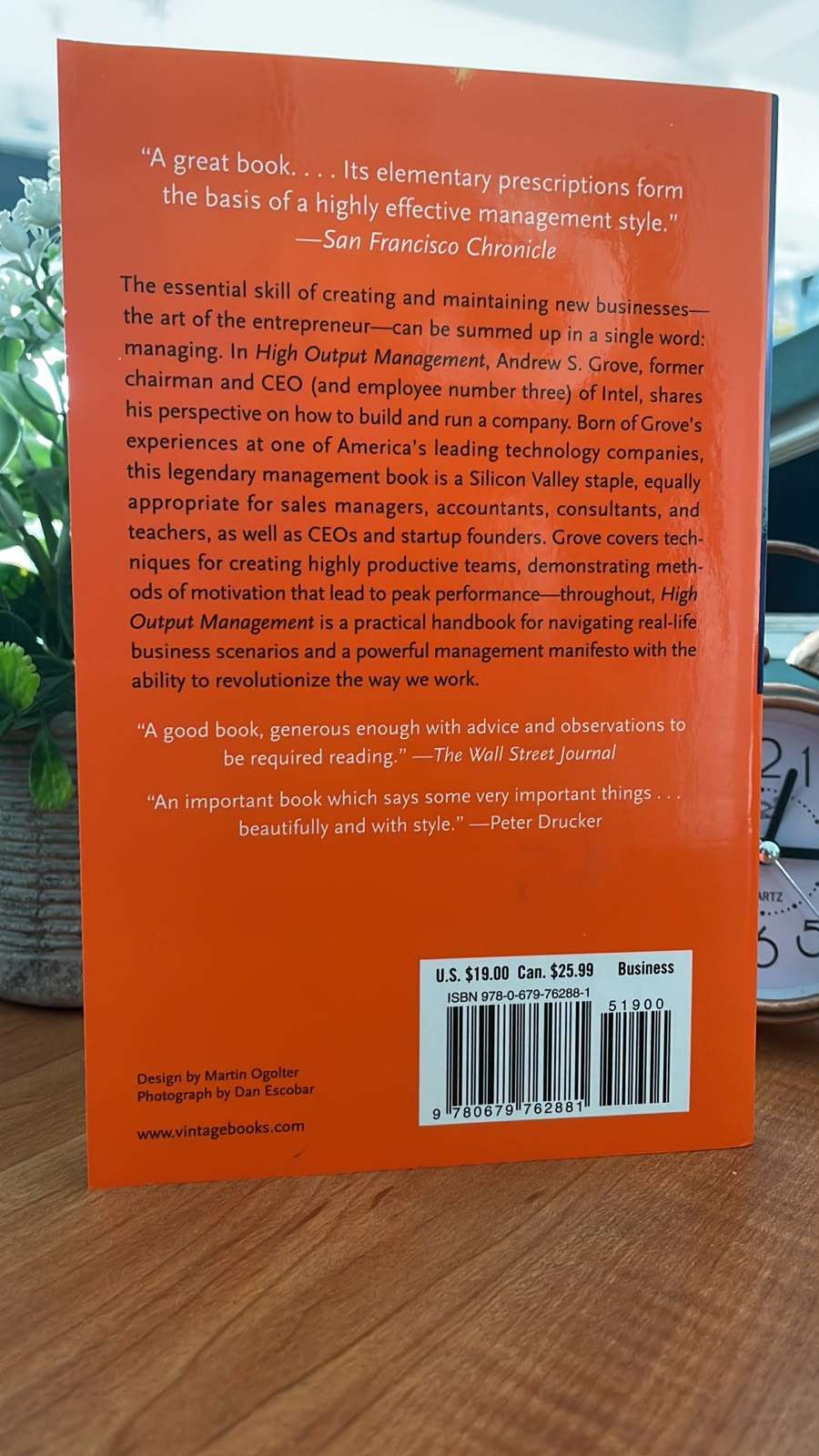
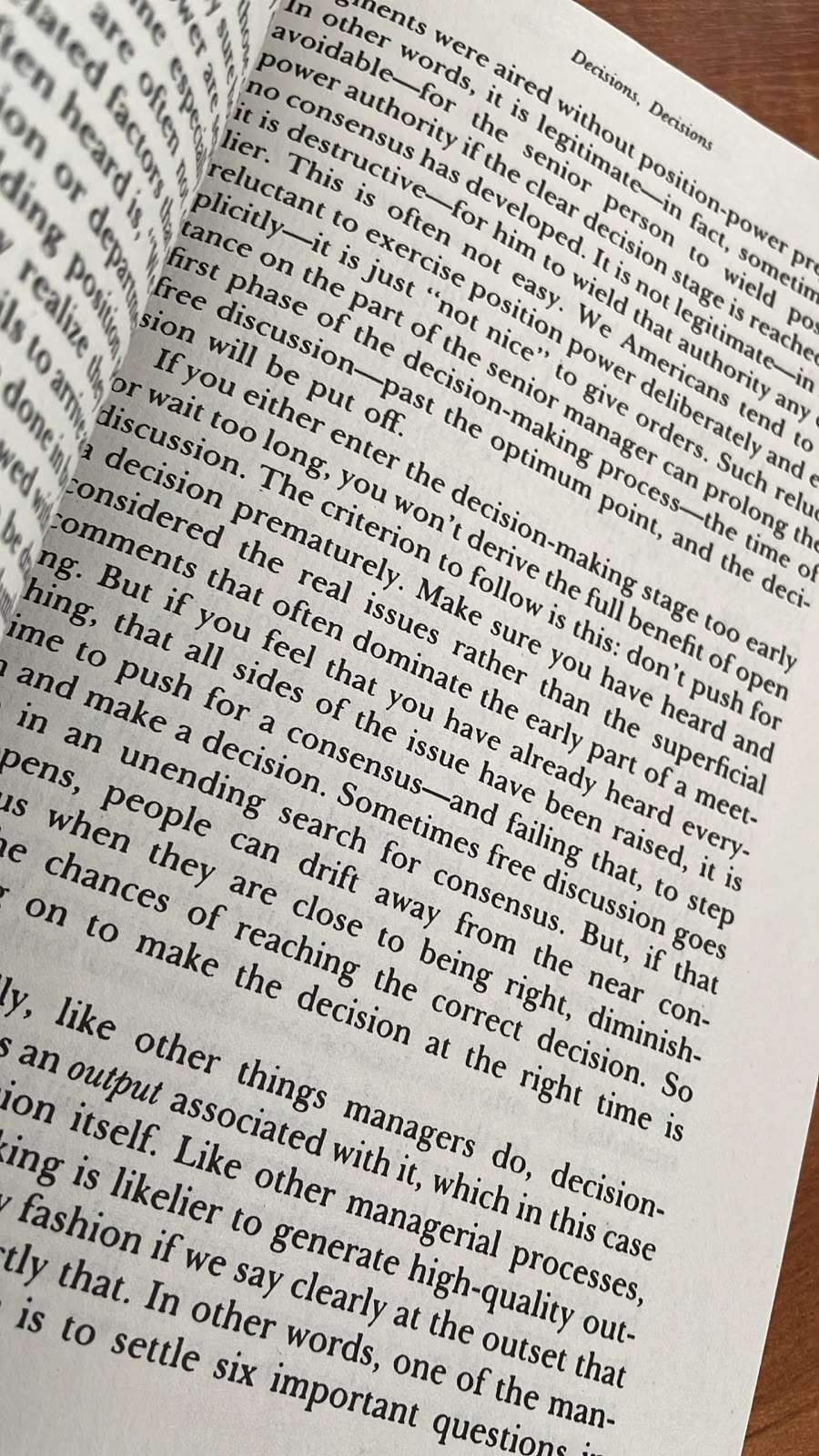
is a practical and influential guide to leadership, productivity and managing successful organisations. Written by the former chairman and chief executive officer of Intel, the book explains how managers can improve the performance of their teams by focusing on measurable output, effective communication, employee development and carefully designed working processes.
Rather than presenting management as a collection of motivational theories, Andrew Grove approaches it as a practical discipline. He examines the daily responsibilities of managers and shows how activities such as meetings, performance reviews, training, planning and decision-making can directly influence the results produced by an organisation.
The lessons are relevant not only to senior executives. They can also be applied by supervisors, department heads, project managers, entrepreneurs, teachers, consultants, sales managers and startup founders. Anyone whose work depends on helping other people perform effectively can benefit from the principles explained in this book.
Why Read High Output Management by Andrew S. Grove?
High Output Management by Andrew S. Grove helps readers understand that a manager’s success should not be measured only by how busy the manager appears. The more important question is whether the manager’s team and the people influenced by that team are producing valuable results.
This approach changes the purpose of management. A manager is not expected to complete every task personally. Instead, the manager must organise people, information and resources so that the entire team can perform at a higher level.
Grove uses examples from manufacturing and technology, but the lessons can be applied to many industries. A retail manager can improve inventory processes, a school administrator can organise teaching teams, and a startup founder can create clearer responsibilities for employees. The central principles remain relevant whenever people must work together to achieve shared objectives.
Understanding Managerial Output
One of the book’s central ideas is that managerial output is connected to the output of the teams under a manager’s supervision or influence. This means that managers should spend their time on activities that have a multiplying effect.
For example, training one employee properly may improve that employee’s performance for months or years. Creating a clear procedure may help an entire department complete work more accurately. Making a well-informed decision may prevent repeated mistakes and unnecessary costs.
Managers must therefore identify high-leverage activities. These are actions that produce a larger result than the time or effort invested in them. Coaching, planning, setting priorities and removing obstacles can often provide more value than becoming personally involved in every operational task.
Improving Team Productivity
High Output Management by Andrew S. Grove explains that productivity can be improved by examining how work moves through an organisation. Managers should identify the steps required to produce a result, determine where delays occur and understand which activities limit overall performance.
This approach is useful for companies handling production, sales, customer service, logistics, software development or administration. Even when the final product is not physical, work usually follows a process. Information is received, decisions are made, tasks are completed and results are delivered.
When managers understand these processes, they can identify bottlenecks and improve the flow of work. They can also establish useful measurements that show whether performance is improving or declining.
However, measurement should support better decisions rather than create unnecessary reporting. A useful performance indicator should help managers recognise a problem early and take action before the problem becomes more serious.
Effective Meetings and Communication
Meetings are an important subject in the book because much of a manager’s work happens through communication. Meetings can be valuable when they have a clear purpose, but they can also waste significant amounts of time when they are poorly organised.
Different meetings serve different purposes. Some are used to exchange information, while others are required to make decisions or solve specific problems. Managers should understand the purpose of each meeting, invite the right people and prepare the necessary information in advance.
Regular one-to-one meetings between a manager and an employee can create an opportunity to discuss performance, priorities, difficulties and professional development. These conversations allow employees to raise concerns that may not be discussed in larger group meetings.
The manager’s role is not only to speak. Listening carefully can reveal obstacles, misunderstandings and useful ideas from the people completing the work every day.
Employee Training and Development
Andrew Grove treats training as one of a manager’s most important responsibilities. When an employee lacks knowledge or skill, performance may remain low even when the employee is motivated.
Managers should therefore identify the difference between a motivation problem and a capability problem. An employee who does not understand the task requires instruction and practice. An employee who understands the task but does not perform it may require clearer expectations, feedback or a discussion about motivation.
High Output Management by Andrew S. Grove encourages managers to become active teachers. Training should not be treated only as a responsibility of the human-resources department. Managers understand the work of their teams and are often in the best position to explain procedures, standards and expected results.
Developing employees also prepares the organisation for future growth. When knowledge is shared, the company becomes less dependent on a small number of individuals.
Performance Reviews and Constructive Feedback
Performance reviews should help employees understand what they are doing well, where improvement is required and what results are expected in the future. They should not be completed only because company policy requires them.
Effective feedback should be specific and connected to observable behaviour or results. General comments such as “work harder” do not clearly explain what the employee should change. Managers should provide examples, discuss the consequences of the behaviour and agree on practical next steps.
The book also recognises that giving difficult feedback requires preparation and courage. Avoiding a performance problem may temporarily prevent an uncomfortable conversation, but the problem often becomes more serious over time.
Motivation and Different Management Styles
Employees do not all require the same level of direction. A new employee completing an unfamiliar task may need detailed instructions and frequent support. An experienced employee working in a familiar area may perform better with greater independence.
Managers should therefore adjust their approach according to the employee’s experience and readiness for the specific task. Management style should not be based only on the employee’s age, title or length of service.
A person may be highly experienced in one area but require close support when taking responsibility for something new. This flexible approach can help managers avoid both micromanagement and insufficient guidance.
Planning, Objectives and Measurable Results
Planning helps organisations decide what they want to achieve and how limited resources should be used. Objectives should provide a clear direction, while measurable results make it possible to determine whether progress has actually been made.
A team may have many possible activities, but not every activity contributes equally to the organisation’s goals. Managers must set priorities and help employees understand which results are most important.
Clear objectives can also improve coordination between departments. When teams understand one another’s priorities and responsibilities, they are less likely to duplicate work or create unnecessary delays.
High Output Management by Andrew S. Grove is frequently connected with modern discussions of objectives and key results because Grove emphasises setting clear goals and measuring meaningful outcomes. However, the book covers a much broader range of management responsibilities, including production, meetings, training, motivation and organisational structure.
Who Should Read High Output Management?
This book is recommended for business owners, entrepreneurs, executives, department managers, supervisors, startup founders, project managers and team leaders. It can also benefit employees preparing for their first management position.
Students studying business administration, management, human resources, entrepreneurship or organisational behaviour may find it useful because it connects management concepts with practical workplace situations.
The book is particularly valuable for readers who want practical advice rather than general motivational statements. Grove explains how managers can organise work, recognise problems, communicate expectations and improve team performance.
About Andrew S. Grove
Andrew S. Grove was a business leader, engineer, author and educator closely associated with the development of Intel. Born in Hungary, he later moved to the United States and participated in Intel’s founding and growth.
He became Intel’s president in 1979 and chief executive officer in 1987. He later served as chairman of the company and taught at the Stanford University Graduate School of Business for twenty-four years.
Grove’s combination of engineering knowledge and management experience influenced the practical style of his writing. He approached organisations as systems in which processes, information, people and decisions must work together.
In High Output Management by Andrew S. Grove, he transforms lessons from his career into guidance that can be applied by managers in technology, retail, education, consulting, sales and many other fields.
Readers can find verified publication information on the
official Penguin Random House page for High Output Management.
Additional information about the writer and his career is available on the
official Andrew S. Grove author page.
Why Buy from Book Lounge Sri Lanka?
Book Lounge is an online bookstore serving readers throughout Sri Lanka. Customers can browse fiction, non-fiction, biographies, children’s books, business books and other popular categories through a convenient online shopping experience.
Book Lounge provides islandwide delivery and secure payment options, including Visa, MasterCard and Cash on Delivery. Supported digital and instalment payment facilities include MintPay, KOKO and Payzy. Free delivery is available on qualifying orders above Rs. 5,000.
Readers interested in business, leadership, productivity and entrepreneurship can browse the
Book Lounge Non-Fiction collection.
You can also explore additional titles through the
Book Lounge online store or discover popular selections in the
Best-Selling Books section.
For assistance with availability, recommendations, payments, delivery or an existing order, visit the
Book Lounge contact page.
Buy High Output Management Online in Sri Lanka
Buy High Output Management by Andrew S. Grove online in Sri Lanka from Book Lounge and discover practical methods for improving productivity, communication, employee development and organisational performance.
Order High Output Management by Andrew S. Grove from Book Lounge today and learn how focused management, effective training and high-leverage decisions can help teams produce better results.






Reviews
There are no reviews yet.