






Description
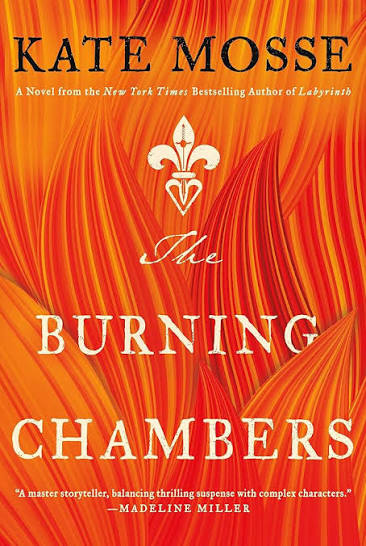
The Burning Chambers by Kate Mosse
The Burning Chambers by Kate Mosse is a sweeping historical novel filled with love, danger, family secrets, religious conflict and political conspiracy. Set primarily in sixteenth-century France during the early stages of the French Wars of Religion, it brings together fictional characters and carefully researched history to create an atmospheric story of courage and survival. This is the first volume in The Joubert Family Chronicles, an epic series following one family across generations and continents.
The story begins in Carcassonne in 1562, at a time when France is becoming increasingly divided between Catholics and Protestant Huguenots. Religious identity affects every part of life, and disagreements that were once private are beginning to separate neighbours, friends and families. Rumours, fear and political ambition are creating an environment in which a person’s faith can determine whether they are accepted, persecuted or forced to flee.
At the centre of the novel is nineteen-year-old Minou Joubert, the daughter of a Catholic bookseller. Intelligent, independent and loyal to her family, Minou helps manage her father’s bookshop while carrying responsibilities that extend far beyond those normally expected of a young woman in her society. Her familiar life is disrupted when a mysterious letter arrives at the shop. The envelope bears a distinctive family crest, but its message contains only five unsettling words: “She knows that you live.”
Minou does not understand who sent the letter, who the mysterious woman might be or why the message was addressed to her. Before she can uncover its meaning, she encounters Piet Reydon, a young Huguenot convert involved in a dangerous mission. Piet carries secrets and responsibilities of his own, and his position places him directly inside the growing conflict between France’s religious communities. His meeting with Minou begins a connection that will change the course of both their lives.
Although Minou and Piet come from opposing religious backgrounds, they are drawn together by shared qualities of courage, loyalty and compassion. Their developing relationship is placed under immediate pressure as violence spreads and political alliances become increasingly unstable. The novel uses their connection to explore what happens when personal affection challenges the identities and loyalties imposed by family, faith and society.
The action later moves to Toulouse, where tensions between Catholics and Huguenots are reaching a dangerous point. Streets, churches and private homes become part of an escalating struggle for control. People who once lived beside one another are forced to choose sides, while those who seek tolerance face threats from extremists on both sides. Minou and Piet become trapped within this atmosphere, where a wrong decision or misplaced trust could have deadly consequences.
Running alongside their story is a darker conspiracy involving powerful individuals, hidden documents, disputed inheritance and a valuable religious relic. A determined woman connected to the fortress of Puivert is prepared to protect her position, while ambitious figures use religion and political influence for personal advantage. The mysterious letter Minou received is gradually connected to secrets that have been concealed for years. As different parts of the mystery come together, the danger surrounding the Joubert family grows more serious.
Kate Mosse presents the religious conflict with complexity rather than reducing it to a simple struggle between heroes and villains. Both Catholic and Huguenot characters display courage, fear, generosity and cruelty. This balanced approach allows the novel to examine the destructive effects of fanaticism while also highlighting those who defend tolerance, dignity and freedom. Historical events shape the characters’ lives, but the emotional centre of the story remains deeply personal.
Family is another major theme throughout The Burning Chambers. Minou’s concern for her father and younger siblings gives the story a strong sense of emotional urgency. She is repeatedly required to balance her own desires against her responsibility to protect the people she loves. Questions about identity, inheritance and the truth of her family’s past gradually become as important as the larger political struggle taking place around her.
The novel also gives particular attention to women whose experiences might have been excluded from traditional historical accounts. Minou is not merely an observer of events; she makes difficult decisions and takes action within a society that attempts to limit her independence. Other women in the story possess their own ambitions, loyalties and secrets. Some use courage and intelligence to protect others, while some pursue power regardless of the consequences.
Mosse’s descriptions bring the cities and landscapes of southern France vividly to life. The fortified walls of Carcassonne, the crowded streets of Toulouse, family bookshops, churches, markets and noble estates create a detailed setting for the unfolding drama. Historical information is woven into the action, allowing readers to understand the period without turning the novel into a textbook. The result is an immersive experience that combines a strong sense of place with fast-moving adventure.
Readers will encounter romance, coded messages, political manoeuvring, religious persecution, family mysteries, dangerous journeys and unexpected betrayal. The story moves between intimate moments and large-scale conflict, showing how decisions made by rulers and religious leaders affect ordinary people. Its combination of suspense and historical detail makes it suitable for readers who enjoy complex family sagas as well as historical thrillers.
The Burning Chambers is also the beginning of a much larger journey. The Joubert Family Chronicles follows the consequences of the events introduced in this novel through later generations. The second book, The City of Tears, continues the family’s story, followed by The Ghost Ship and The Map of Bones. Readers who enjoy long historical series can begin here and follow the Joubert family through changing countries, conflicts and centuries.
This novel will appeal to admirers of richly detailed historical fiction, forbidden romance and stories about families divided by political or religious conflict. It is particularly suitable for readers who enjoy novels by authors such as Ken Follett, Philippa Gregory and Hilary Mantel, as well as fans of Kate Mosse’s earlier Languedoc novels.
The Burning Chambers by Kate Mosse is an ambitious story about the human cost of intolerance and the courage required to resist it. Through Minou and Piet’s dangerous journey, the novel explores love across divided communities, the burden of hidden history and the way secrets can shape generations. Atmospheric, suspenseful and emotionally engaging, it is a compelling opening to The Joubert Family Chronicles.
Content note: The story contains depictions of religious persecution, warfare, torture, death and other forms of historical violence that may be upsetting to some readers.




Reviews
There are no reviews yet.