








Description
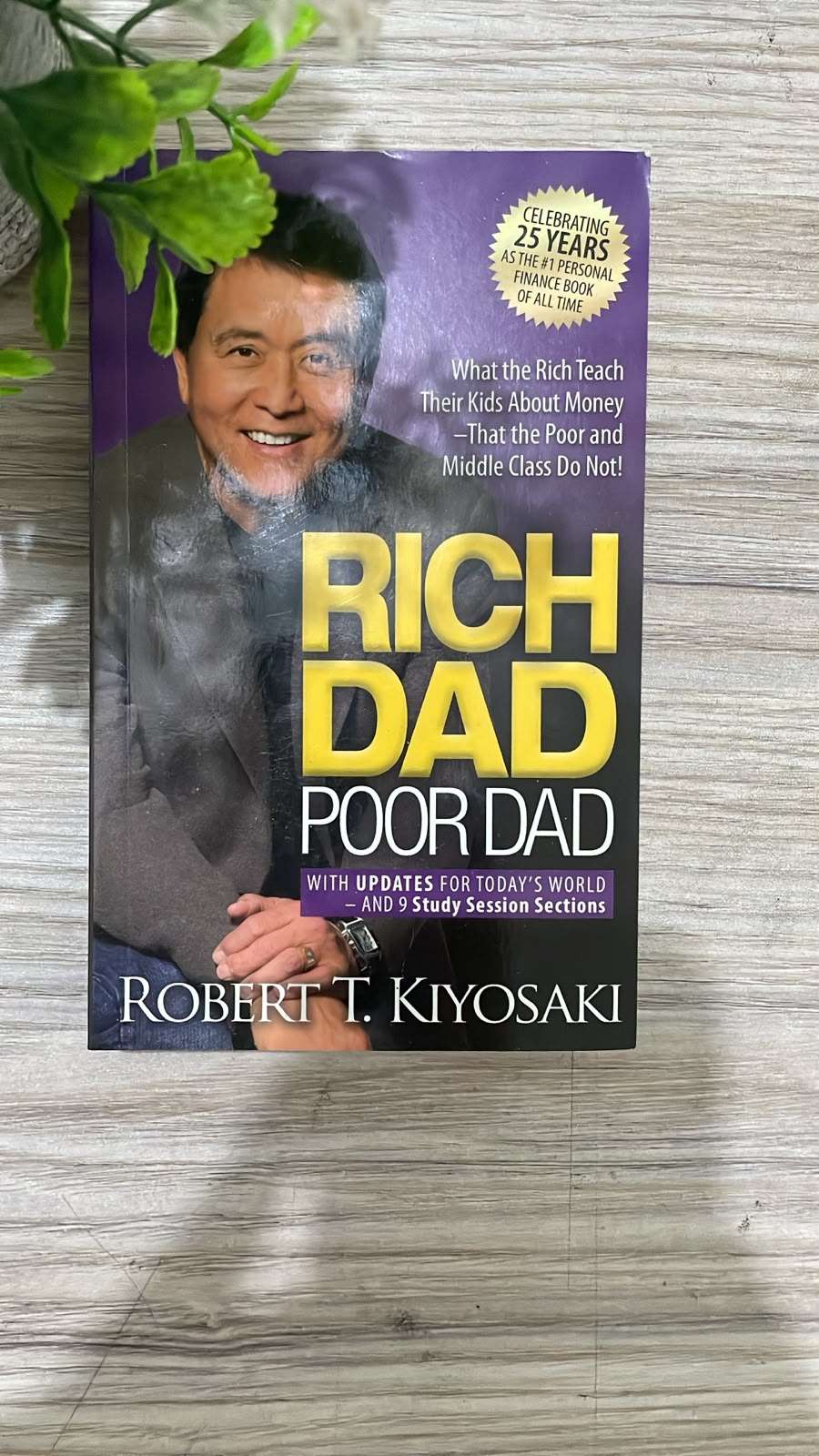
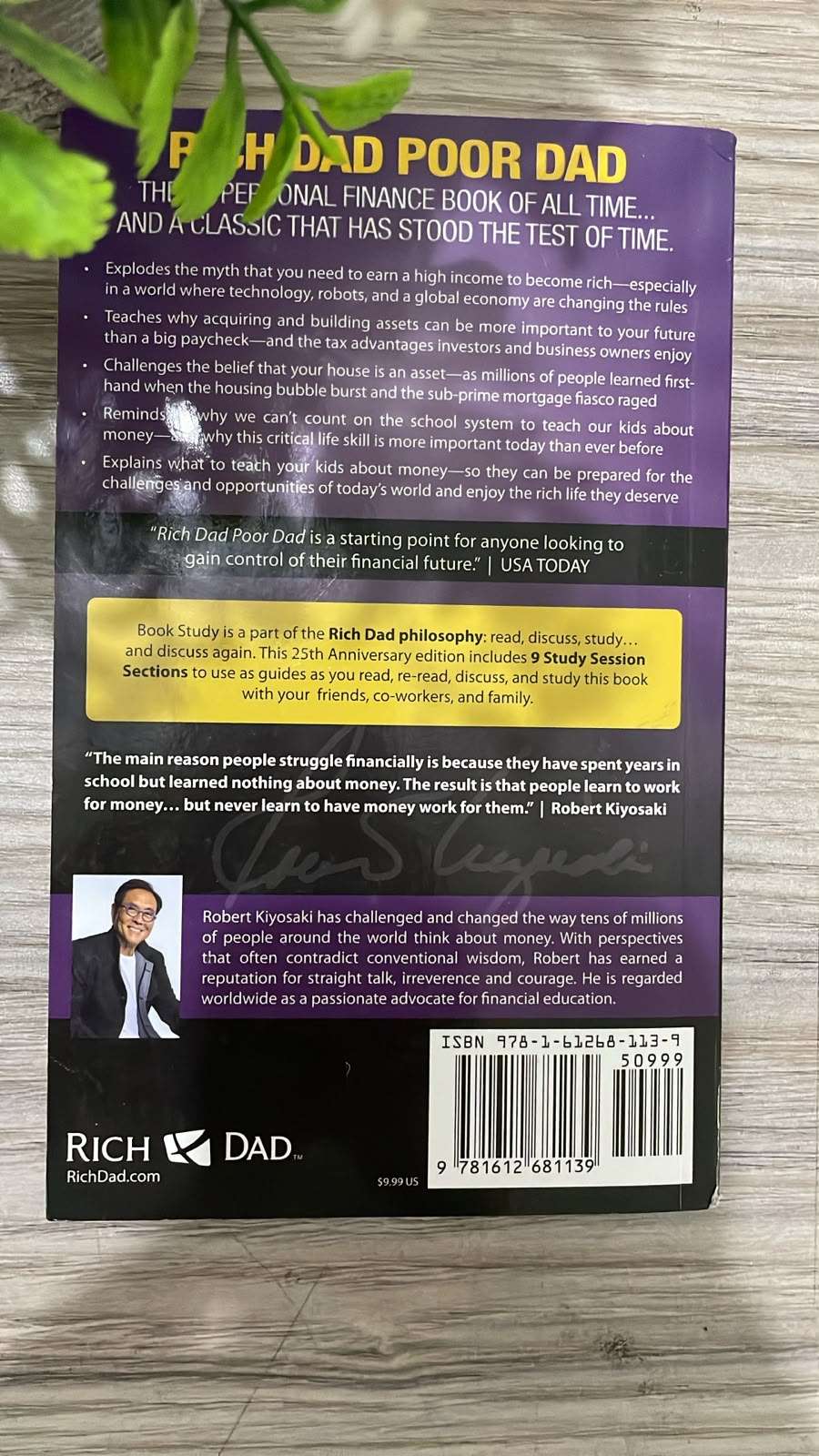
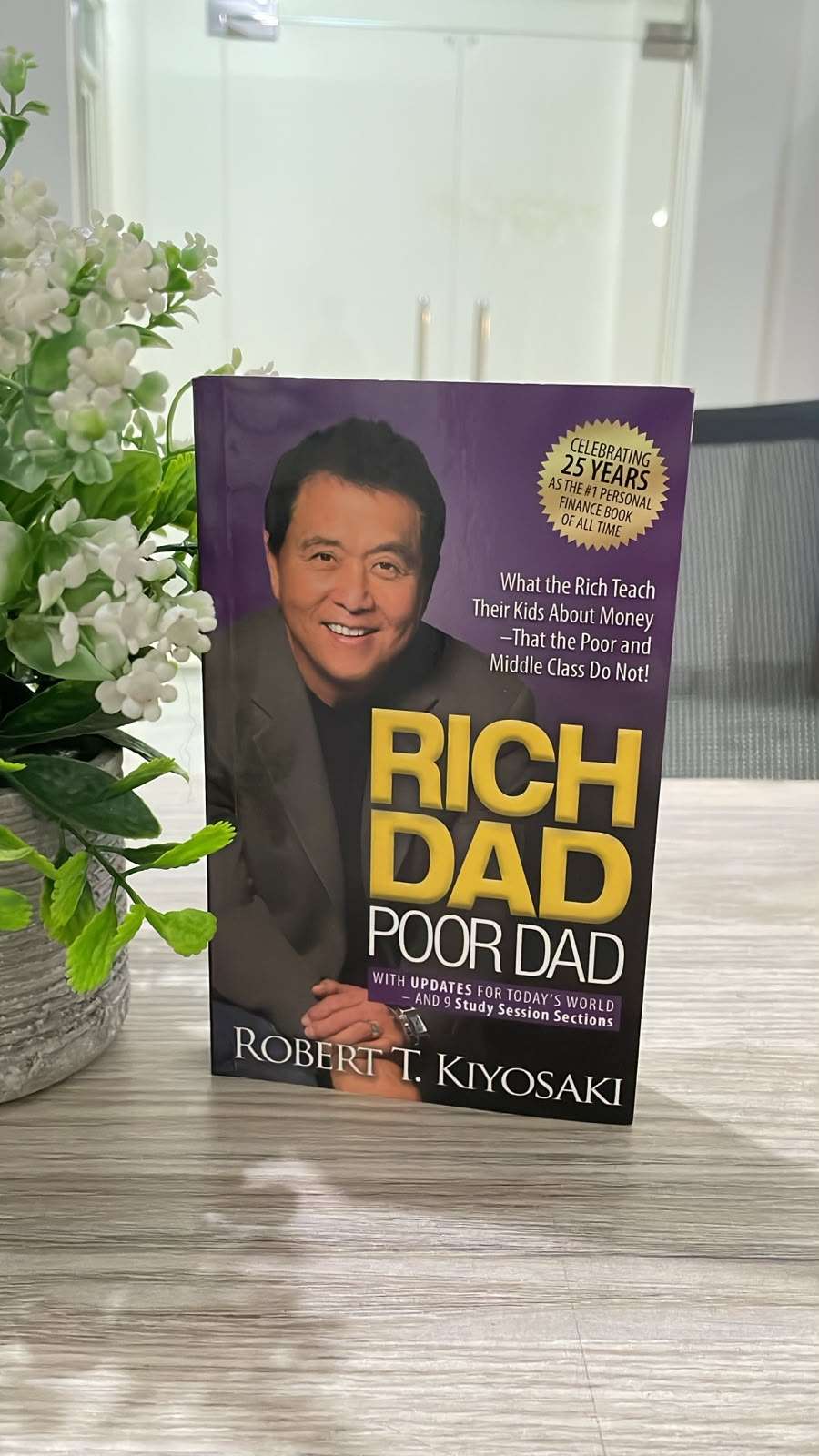
Rich Dad Poor Dad by Robert T. Kiyosaki is one of the world’s best-known personal-finance books. Through the contrasting lessons of two father figures, Robert Kiyosaki examines how different beliefs about money, employment, education, investing and business can influence a person’s financial future.
The complete title is Rich Dad Poor Dad: What the Rich Teach Their Kids About Money That the Poor and Middle Class Do Not!. The book was originally self-published in 1997 and later became the foundation of the wider Rich Dad financial-education brand.
Kiyosaki refers to his biological father as “Poor Dad.” He was highly educated, valued academic achievement and believed strongly in obtaining secure employment. The father of Kiyosaki’s childhood friend is presented as “Rich Dad,” an entrepreneur who taught him to think differently about assets, cash flow, business ownership and financial independence.
The book uses these contrasting viewpoints to encourage readers to question traditional assumptions and develop a stronger understanding of how money moves through their lives.
Why Read Rich Dad Poor Dad by Robert T. Kiyosaki?
Rich Dad Poor Dad by Robert T. Kiyosaki is written for readers who want an accessible introduction to financial thinking rather than a technical textbook filled with complex calculations.
Kiyosaki argues that earning a high salary does not automatically create lasting wealth. A person may receive a large income while spending nearly all of it on debt, lifestyle expenses and purchases that require continuing payments.
The book encourages readers to examine whether their financial decisions create future income or increase their monthly obligations.
Its main value lies in encouraging financial curiosity. Readers are invited to learn about accounting, investing, taxation, entrepreneurship and cash flow instead of depending entirely on employers or advisers to make financial decisions for them.
The Story of Two Fathers
The book’s central structure compares the financial attitudes of two influential men.
“Poor Dad” represents the conventional path of studying hard, obtaining qualifications, finding secure employment and working towards retirement. He values education and professional stability but, in Kiyosaki’s account, struggles financially despite earning a respectable income.
“Rich Dad” represents entrepreneurship, investing and the ownership of income-producing assets. He teaches Kiyosaki to observe how businesses and money systems operate rather than concentrating only on obtaining a salary.
The labels describe contrasting financial philosophies within the book. They should not be interpreted as statements that education or salaried employment has no value.
The Rich Do Not Work Only for Money
One of the book’s best-known lessons is that many people spend their lives working for money without learning how to make money work for them.
Employment income can provide stability, experience and necessary living expenses. However, Kiyosaki argues that depending exclusively on a salary may limit financial freedom when income stops immediately after the person stops working.
He encourages readers to use part of their earned income to develop skills and acquire assets that may produce additional cash flow.
The objective is not necessarily to leave employment immediately. It is to reduce complete dependence on one source of income over time.
Understanding Assets and Liabilities
Rich Dad Poor Dad by Robert T. Kiyosaki uses a simplified distinction between assets and liabilities.
In the book’s cash-flow framework, an asset places money into the owner’s pocket, while a liability removes money from it.
Possible income-producing assets may include profitable businesses, rental properties, shares, bonds, intellectual property or other investments that generate cash flow.
Liabilities may include debts and possessions that require continuing payments without producing income.
This is a simplified educational definition. Formal accounting uses more detailed definitions, and an item may still be classified as an asset on a balance sheet even when it creates negative monthly cash flow.
Why Cash Flow Matters
Cash flow describes money entering and leaving a person, household or business.
A person can appear wealthy while experiencing financial pressure when expenses and debt repayments consume most of their income.
Kiyosaki encourages readers to track where their money goes and identify whether spending supports long-term financial goals.
Understanding cash flow can help readers recognise the difference between owning valuable-looking possessions and building investments that may generate recurring income.
Financial Education
A central argument of the book is that traditional education does not always provide enough practical instruction about money.
Students may learn valuable academic and professional skills without learning how to read financial statements, evaluate investments, understand debt or calculate the true cost of financial decisions.
Kiyosaki encourages readers to continue developing financial knowledge throughout life.
Useful subjects may include:
- Budgeting and cash-flow management
- Accounting and financial statements
- Saving and emergency funds
- Investing and diversification
- Interest, inflation and debt
- Business operations and entrepreneurship
- Tax and legal responsibilities
- Risk management
Financial education does not eliminate risk, but it can help people ask better questions and recognise decisions they do not yet understand.
Mind Your Own Business
One of Kiyosaki’s lessons is to “mind your own business.” In this context, he encourages readers to build their personal asset column even while working for an employer.
A person’s profession and personal business interests do not always have to be identical. Someone may work as a teacher, accountant, technician or manager while gradually building investments or a small business outside working hours.
This approach should be followed responsibly. Employees must respect contracts, avoid conflicts of interest and ensure that outside projects do not misuse employer time or resources.
The Difference Between a Profession and an Asset Base
A profession provides skills and income. An asset base may provide investment growth or recurring cash flow.
A skilled professional may earn well but remain financially vulnerable if they have no savings, investments or alternative sources of income.
The book encourages readers to use employment income not only for immediate consumption but also for developing long-term financial security.
This can begin through modest actions such as creating an emergency fund, reducing expensive debt and investing regularly within an appropriate risk level.
The History of Taxes and Corporations
Kiyosaki discusses how businesses and wealthy investors may use legal structures to organise income, expenses, ownership and taxation.
Companies can provide advantages in suitable situations, but forming a company does not automatically reduce tax or protect a person from every liability.
Business and tax laws differ between countries and change over time. Sri Lankan readers should obtain advice based on current Sri Lankan law before establishing a company or making tax-related decisions.
The book’s general discussion should not replace professional legal, accounting or tax guidance.
Work to Learn, Not Only to Earn
The book encourages readers to choose some employment and business opportunities according to the skills they can develop.
Sales, communication, negotiation, marketing, leadership and financial management may become valuable across many careers and businesses.
A position with the highest immediate salary is not always the only useful choice when another opportunity can provide important long-term experience.
However, learning opportunities should be balanced with practical needs such as fair compensation, job security and family responsibilities.
Overcoming Fear and Self-Doubt
Fear of losing money can prevent people from making reckless decisions, but it can also prevent them from learning about reasonable opportunities.
Kiyosaki encourages readers to improve their knowledge rather than allowing fear or excitement alone to control decisions.
This does not mean that every person should take large risks. A responsible investor should understand possible losses, maintain emergency savings and avoid committing money that is needed for essential expenses.
The Importance of Action
Reading about money does not automatically change a person’s financial position. The book encourages readers to apply useful lessons through practical action.
Beginner actions may include:
- Recording monthly income and expenses
- Creating an emergency savings target
- Paying down high-interest debt
- Studying one investment category carefully
- Reading company and investment documents
- Developing an additional professional skill
- Testing a small business idea
- Consulting qualified financial professionals
Action should be informed and measured rather than rushed.
The 20th Anniversary Edition
Your Book Lounge stock uses ISBN 9781612680194, which corresponds to the 2017 20th Anniversary Edition.
This edition includes updates and “fast-forward” sidebars in which Kiyosaki reflects on economic changes and considers how the ideas from the original 1997 book apply to a later financial environment.
It should not be described as the 25th Anniversary Edition. That is a different edition with a different ISBN.
Strengths of the Book
The book is popular because it presents financial ideas through stories and simple comparisons rather than advanced mathematics.
It can encourage beginners to:
- Think more carefully about cash flow
- Distinguish income from wealth
- Learn about assets and liabilities
- Question unnecessary lifestyle spending
- Explore investing and entrepreneurship
- Develop greater financial responsibility
Readers often use it as a starting point before moving to more detailed books about budgeting, accounting and investing.
Read the Financial Claims Critically
Rich Dad Poor Dad presents the author’s personal philosophy and simplifies several financial concepts to make them easier to understand.
Not every strategy will be suitable for every reader. Property, shares, businesses, borrowing and other investments can lose money.
Readers should verify important claims through additional sources and consider their income, responsibilities, debt, local laws and tolerance for risk.
The book is best approached as motivational financial education rather than a complete investment plan.
Who Should Read This Book?
This book is recommended for:
- Beginners learning about personal finance
- Students and young professionals
- Entrepreneurs and aspiring business owners
- Readers interested in investing
- People seeking financial independence
- Parents discussing money with older children
- Readers interested in multiple income sources
- Fans of business and self-development books
Important Financial Disclaimer
This book provides general educational ideas and the author’s opinions. It does not provide personalised investment, legal, accounting or tax advice.
Investing and business ownership involve risk, including possible financial loss. Readers should conduct independent research and consult appropriately qualified professionals before making major financial decisions.
About Robert T. Kiyosaki
Robert T. Kiyosaki is an entrepreneur, author and financial educator best known for creating the Rich Dad series.
After the success of Rich Dad Poor Dad, he co-founded The Rich Dad Company with Kim Kiyosaki. The company developed books, educational programmes, games, courses and events focused on financial education.
His other books include Cashflow Quadrant, Rich Dad’s Guide to Investing, Retire Young Retire Rich and Increase Your Financial IQ.
In Rich Dad Poor Dad by Robert T. Kiyosaki, he presents the contrasting financial lessons of his two father figures and encourages readers to take greater responsibility for their financial education.
Learn more about the author through the
official Robert Kiyosaki profile.
Readers can explore additional financial-education resources through the
official Rich Dad website.
Why Buy from Book Lounge Sri Lanka?
Book Lounge is an online bookstore serving students, professionals, entrepreneurs and general readers throughout Sri Lanka.
Explore more finance, business and educational titles through the
Book Lounge Non-Fiction collection.
You can also browse motivational and personal-development titles through the
Book Lounge Self Help collection.
View all currently available titles through the
Book Lounge online store.
For assistance with availability, payments or delivery, visit the
Book Lounge contact page.
Buy Rich Dad Poor Dad Online in Sri Lanka
Buy Rich Dad Poor Dad by Robert T. Kiyosaki online in Sri Lanka from Book Lounge and explore influential ideas about assets, liabilities, cash flow, entrepreneurship and financial education.
Order Rich Dad Poor Dad by Robert T. Kiyosaki from Book Lounge today and begin developing a more informed and responsible approach to money and long-term financial planning.






Reviews
There are no reviews yet.