








Description
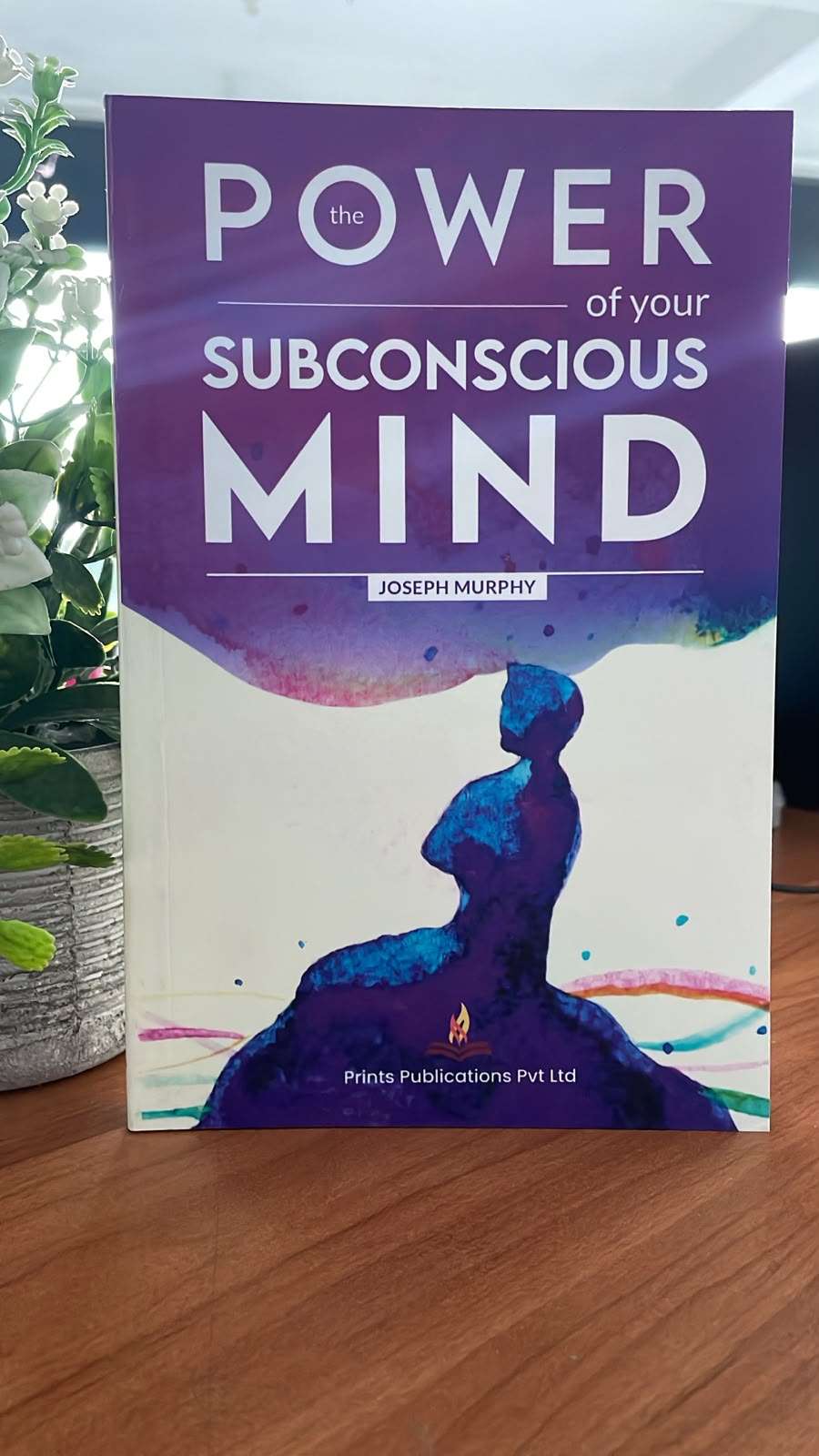
The Power of Your Subconscious Mind by Joseph Murphy is a classic self-improvement and spiritual-development book about beliefs, habitual thinking and the influence of mental patterns on everyday life. First published in 1963, the book has remained popular among readers interested in positive thinking, visualization, prayer, personal growth and New Thought philosophy.
Joseph Murphy presents the subconscious mind as a powerful part of human experience that stores beliefs, habits, expectations and emotional patterns. He argues that thoughts repeatedly accepted by the conscious mind can gradually influence subconscious responses and, in turn, affect behaviour, confidence and decision-making.
Through explanations, exercises and anecdotal case studies, Murphy encourages readers to examine the ideas they repeatedly communicate to themselves. He suggests replacing thoughts centred on fear, failure and limitation with constructive beliefs connected to confidence, peace and meaningful goals.
Why Read The Power of Your Subconscious Mind by Joseph Murphy?
The Power of Your Subconscious Mind by Joseph Murphy can help readers become more aware of the relationship between repeated thoughts and habitual behaviour. Many people develop automatic beliefs about their intelligence, confidence, relationships, career or ability to change.
A person who repeatedly believes that failure is unavoidable may avoid opportunities or stop trying when difficulties appear. Someone who begins developing a more constructive inner dialogue may become more willing to prepare, practise and take purposeful action.
The book encourages readers to observe these mental patterns and decide whether they support the life they want to create. Its message is that personal transformation often begins by recognising the beliefs that operate automatically beneath everyday decisions.
Understanding the Conscious and Subconscious Mind
Murphy distinguishes between the conscious mind and the subconscious mind. The conscious mind evaluates information, makes choices and directs attention. The subconscious mind is presented as the part that stores accepted ideas, repeated emotional responses and established habits.
According to Murphy’s framework, thoughts that are frequently repeated with conviction may gradually become subconscious beliefs. These beliefs can then influence how people interpret events and respond to challenges.
For example, someone who continually expects rejection may notice every negative response while overlooking encouragement and opportunity. Changing the underlying expectation may help that person approach situations with greater confidence and awareness.
The book therefore asks readers to become more selective about the thoughts they continually repeat and emotionally reinforce.
The Role of Belief and Expectation
Belief is one of the book’s central themes. Murphy argues that expectations can influence behaviour, motivation and emotional responses.
When people believe improvement is possible, they may be more willing to practise, seek assistance and continue after setbacks. When they believe change is impossible, they may abandon useful action before giving it sufficient time.
The Power of Your Subconscious Mind by Joseph Murphy encourages readers to build beliefs that support constructive effort. This should not be confused with assuming that thought alone guarantees every desired outcome.
External circumstances, opportunity, health, education, resources and the actions of other people also affect results. Positive belief can support purposeful action, but it does not remove every practical challenge.
Visualization and Mental Rehearsal
Murphy recommends visualization as a way of directing attention towards a desired result. Visualization involves forming a clear mental image of completing a goal or responding successfully to a future situation.
An individual preparing for a presentation might imagine speaking calmly and explaining each point clearly. A student might picture following a regular study routine and entering an examination with suitable preparation.
Mental rehearsal can help clarify the behaviour required, but it should be combined with practical work. Imagining a successful examination cannot replace studying, and visualizing business growth cannot replace understanding customers, managing costs and delivering valuable products.
The most practical use of visualization is to connect a goal with the actions needed to achieve it.
Affirmations and Constructive Self-Talk
The book also discusses affirmations—short statements repeated to encourage a particular belief or emotional direction.
Effective affirmations should be meaningful and connected to action. A person may repeat a statement about becoming more confident while also practising communication, accepting feedback and gradually entering challenging situations.
Statements that feel completely unrealistic may create resistance. More grounded wording, such as recognising that confidence can improve through preparation and experience, may feel easier to apply.
Murphy’s broader message is that the language people use internally can influence their willingness to act. Replacing constant self-criticism with constructive and realistic encouragement may support personal growth.
Replacing Fear with Constructive Thought
Fear can protect people from genuine danger, but repeated fear-based thinking may also prevent useful action. Someone may avoid applying for a position, beginning a course or meeting new people because they mentally rehearse only negative outcomes.
Murphy encourages readers to replace these repeated images with calmer and more constructive expectations. This does not mean ignoring risk. It means evaluating a situation carefully without allowing imagined failure to become the only possible outcome.
Preparation can strengthen this process. A person concerned about an interview can study the organisation, practise answers and plan the journey. Constructive thinking becomes more useful when it supports clear practical action.
Habits and Repeated Mental Patterns
The Power of Your Subconscious Mind by Joseph Murphy connects repeated thinking with the development of habits. A behaviour becomes easier to repeat when it is connected to familiar cues and expectations.
Readers can use this idea by creating routines that support their goals. A specific time and location can become a signal for studying, exercising, reading or planning important work.
Replacing an unwanted habit may also require understanding the purpose it currently serves. A person may use a particular behaviour to respond to stress, boredom or loneliness. A suitable replacement should address the underlying need rather than only remove the visible action.
Although Murphy describes these ideas through a spiritual and metaphysical framework, readers can still use the book as an invitation to observe their routines and inner dialogue more carefully.
Prayer, Faith and Inner Peace
Prayer and spiritual belief are important parts of Murphy’s approach. He presents prayer as a method of directing thought towards peace, trust, healing and constructive possibilities.
Readers from different religious or philosophical backgrounds may interpret these sections differently. Some may approach them as religious teachings, while others may view them as forms of meditation, reflection or focused intention.
The book encourages calmness rather than desperate mental struggle. Murphy suggests that a relaxed and trusting state allows constructive ideas to be accepted more naturally.
Readers should treat claims about physical healing as spiritual teachings, not as replacements for qualified medical diagnosis or treatment.
Relationships and Forgiveness
The book explores how resentment, anger and repeated negative assumptions may influence relationships. When people continually expect hostility, they may interpret neutral actions as personal attacks.
Murphy encourages forgiveness as a way of releasing persistent emotional conflict. Forgiveness does not require approving harmful behaviour or removing appropriate boundaries.
It may instead involve deciding not to allow a past event to control every present thought. Healthy relationships still require honesty, communication, accountability and respect.
Readers experiencing abusive or dangerous circumstances should seek suitable professional and practical support rather than relying only on positive thinking.
Goals, Career and Financial Success
Murphy applies his teachings to professional development and prosperity. He encourages readers to expect opportunities, develop confidence and focus their attention on useful outcomes.
Constructive belief may help people communicate more confidently, remain committed to learning and recognise opportunities they previously ignored. However, financial or career success also requires practical knowledge, responsible decisions and sustained effort.
Readers can apply the book’s ideas by defining a goal, imagining the desired result and then identifying the actions required. These actions may include gaining qualifications, improving a skill, creating a budget or understanding customer needs.
Mental focus can provide direction, but it should work alongside realistic planning.
How to Apply the Book’s Ideas
Readers can begin with one area of life rather than attempting to change everything at once. A simple process may include:
- Identify one repeated negative belief.
- Examine how that belief affects behaviour.
- Create a realistic and constructive replacement statement.
- Visualize completing the actions connected to the new belief.
- Develop a small daily routine supporting the goal.
- Review progress and adjust the approach when necessary.
Consistency is more useful than temporary excitement. A few minutes of regular reflection and purposeful action may be easier to maintain than an extreme programme that is quickly abandoned.
A Classic of New Thought Philosophy
The book is closely connected to the New Thought movement, which emphasises the relationship between thought, belief, spirituality and personal experience.
Its language and claims reflect the period and philosophical tradition in which it was written. Some readers may find the spiritual approach inspiring, while others may disagree with its explanations of the mind.
The book is best approached as a classic work of motivational and spiritual self-help rather than a modern neuroscience or clinical-psychology textbook.
Reading it critically allows readers to consider its practical ideas about self-talk, confidence and habits without assuming that every metaphysical claim has been scientifically established.
Who Should Read This Book?
This title is recommended for:
- Readers interested in self-help and personal development
- People exploring positive thinking and visualization
- Readers interested in New Thought philosophy
- People working to improve confidence and mental habits
- Readers interested in spirituality and prayer
- Fans of Napoleon Hill, Neville Goddard and Norman Vincent Peale
- Readers interested in classic motivational books
- Anyone examining how beliefs influence behaviour
The book’s accessible language makes it suitable for readers beginning their personal-development journey as well as those collecting influential self-help classics.
About Joseph Murphy
Joseph Murphy was an Irish-born American author, speaker and New Thought minister. He was born in 1898 and later moved to the United States, where he became known for lectures and writings about belief, spirituality and the subconscious mind.
He wrote numerous books and pamphlets examining affirmative thinking, prayer, prosperity and the metaphysical faculties of the mind. His publications include The Power of Your Subconscious Mind, How to Attract Money, Believe in Yourself and The Miracles of Your Mind.
Murphy died in 1981, but his writings continue to be published in numerous editions and languages.
In The Power of Your Subconscious Mind by Joseph Murphy, he presents his best-known teachings through practical exercises, spiritual reflections and stories intended to demonstrate how beliefs may influence everyday experience.
Official publication information is available from the
Penguin Random House page for The Power of Your Subconscious Mind.
Readers can also view information about the original-text edition from the
official Tarcher edition page.
Why Buy from Book Lounge Sri Lanka?
Book Lounge is an online bookstore serving readers, students and families throughout Sri Lanka.
Readers interested in positive thinking, confidence and personal development can explore the
Book Lounge Self Help collection.
You can also browse spirituality, psychology and personal-development titles through the
Book Lounge Non-Fiction collection.
Explore all currently available books through the
Book Lounge online store.
For assistance with book availability, recommendations, payments or delivery, visit the
Book Lounge contact page.
Buy The Power of Your Subconscious Mind Online in Sri Lanka
Buy The Power of Your Subconscious Mind by Joseph Murphy online in Sri Lanka from Book Lounge and explore a classic guide to belief, visualization, constructive thinking and personal transformation.
Order The Power of Your Subconscious Mind by Joseph Murphy from Book Lounge today and discover practical and spiritual reflections on how repeated thoughts may influence confidence, habits and everyday decisions.






Reviews
There are no reviews yet.