








Description
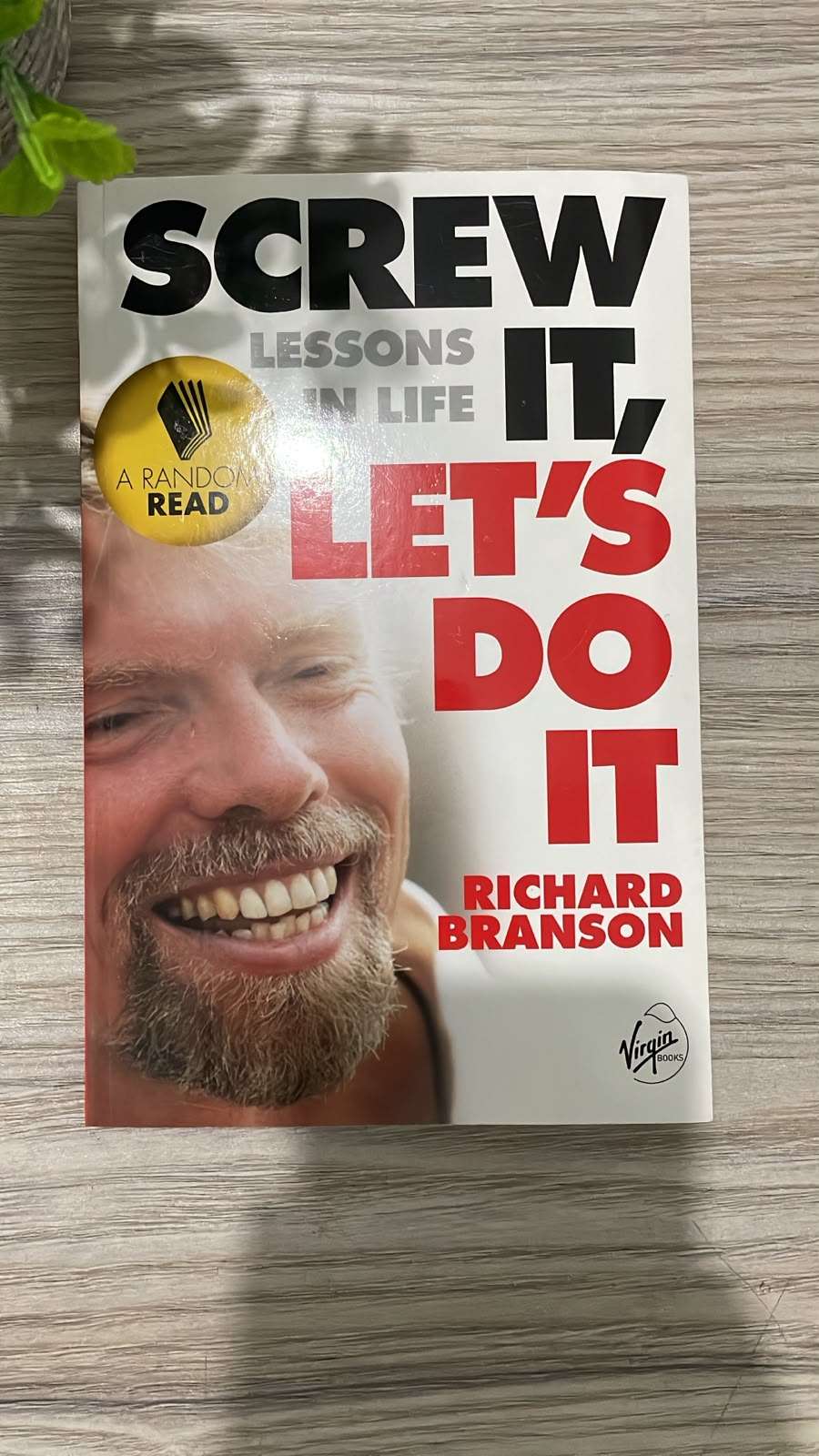
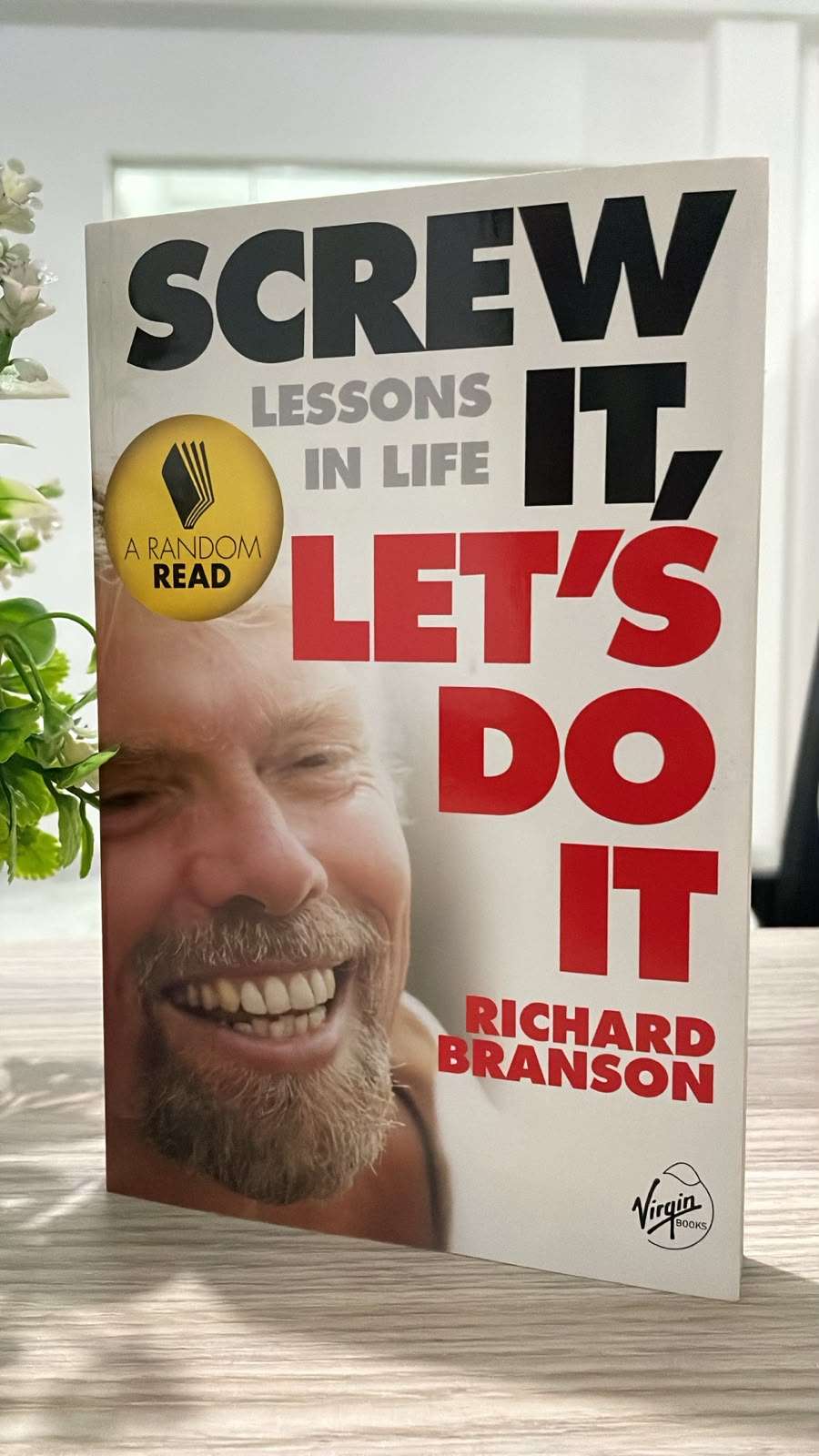
Screw It Lets Do It by Sir Richard Branson
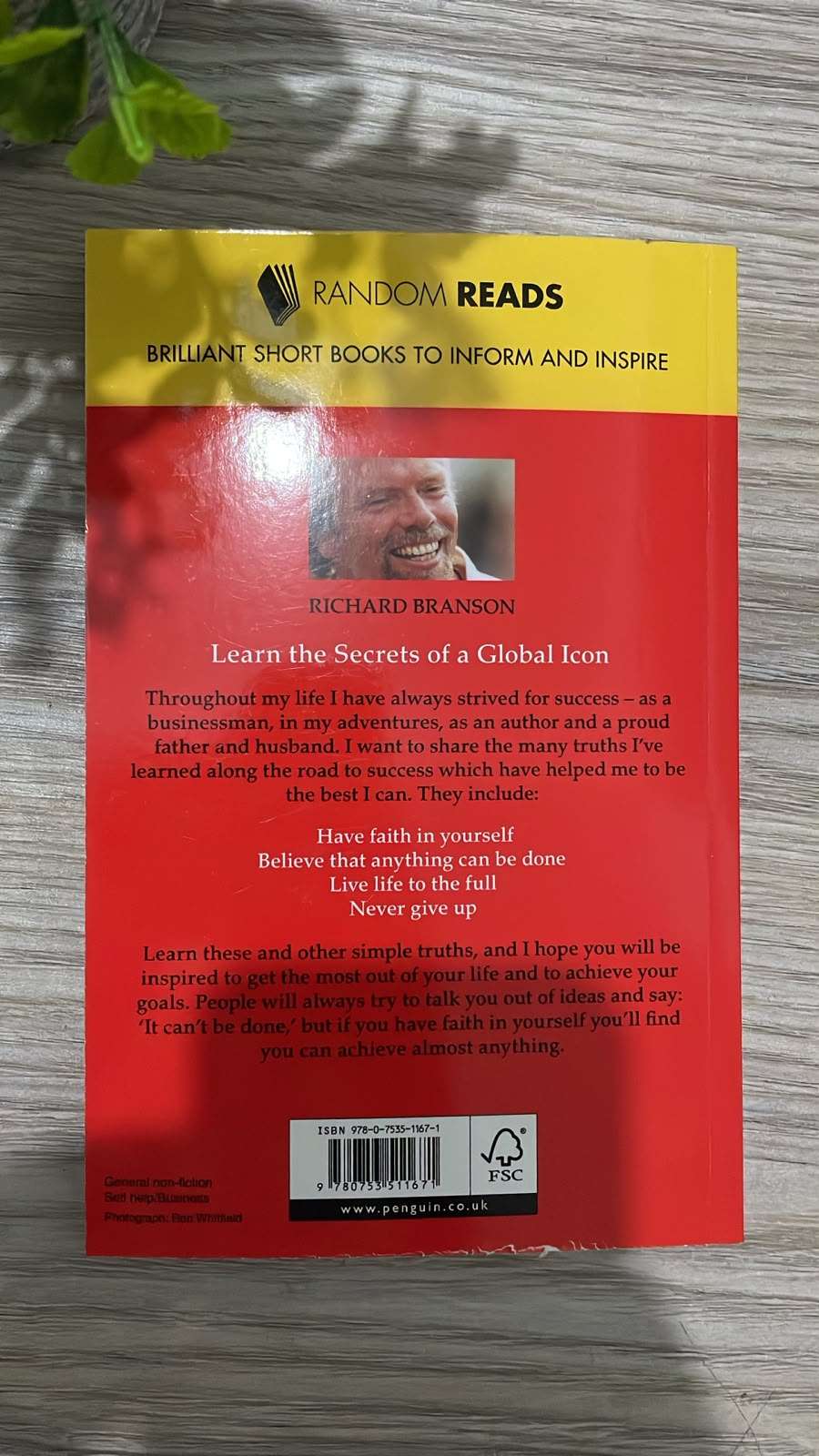
Screw It, Let’s Do It by Sir Richard Branson is an energetic collection of lessons about business, leadership, ambition, responsibility and living with purpose. Drawing on experiences from his career as the founder of the Virgin Group, Branson explains the attitudes that helped him transform unconventional ideas into internationally recognised businesses.
The book is not presented as a technical business textbook or a rigid formula for guaranteed success. Instead, it combines personal stories, practical observations and motivational principles developed through Branson’s experiences with entrepreneurship, adventure, competition, innovation and failure.
At the centre of the book is a simple attitude: worthwhile opportunities should not always be delayed until every risk has disappeared and every detail is perfect. Branson encourages readers to examine the opportunity, prepare responsibly, take action and continue learning while moving forward.
The expanded edition also looks at environmental responsibility, ethical business and emerging projects connected with energy and space travel. It asks successful organisations to consider not only profit but also their effect on society and the planet.
Why Read Screw It, Let’s Do It by Sir Richard Branson?
Screw It, Let’s Do It by Sir Richard Branson is suitable for readers who have an idea or ambition but feel uncertain about beginning.
Many potentially valuable projects remain unfinished because people wait for ideal conditions. They may believe they need more money, more experience, complete confidence or universal approval before taking the first step.
Branson’s approach is different. He argues that preparation matters, but experience is frequently gained through action. A new entrepreneur may not know everything before launching a small project, but customer feedback and real-world testing can reveal what must be improved.
The book encourages readers to develop confidence without assuming that every decision will succeed. Mistakes and setbacks can provide useful information when people are willing to recognise them, adapt and try again.
Take Action on Worthwhile Ideas
The title expresses Branson’s willingness to act when an opportunity appears exciting, meaningful and achievable.
This does not need to mean acting carelessly. Responsible action involves understanding the main risks, protecting people from unnecessary harm and deciding what resources are available.
However, endless analysis can become another form of avoidance. A person may spend years discussing a business, qualification or creative project without completing the first meaningful task.
Readers are encouraged to identify one practical action that can be completed now. This could include researching customers, building a prototype, contacting a potential partner, creating a budget or beginning professional training.
Believe That Progress Is Possible
Confidence is an important theme throughout the book.
People are less likely to pursue difficult goals when they repeatedly assume failure is unavoidable. Confidence can help them communicate ideas, recover from rejection and remain persistent when results take longer than expected.
Branson’s message does not require readers to pretend that obstacles do not exist. Instead, it encourages them to believe that many problems can be approached creatively.
Confidence becomes most useful when supported by preparation, skill development and honest evaluation.
Challenge Established Methods
Branson built much of the Virgin identity around challenging established organisations and conventional ways of working.
The book encourages readers to ask why an industry operates in a particular way and whether customers are receiving the service they deserve.
New businesses may not possess the resources of large competitors, but they can sometimes compete through better communication, simpler processes, improved customer care or a more memorable experience.
Challenging convention does not mean rejecting every existing practice. Some rules protect employees, customers and the public. The useful question is whether a process creates genuine value or continues only because nobody has attempted to improve it.
Learn Through Experience
Formal education can provide valuable knowledge, but experience also teaches lessons that may not be available in a classroom.
Entrepreneurs learn by speaking with customers, negotiating, managing money, solving unexpected problems and accepting responsibility for results.
Branson’s stories demonstrate that a person does not need to begin as a complete expert. However, willingness to learn is essential.
Readers should ask questions, seek qualified advice and listen to people with direct experience. Acting boldly should never require refusing useful knowledge.
Accept Risk Without Ignoring It
Risk is unavoidable in business and personal development. A new company may lose money, an idea may fail and a career change may take longer than expected.
The book encourages courage, but courage should be distinguished from recklessness.
A responsible risk may involve starting a project on a manageable scale, testing demand before investing heavily and keeping enough financial security to handle an unsuccessful result.
Readers should understand the possible loss as well as the hoped-for reward. The strongest decision is not always the most dramatic one; it is the decision that balances ambition with preparation.
Turn Failure into Useful Information
Failure is not presented as a reason to stop permanently.
A failed project can reveal weaknesses in the original idea, timing, pricing, communication or execution. These lessons can improve the next attempt.
However, persistence should not mean repeating the same action without change. When evidence shows that a strategy is not working, the reader must be willing to adapt.
Resilience combines determination with flexibility. It means protecting the larger purpose while changing the method when necessary.
Build a Strong Team
No large organisation is created by one person working alone.
Branson emphasises relationships, delegation and the importance of surrounding a project with capable people.
A strong leader does not need to know more than every employee. The leader’s responsibility includes identifying talent, creating a clear direction and giving people enough trust to use their abilities.
Teams perform better when employees understand the goal, receive useful feedback and believe their contribution matters.
Treat People with Respect
Customer service and employee relationships are central to a sustainable business.
Customers may forget advertisements, but they often remember whether a company treated them fairly and solved their problems responsibly.
Employees also influence the customer experience. A business that ignores or mistreats its staff may struggle to provide consistent service.
Respect includes listening, communicating honestly and recognising that long-term reputation can be more valuable than one short-term transaction.
Make Work Enjoyable
Branson encourages readers to pursue work they find meaningful and engaging.
Enjoyment does not mean that every day will be easy. Businesses still require difficult decisions, repetitive tasks and long periods of effort.
However, interest in the work can provide energy during difficult periods. Leaders who communicate enthusiasm may also inspire stronger participation from their teams.
Readers should examine whether their goals reflect genuine values or only social pressure and external expectations.
Listen to Customers
A business idea has value only when it solves a real problem or creates an experience customers are willing to support.
Entrepreneurs should not assume they already know exactly what the market wants. They need to ask questions, examine complaints and observe how customers actually use the product.
Feedback may be uncomfortable, but it can prevent expensive mistakes.
The purpose is not to obey every individual suggestion. It is to identify repeated problems and understand what matters most to the target audience.
Leadership Through Communication
Leaders need to explain the organisation’s purpose clearly.
People are more likely to make good decisions when they understand the larger goal rather than receiving isolated instructions without context.
Communication also requires listening. Employees working directly with customers or operational systems may identify problems before senior management notices them.
A leader who remains approachable can gather better information and build greater trust.
Business and Environmental Responsibility
The expanded edition discusses the responsibility of businesses to consider environmental consequences.
Branson argues that large companies possess resources and influence that can help develop more sustainable approaches.
Environmental responsibility may involve reducing waste, improving energy efficiency, reviewing supply chains and investing in cleaner technology.
These decisions should be supported by evidence and measurable results rather than marketing claims alone.
Innovation and the Future
The book also considers emerging opportunities, including alternative fuels and space travel.
These examples demonstrate Branson’s interest in industries that involve major technical, financial and organisational challenges.
Innovation often requires combining specialists from different fields and accepting that development may take many years.
Readers do not need to begin a space company to apply this principle. Innovation can also involve improving a small local service, simplifying a customer process or using existing technology in a more effective way.
Practical Lessons for Entrepreneurs
Readers may apply the book’s principles through actions such as:
- Define the problem your idea will solve
- Speak with potential customers before investing heavily
- Begin with a manageable test
- Calculate the possible cost of failure
- Build a team with complementary skills
- Listen carefully to employees and customers
- Learn from unsuccessful attempts
- Protect the reputation of the business
- Consider environmental and social consequences
- Take action instead of waiting indefinitely for perfection
Is This a Business Book or an Autobiography?
The book is primarily classified as business, entrepreneurship and personal development.
Branson uses stories from his own career, so it also contains autobiographical elements. However, it is not a complete account of his life.
Readers seeking a fuller autobiography may also explore Losing My Virginity or Finding My Virginity.
Who Should Read This Book?
This title is recommended for:
- Entrepreneurs and aspiring business owners
- Students studying business or management
- Managers and team leaders
- Professionals considering a career change
- Readers interested in the Virgin Group
- People developing a new product or service
- Readers seeking motivation and confidence
- Fans of practical business biographies
Important Business and Financial Note
This book shares Richard Branson’s personal experiences and business philosophy. It does not provide personalised legal, accounting, investment or financial advice.
Starting or expanding a business involves risk, including the possibility of financial loss. Readers should conduct independent research and consult qualified professionals before making major financial or contractual decisions.
About Sir Richard Branson
Sir Richard Branson is a British entrepreneur, adventurer and founder of the Virgin Group.
He is known for developing the Virgin name across industries including music, aviation, telecommunications and travel.
His other books include Losing My Virginity, Finding My Virginity, The Virgin Way and Screw Business as Usual.
In Screw It, Let’s Do It by Sir Richard Branson, he brings together business lessons, personal reflections and motivational ideas intended to help readers act confidently while learning from experience.
Official publication information is available from the
Penguin page for Screw It, Let’s Do It.
Readers can learn more about the author through the
official Richard Branson profile.
Why Buy from Book Lounge Sri Lanka?
Book Lounge is an online bookstore serving students, professionals, entrepreneurs and general readers throughout Sri Lanka.
Explore additional business and educational titles through the
Book Lounge Non-Fiction collection.
Browse all available titles through the
Book Lounge online store.
For assistance with availability, payments or delivery, visit the
Book Lounge contact page.
Buy Screw It, Let’s Do It Online in Sri Lanka
Buy Screw It, Let’s Do It by Sir Richard Branson online in Sri Lanka from Book Lounge and explore practical lessons about entrepreneurship, leadership, confidence and responsible risk-taking.
Order Screw It, Let’s Do It by Sir Richard Branson from Book Lounge today and discover an energetic guide to turning ambitious ideas into purposeful action.





Reviews
There are no reviews yet.