






Description
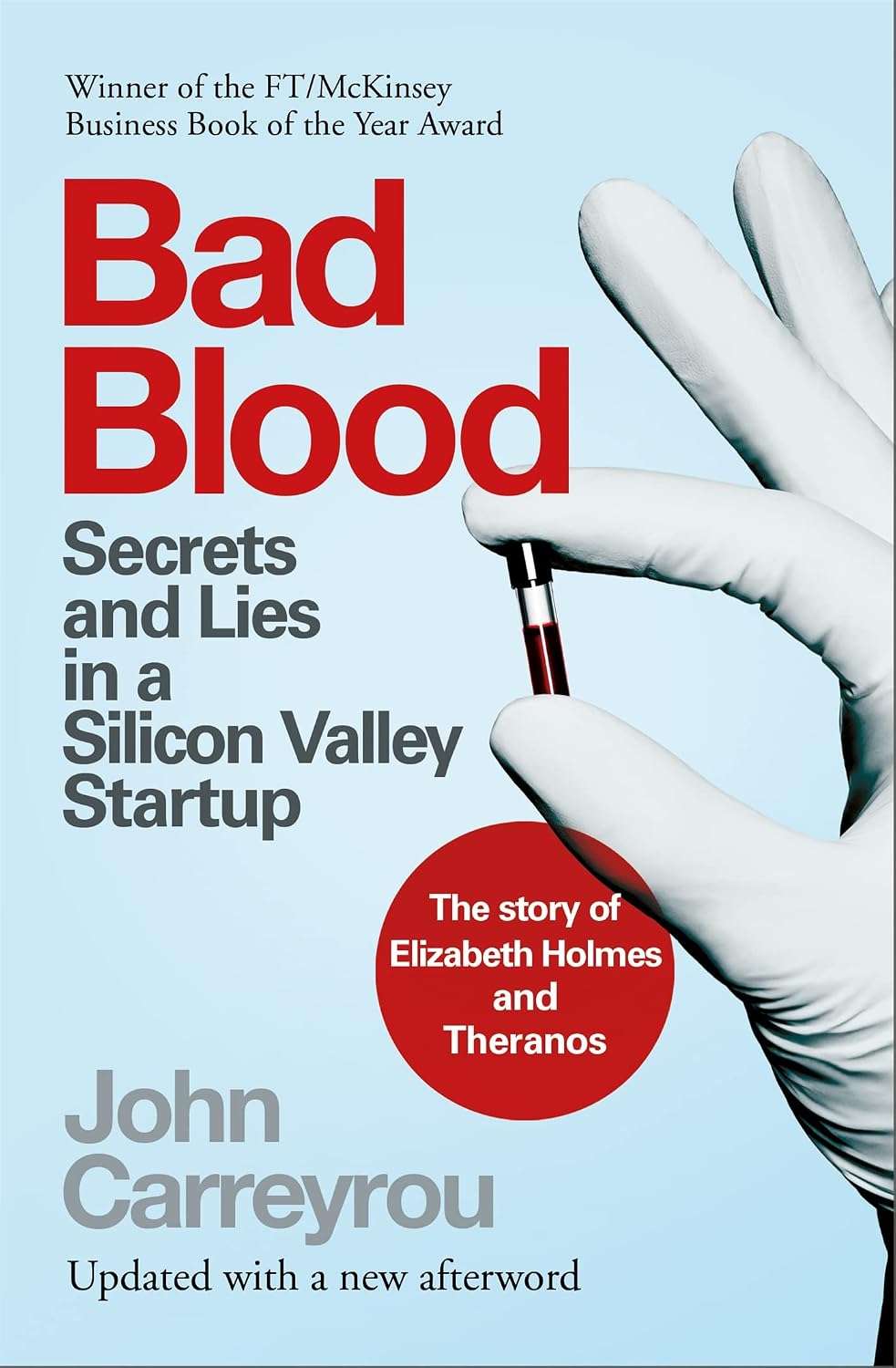
Bad Blood: Secrets and Lies in a Silicon Valley Startup by John Carreyrou
Bad Blood is a gripping investigative nonfiction book that exposes the dramatic rise and fall of Theranos, a Silicon Valley startup once valued at $9 billion. Rather than telling a story of innovation and success, the book reveals how ambition, secrecy, and deception created one of the biggest corporate scandals in modern business history.
The central idea of Bad Blood is that unchecked ambition combined with a lack of transparency can lead to systemic fraud. Success in business does not come from vision alone — it requires ethical leadership, scientific integrity, and accountability.
The Dream of Revolutionary Innovation
The story begins with Elizabeth Holmes, a Stanford dropout who founded Theranos with the promise of transforming healthcare. She claimed the company had developed a device capable of running hundreds of medical tests using only a few drops of blood from a finger prick.
Investors, politicians, and media outlets embraced the vision. Holmes was portrayed as a visionary entrepreneur, often compared to Steve Jobs. Theranos attracted high-profile board members and hundreds of millions of dollars in investment.
Rather than searching for steady scientific validation, the company focused on growth, valuation, and image.
Secrecy and Corporate Culture
One of the earliest lessons in Bad Blood is how dangerous a culture of secrecy can become. Inside Theranos:
- Departments were isolated from each other
- Employees were discouraged from asking questions
- Legal threats silenced internal concerns
Many scientists and engineers quickly realized that the technology did not work reliably. Yet leadership continued to promote it publicly.
The book shows how fear-based management and strict confidentiality agreements prevented transparency. Instead of solving technical problems, the company prioritized protecting its reputation.
The Role of Whistleblowers
A major turning point in the story involves courageous former employees who chose to speak out. Despite legal intimidation, several insiders reported that inaccurate blood test results could endanger patients.
Their willingness to risk careers and lawsuits demonstrates that ethical responsibility sometimes requires personal sacrifice.
Rather than ignoring red flags, these individuals chose accountability over silence.
Investigative Journalism and Truth
The book highlights the investigative work of John Carreyrou while he was reporting for The Wall Street Journal. Through months of interviews, documentation review, and source verification, he uncovered evidence that Theranos was using traditional lab machines while claiming proprietary innovation.
In 2015, his published reports triggered regulatory scrutiny and national attention.
Bad Blood demonstrates that journalism plays a critical role in maintaining transparency within powerful industries.
Collapse and Consequences
After public exposure, government agencies including the U.S. Food and Drug Administration and the Centers for Medicare & Medicaid Services investigated Theranos. The findings confirmed serious deficiencies in its testing processes.
The company dissolved in 2018. Elizabeth Holmes and former executive Sunny Balwani faced criminal fraud charges, marking a dramatic end to what was once considered a revolutionary enterprise.
Ethics in Modern Startup Culture
Bad Blood goes beyond one company’s failure. It explores broader themes in Silicon Valley culture:
- The danger of valuing hype over evidence
- Investor pressure to scale quickly
- The myth of “fake it till you make it” in science-based industries
- The responsibility leaders hold when public health is involved
Unlike fictional thrillers, this story unfolds through documented facts — which makes it even more compelling.
Handling Ambition and Accountability
No startup is free from risk. However, Bad Blood explains that risk must be managed with transparency. Problems arise not from failure itself, but from covering up failure.
The book teaches that:
- Integrity is non-negotiable in healthcare
- Leadership requires honesty under pressure
- Sustainable success depends on truth
When companies prioritize image over accuracy, collapse becomes inevitable.
Who Should Read This Book
This book is ideal for:
- Entrepreneurs and startup founders
- Business and MBA students
- Readers interested in corporate ethics
- Followers of Silicon Valley history
- Fans of investigative journalism
It also appeals to anyone curious about how large-scale fraud can develop inside respected institutions.
Lasting Impact
After its publication in 2018, Bad Blood became a bestseller and reshaped conversations about startup accountability. It influenced how investors evaluate health-tech companies and increased public awareness of corporate governance risks.
Rather than celebrating disruption at any cost, Bad Blood reminds readers that innovation without integrity can cause real harm.
Ultimately, the book teaches that long-term credibility grows from transparency, ethical leadership, and consistent truth — not from inflated promises.
Book Lounge (Sri Lanka) purchase page:
https://booklounge.lk/bad-blood-by-john-carreyrou/ — This page lets order the paperback edition of Bad Blood right in Sri Lanka.
Wikipedia article for the book:
https://en.wikipedia.org/wiki/Bad_Blood%3A_Secrets_and_Lies_in_a_Silicon_Valley_Startup — This is the official Wikipedia entry summarizing the book’s publication, subject (the Theranos scandal), and reception
Here are the details about the author of Bad Blood: Secrets and Lies in a Silicon Valley Startup:
About the Author — John Carreyrou
John Carreyrou is a French‑American investigative journalist and author best known for exposing the fraudulent practices of Theranos — one of the biggest corporate scandals in recent history. He has won multiple major journalism awards and continues to report on corporate and financial issues.
Key facts about John Carreyrou:
- Nationality: French‑American journalist
- Education: Graduated from Duke University with a B.A. in political science and government.
- Career:
- Spent about 20 years as an investigative reporter at The Wall Street Journal, based in Brussels, Paris, and New York.
- In 2023, he joined The New York Times as part of its business investigations team.
- Major Investigation:
- Carreyrou’s reporting in 2015 began uncovering the false claims surrounding Theranos’s blood‑testing technology. His work ultimately led to regulatory scrutiny and the company’s collapse
- Awards:
- Two Pulitzer Prizes (one for explanatory reporting and one for investigative reporting)George Polk Award for Financial ReportingGerald Loeb Award for Distinguished Business and Financial Journalism.Barlett & Steele Silver Award for Investigative Business Journalism.
- His book Bad Blood was named the Financial Times and McKinsey Business Book of the Year.
- Personal Life:
- Carreyrou lives in Brooklyn, New York with his wife, Molly Schuetz, and their three children.
- Other Work:
- In addition to Bad Blood, he has produced investigative reporting on healthcare, corporate scandals, and Medicare abuses.



Reviews
There are no reviews yet.