








Description
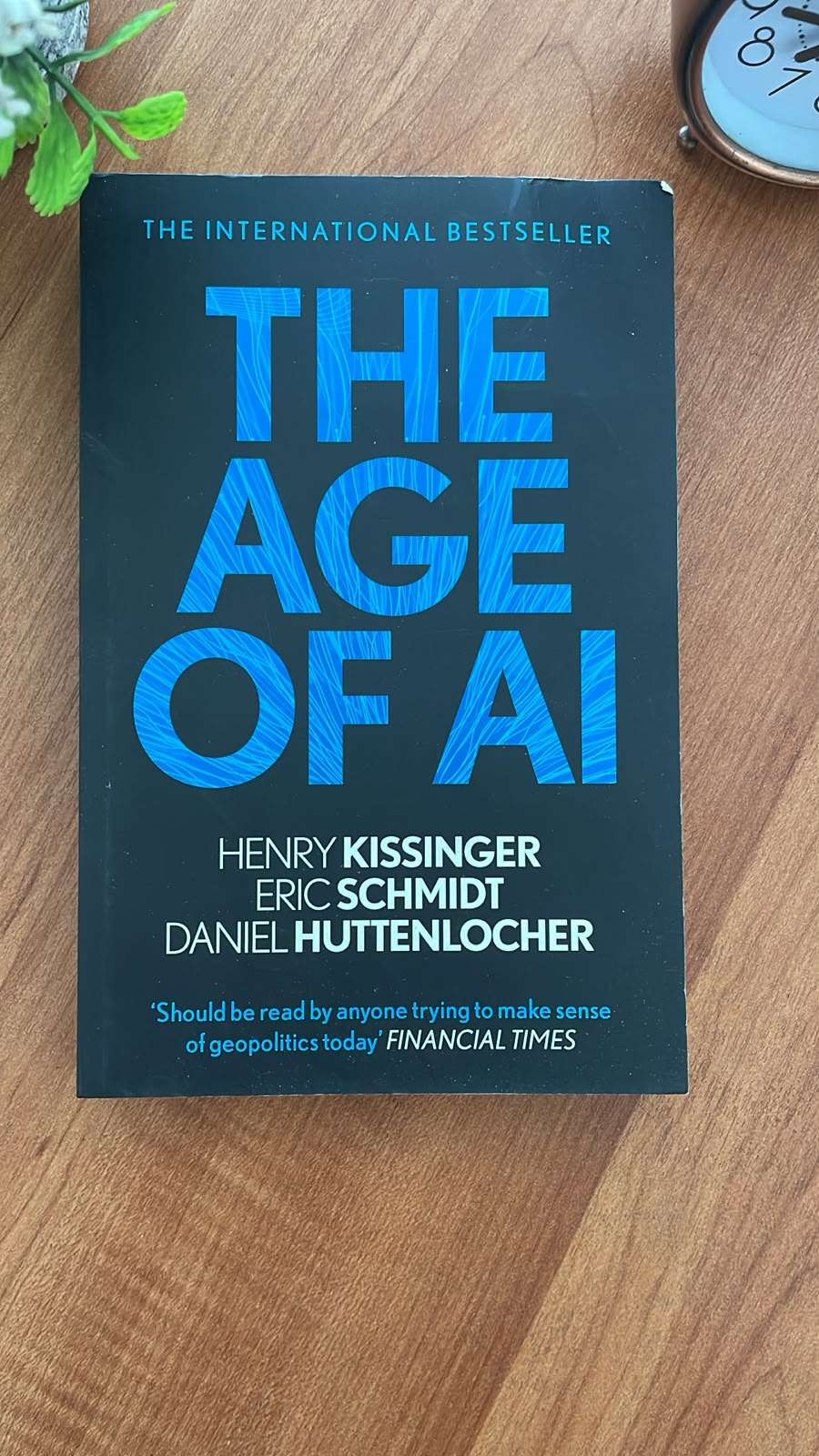
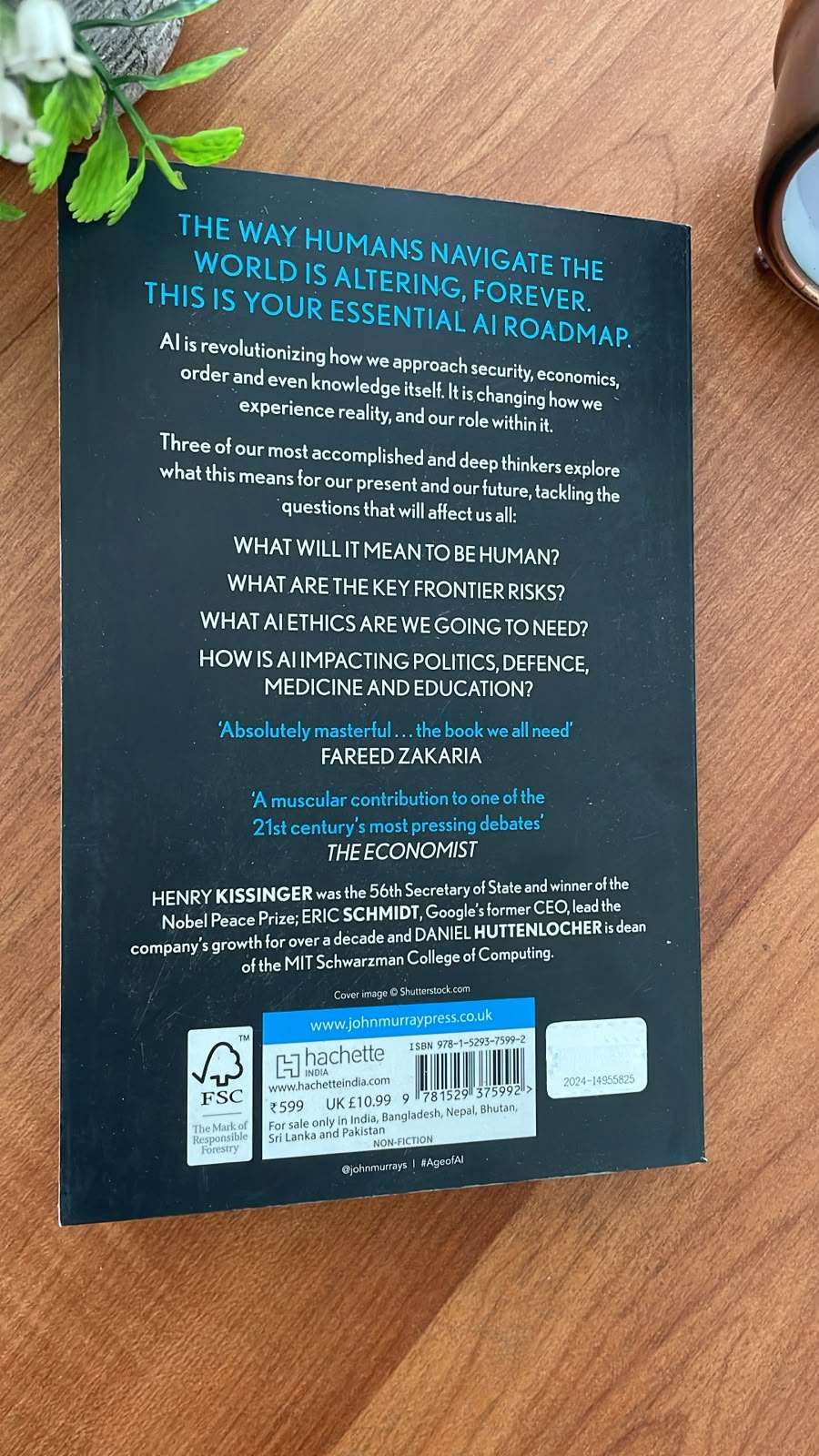
The Age of AI by Henry A. Kissinger is a thought-provoking non-fiction book about the rapid development of artificial intelligence and the way it is changing knowledge, politics, security, science, communication, and everyday life. Written with Eric Schmidt and Daniel Huttenlocher, the book combines experience from international affairs, technology leadership, and computer science. Instead of treating AI only as a technical subject, the authors examine what it may mean for human identity, responsibility, decision-making, and the future of society.
The full title is The Age of AI: And Our Human Future. The book explains that intelligent machines can discover patterns, generate recommendations, and reach conclusions that people may not fully understand. This creates major opportunities, but it also raises serious questions. Who should be responsible when AI influences medicine, education, business, public policy, or national security? How should society respond when machines produce valuable knowledge through methods humans cannot easily explain?
Why Read The Age of AI by Henry A. Kissinger?
The Age of AI by Henry A. Kissinger looks beyond software and algorithms. The authors discuss artificial intelligence as a force capable of changing how people understand reality. Earlier technologies often helped humans complete familiar tasks more efficiently. AI is different because it can identify relationships, create solutions, and influence decisions in ways that may not follow ordinary human reasoning.
The book considers how AI may transform many areas of life. In science, it can help researchers examine large amounts of information and identify possibilities that might otherwise remain hidden. In healthcare, it may support diagnosis and the discovery of treatments. In communication, AI systems can create text, images, and recommendations at great speed. In national security, however, similar capabilities may affect surveillance, cyber conflict, autonomous weapons, and competition between countries.
By examining both benefits and risks, the authors encourage readers to think carefully rather than responding with simple excitement or fear. Their main concern is that AI is advancing faster than the political, ethical, and philosophical systems needed to guide it. Human beings must therefore develop new rules, institutions, and ideas about responsibility before AI becomes even more deeply connected to society.
Artificial Intelligence and Human Knowledge
One of the book’s strongest themes is the relationship between AI and knowledge. People traditionally learn by observing, reasoning, comparing evidence, and explaining how they reached a conclusion. Many AI systems work differently. They can analyse enormous quantities of data and produce useful results without providing an explanation that ordinary users can easily follow.
This creates a difficult situation. A machine may provide a valuable answer, but people may not understand why that answer is correct. The Age of AI by Henry A. Kissinger asks how individuals, governments, and institutions should act when they depend on systems that are powerful but not fully transparent. It also asks whether access to information is the same as genuine understanding and whether human judgement can remain central in an increasingly automated world.
AI, Politics and Global Security
The book explores the political consequences of artificial intelligence. Nations that develop advanced AI may gain economic, scientific, and military advantages. Unlike many traditional technologies, AI can spread quickly, improve continuously, and operate across borders through digital networks.
Henry Kissinger’s background in diplomacy and international relations gives this discussion a historical perspective. The authors argue that leaders must understand both the possibilities and dangers of intelligent systems. Cooperation, regulation, strategic planning, and international dialogue will be necessary if societies want to benefit from AI while reducing the risks of conflict, manipulation, and loss of control.
Technology, Ethics and Human Responsibility
As artificial intelligence becomes more powerful, questions about ethics and responsibility become increasingly important. An AI system may recommend a decision, but people must still decide whether that recommendation is fair, safe, and appropriate. The book encourages governments, businesses, universities, and individuals to consider the values that should guide the development and use of intelligent machines.
The authors also examine what may happen when people become dependent on AI for information and decision-making. Intelligent systems may provide speed and efficiency, but human judgement, empathy, experience, and moral responsibility remain essential. The challenge is not simply to create more powerful technology. It is to ensure that technology continues to serve human purposes.
Who Should Read This Book?
This book is suitable for students, business leaders, policymakers, technology professionals, educators, researchers, and general readers interested in the future. It is especially valuable for people who want to understand artificial intelligence without reading a highly technical programming guide. The writing focuses on the social, political, ethical, and philosophical meaning of AI rather than teaching readers how to build software.
Readers interested in technology, international relations, digital transformation, global security, leadership, innovation, and future studies will find many important ideas in this book. It may also help university students and professionals understand how AI could influence their industries, careers, and communities.
About Henry A. Kissinger
Henry A. Kissinger was a historian, diplomat, author, and influential thinker on international relations. He served as the United States National Security Advisor and later as Secretary of State. His work focused on diplomacy, global power, strategy, history, and international security. In The Age of AI, Kissinger brings a historical and political perspective to the development of artificial intelligence.
His contribution helps readers compare the emergence of AI with earlier technological changes that transformed international relations. The book considers how governments and leaders may need to respond when intelligent machines influence economic competition, military strategy, diplomacy, and political decision-making.
About Eric Schmidt and Daniel Huttenlocher
Eric Schmidt is a technologist, entrepreneur, and philanthropist who helped Google develop from a growing technology company into a global leader. His experience provides valuable insight into digital innovation, large-scale technology systems, business leadership, and the influence of technology companies on society.
Daniel Huttenlocher is a computer scientist and the inaugural dean of the MIT Schwarzman College of Computing. He has experience in academic research, technology, and industry. His contribution connects the book’s political and philosophical discussions with the practical development of computer science and artificial intelligence.
Together, Henry Kissinger, Eric Schmidt, and Daniel Huttenlocher provide political, technological, academic, and historical perspectives. This combination makes the book accessible to readers from many different backgrounds.
Why Buy from Book Lounge Sri Lanka?
Book Lounge is an online bookstore serving readers across Sri Lanka. Customers can explore fiction, non-fiction, biographies, children’s books, bestsellers, and many other titles. Book Lounge offers convenient online ordering and islandwide delivery.
Customers can pay using Visa, MasterCard, Cash on Delivery, MintPay, KOKO, and Payzy. Free delivery is available on qualifying orders above Rs. 5,000, making it easier to order several books together.
Readers looking for similar books can browse the Book Lounge Non-Fiction collection or visit the Best-Selling Books section. Customers who need help with an order, availability, or recommendation can use the Book Lounge contact page.
Buy The Age of AI Online in Sri Lanka
Buy The Age of AI by Henry A. Kissinger online in Sri Lanka from Book Lounge and explore an important discussion about technology and humanity’s future. The book offers a wide-ranging examination of how intelligent machines may reshape knowledge, politics, security, science, communication, and human decision-making.
For verified information about the title and authors, visit the official publisher page for The Age of AI. Order your copy from Book Lounge and develop a deeper understanding of the opportunities, responsibilities, and challenges created by artificial intelligence.
The Age of AI by Henry A. Kissinger, Eric Schmidt, and Daniel Huttenlocher is an insightful non-fiction book exploring how artificial intelligence is changing knowledge, politics, security, science, and human society. Combining perspectives from diplomacy, technology leadership, and computer science, the authors examine both the opportunities and dangers created by intelligent machines. This book is suitable for students, business leaders, technology professionals, policymakers, educators, and readers interested in AI and humanity’s future. Buy The Age of AI online in Sri Lanka from Book Lounge with convenient payment options and islandwide delivery.





Reviews
There are no reviews yet.