






Description
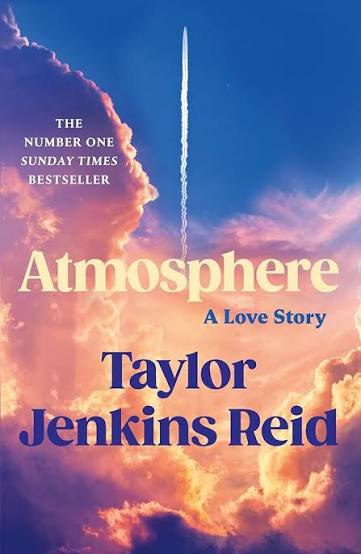
Atmosphere by Taylor Jenkins Reid
Atmosphere by Taylor Jenkins Reid is a sweeping historical novel about ambition, courage, forbidden love and the remarkable people who dare to reach beyond the limits placed upon them. Set during the early years of NASA’s Space Shuttle era, the story combines the excitement of astronaut training with an intimate exploration of identity, family, sacrifice and human connection. It is an emotionally rich novel for readers who enjoy character-driven historical fiction, powerful romance and stories about women entering spaces from which they were once excluded.
In the summer of 1980, Joan Goodwin is a thoughtful and reserved professor of physics and astronomy at Rice University. From an early age, she has been fascinated by the stars and the mysteries of the universe. Her academic career gives her the opportunity to study the subjects she loves, while much of her personal life revolves around her family, particularly her beloved niece, Frances. Joan’s world is stable and familiar, but a new opportunity soon invites her to imagine a life beyond everything she has previously known.
When Joan learns that NASA is looking for scientists to join the Space Shuttle programme, she applies for the chance to become an astronaut. Thousands of talented people want the same opportunity, making the selection process intensely competitive. Against the odds, Joan earns a place among a new group of astronaut candidates and begins training at Houston’s Johnson Space Center. The decision takes her from the relative calm of university life into an environment defined by pressure, competition, danger and extraordinary possibility.
Joan trains alongside a memorable group of candidates, including Hank Redmond, John Griffin, Lydia Danes, Donna Fitzgerald and Vanessa Ford. Each person arrives with different abilities, ambitions and private struggles. At first, they may appear to be rivals competing for limited opportunities, but the demanding nature of their work gradually brings them together. Their shared experiences create a powerful sense of friendship and found family, demonstrating how trust can form between people who must depend on one another in the most challenging circumstances.
The astronaut candidates face rigorous physical preparation, complex technical exercises and constant evaluation. They must learn how to respond calmly when plans fail, equipment behaves unexpectedly or an ordinary decision suddenly carries enormous consequences. Taylor Jenkins Reid uses this demanding setting to examine what courage really means. Courage is not presented as the absence of fear, but as the willingness to act responsibly even when fear, doubt and uncertainty are impossible to ignore.
Joan must also navigate the expectations placed upon women working in a field traditionally dominated by men. Her intelligence and qualifications do not protect her from prejudice, unequal standards or assumptions about what a woman should want from her life. She must continually prove that her ambition is neither selfish nor unreasonable. Through Joan’s experiences, the novel explores the determination required to pursue a calling when institutions and social conventions have not yet made room for someone like her.
At the same time, Joan discovers an unexpected and transformative love. This relationship awakens emotions she has kept carefully controlled and encourages her to understand herself more honestly. However, love in the early 1980s is complicated by secrecy, professional expectations and the fear of being judged. Joan must consider how much of herself she is willing to reveal and what she might risk by choosing a life that feels authentic. The romance is therefore connected to the novel’s broader questions about freedom, belonging and the courage to be fully known.
Family remains another important part of Joan’s journey. Her devotion to Frances and her responsibilities at home do not disappear simply because NASA offers her a new future. Joan is forced to consider whether personal ambition can coexist with loyalty to the people she loves. Rather than presenting career and family as a simple choice, the story explores the emotional compromises, misunderstandings and acts of care that shape both. This gives the novel a deeply human foundation beneath the scale and spectacle of the space programme.
The story builds toward a critical moment in December 1984, when the fictional Space Shuttle mission STS-LR9 encounters a devastating crisis. Years of preparation, friendship and difficult decisions converge as those involved must respond to a situation with life-changing consequences. The mission brings urgency and suspense to the novel without turning it into conventional science fiction. The danger feels immediate because readers have come to understand what the programme, the mission and the people involved mean to Joan.
Atmosphere is especially compelling in the way it contrasts the vastness of space with the private emotional lives of its characters. Space represents wonder, possibility and discovery, but it also exposes human vulnerability. The title evokes both the physical boundary surrounding Earth and the emotional environments that allow people to survive. Love, friendship and trust become forms of protection—an atmosphere of their own—in a world where isolation can be as dangerous as any technical failure.
Taylor Jenkins Reid also explores how history remembers achievement. Public attention often focuses on the person who enters the spacecraft or appears in the official photograph, while countless others contribute through research, training, planning and support. The novel recognises these interconnected efforts and asks readers to think about whose stories are celebrated, whose are overlooked and how social attitudes determine who is permitted to become a symbol of progress.
Although its NASA setting will appeal to readers interested in astronauts, aviation and the history of space exploration, Atmosphere is primarily a character-led work of historical fiction and romance. It does not require specialist scientific knowledge. The technical environment supports a story about people: what they dream about, what they hide, whom they love and what they are prepared to sacrifice for a meaningful life.
Readers who enjoyed The Seven Husbands of Evelyn Hugo, Daisy Jones & The Six, Malibu Rising or Carrie Soto Is Back will recognise Taylor Jenkins Reid’s gift for creating ambitious women whose public accomplishments are inseparable from their private choices. The novel may also appeal to readers drawn to women-in-STEM stories, LGBTQ+ historical fiction, emotional book-club selections and novels about individuals challenging the expectations of their time.
Atmosphere by Taylor Jenkins Reid is an absorbing story about looking upward while learning to live honestly on Earth. Through Joan’s journey, the novel celebrates intellectual curiosity, personal bravery, chosen family and a love powerful enough to alter the course of a life. Moving, suspenseful and filled with wonder, it reminds readers that some of humanity’s greatest journeys begin with the courage to imagine a different future.





Reviews
There are no reviews yet.