


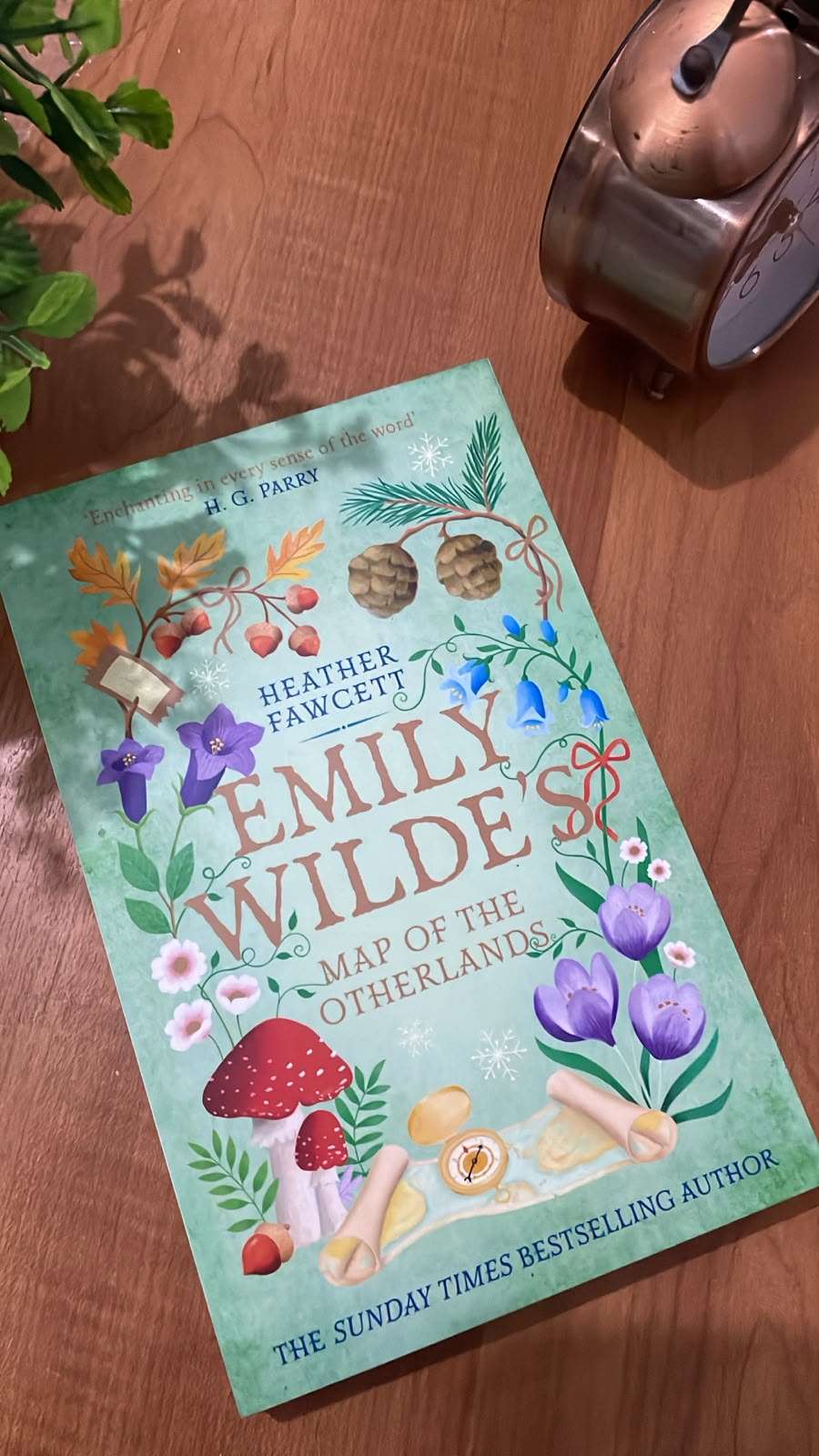






Description
A Practical Guide to Understanding Emily Wilde’s Map of the Otherlands
by Heather Fawcett — A character‑driven fantasy adventure about knowledge, courage, and emotional growth in a world where myth and reality collide.
Instead of delivering a simple magical quest story, Emily Wilde’s Map of the Otherlands treats fantasy as a lens for intellectual curiosity, resilience, and personal transformation. The central idea of the novel is that true exploration — of the world and oneself — requires dedication, humility, and emotional insight.
Rather than chasing legend for fame, protagonists learn how to confront uncertainty and vulnerability with integrity and intelligence.
Story Beginnings — Curiosity Before Heroism
One of the earliest lessons in Emily Wilde’s Map of the Otherlands is about purposeful curiosity. Many fantasy books start with danger or prophecy — here, the journey begins with questions and scholarship.
Emily Wilde is a Cambridge professor of faerie studies whose expertise comes from discipline, meticulous research, and earnest fascination with the unknown. She doesn’t start as a typical warrior or chosen one — she brings knowledge to the adventure.
Fawcett illustrates that before conquering realms, characters must understand why they seek them. Emily’s inner motivations — empathy, academic passion, and vulnerability — shape her journey through magical lands instead of mere destiny.
The Emotional Architecture — What the Story Teaches
1. Understanding Self Beyond Titles
Emily’s quest begins not as a fairy queen or powerful mage, but as a scholar. She learns that expertise doesn’t guarantee wisdom unless accompanied by humility, self‑reflection, and openness to change. Her intellectual confidence becomes a strength only when it is balanced with emotional receptivity.
Readers learn how to:
- Recognize personal limits and biases
- Separate ego from purpose
- Build resilience through self‑awareness
Because the narrative follows Emily’s internal and external explorations, the growth feels grounded rather than fantastical.
2. Navigating Relationship with Otherworldly and Human Allies
A major strength of Emily Wilde’s Map of the Otherlands is its focus on relationships built through respect and authentic communication. Emily’s partnership with Wendell — a displaced faerie king — illustrates how connection forms through shared intent, honesty, and vulnerability rather than magical instinct or mythic fate.
Fawcett encourages listening to understand, not fix or dominate. Emily adapts her academic rigor to emotional complexity by acknowledging Wendell’s experiences and his fractured identity.
Readers discover that trust isn’t automatic — it grows from consistency and reciprocity.
3. Handling Conflict and Uncertainty
No journey — magical or personal — is free from danger or misunderstanding. The book explains that disagreements and obstacles are integral to transformation. The true challenge isn’t avoiding conflict; it’s confronting it with reasoned patience and ethical clarity.
Emily often pauses before reacting, reframing challenges as puzzles rather than threat signals. This approach transforms conflict into opportunities for discovery — both of Self and Other.
4. Magic in the Modern World of Ideas and Feelings
While set in a world involving portals and faerie realms, the narrative remains keenly tuned to psychological realism. Modern readers will find the fantasy relevant because the book doesn’t romanticize magic — it examines its consequences, costs, and contradictions.
Comparison between human and faerie worlds serves as a metaphor for:
- emotional complexity
- cultural misunderstanding
- the humility of learning
Because of this perspective, the story feels deeply relevant for anyone navigating complex personal relationships or intellectual challenges.
Growth Through Commitment — Internal and External
Beyond lore and encounters, the novel explores enduring elements like commitment, courage, and ethical action:
- Commitment to truth even when it hurts
- Commitment to others even when they are flawed
- Self‑commitment to integrate emotion and intellect
Magic here isn’t a shortcut — it’s a mirror that reflects the effort needed to evolve. Emily learns that effort isn’t proof of weakness — it is proof of care.
Who Should Read This Book
This novel resonates with readers who enjoy:
- Fantasy grounded in character psychology and folklore
- Protagonists who grow through intellectual curiosity and emotional insight
- Stories where relationships are as important as quests
- Narratives that blend academic inquiry with adventure
It appeals to:
• Fantasy lovers who want depth and heart
• Readers interested in emotional growth parallels
• Adults and young adults seeking intelligent worldbuilding
• Those who enjoy slow‑burn romance and layered motivation
The lessons apply well beyond the Otherlands — to real quests for understanding boundaries, values, and human connection.
Lasting Impact
After reading Emily Wilde’s Map of the Otherlands, many readers feel inspired about questions like:
- What does it take to truly know another world — or another person?
- How does curiosity become courage?
- Why is vulnerability necessary for wisdom?
Instead of telling readers that magic simply exists, the book shows that magic — like healthy relationships — grows from awareness, patience, and honest effort.
Ultimately, Fawcett teaches that lasting transformation isn’t about destiny — it’s about choosing to persist even after uncertainty, hurt, and risk.
Here are the two links you asked for:
BookLounge (Sri Lanka) Listing
Emily Wilde’s Map of the Otherlands by Heather Fawcett — BookLounge
https://booklounge.lk/product-category/fiction/page/4/
Wiki/Reference Link https://emilywilde.fandom.com/wiki/Emily_Wilde_Wiki (emilywilde.fandom.com)
Author Overview — Heather Fawcett
Heather Fawcett is a Canadian author best known for Emily Wilde’s Map of the Otherlands and the rest of the Emily Wilde series.
- She is a New York Times, USA Today, and Sunday Times bestselling writer whose books span adult fantasy, young adult, and middle grade genres.
- Her body of work includes not just the Emily Wilde fantasy series but also other novels such as Ember and the Ice Dragons, The Grace of Wild Things, and the Even the Darkest Stars series.
- Fawcett holds a Master’s degree in English Literature and a Bachelor’s degree in Archaeology, academic backgrounds that often inform the richly researched and folkloric elements in her fantasy writing
- Before becoming a full‑time author she worked in various fields including archaeology, photography, and technical writing
- She currently lives on Vancouver Island, Canada, where she continues to write and publish.
Her novels frequently feature mythical creatures like faeries and dragons, and her storytelling often blends folklore, academic curiosity, romance, and adventure





Reviews
There are no reviews yet.