







Description
A Practical Guide to Understanding Emotional Intelligence
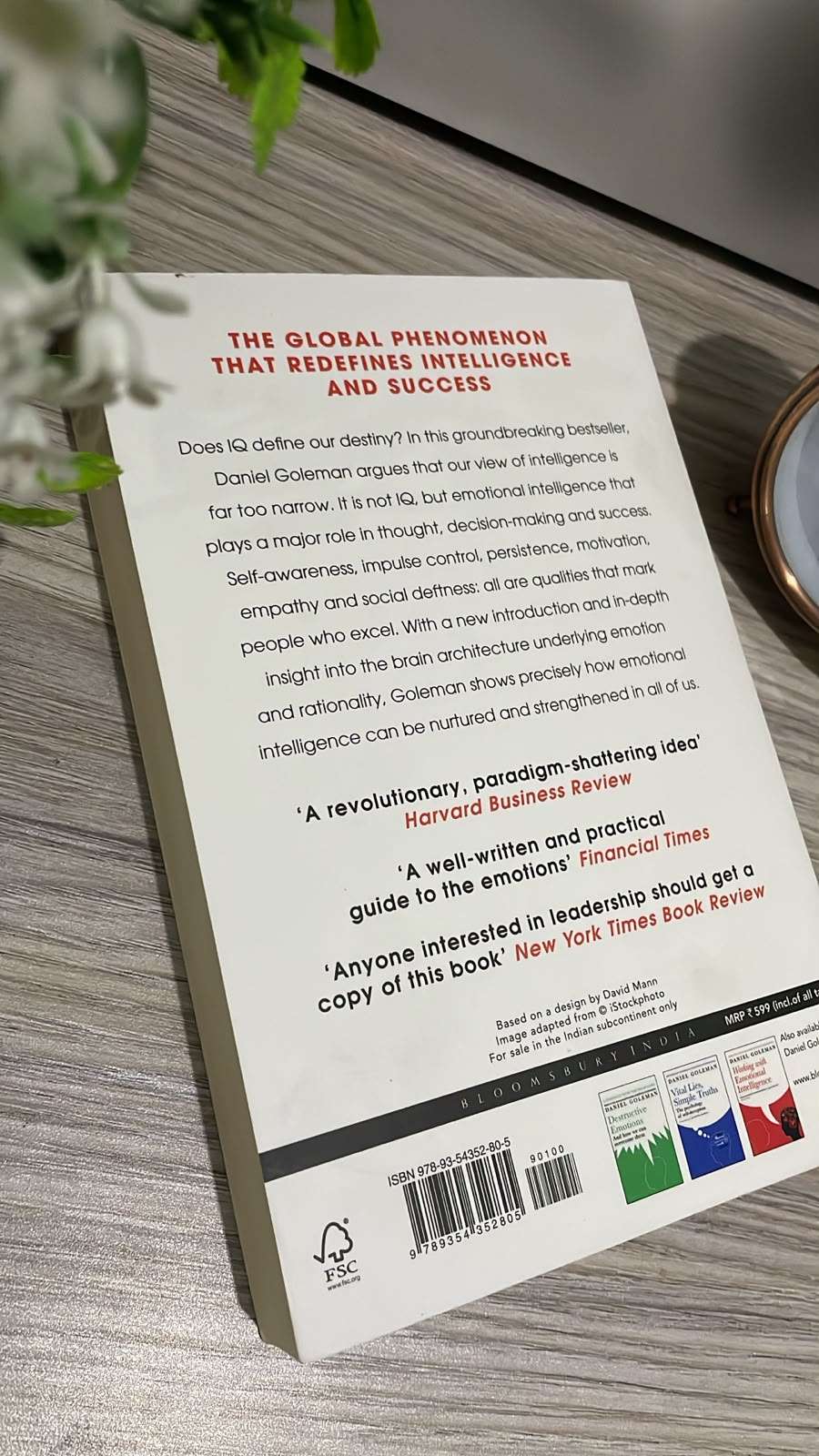
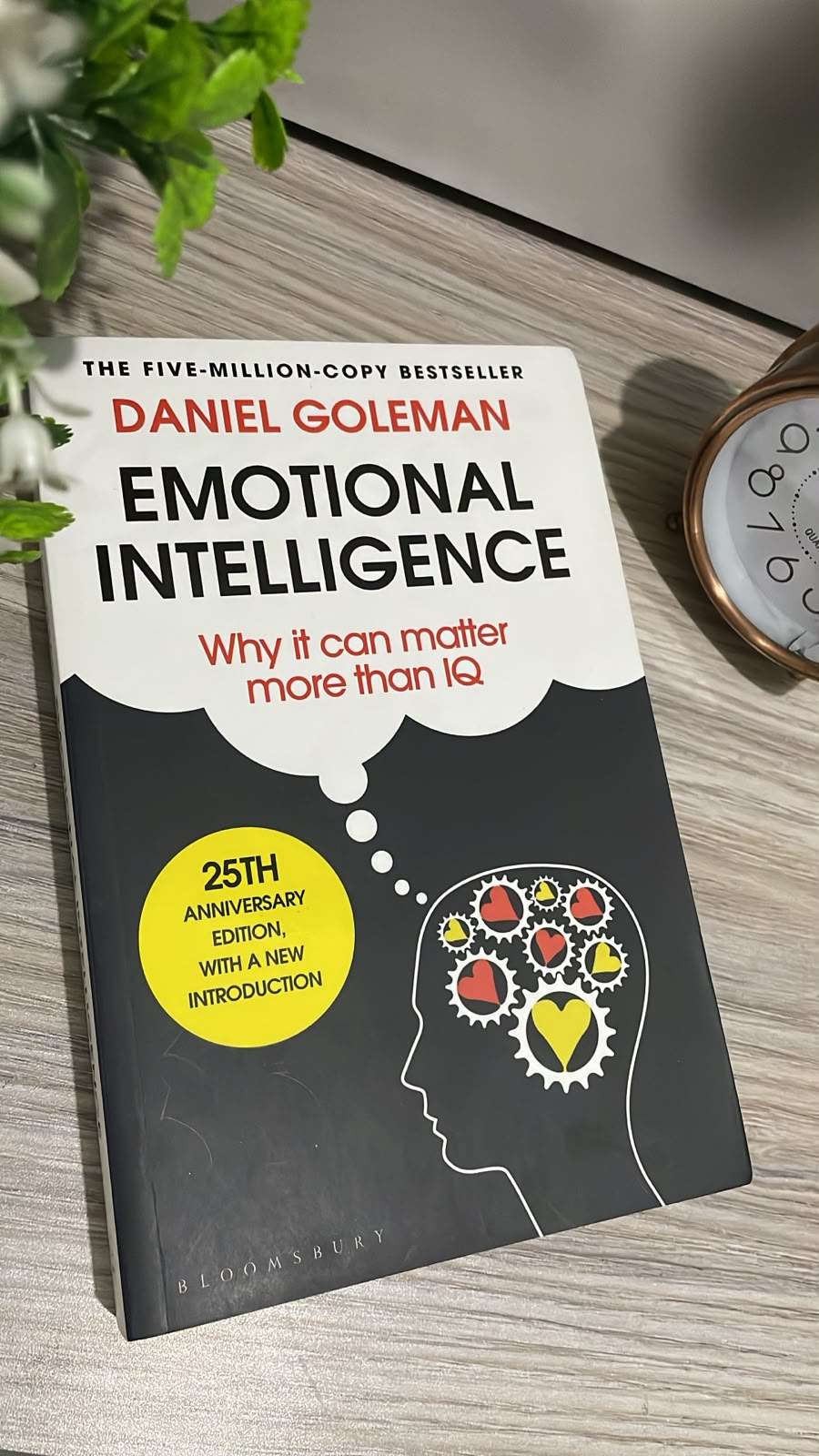
by Daniel Goleman — A foundational psychology and personal‑development book that explains how emotional awareness and skills shape success, relationships, and well‑being.
Instead of treating intelligence as only academic ability or IQ, Emotional Intelligence argues that understanding and managing emotions is a learned skill that strongly influences life outcomes in careers, relationships, and personal fulfilment
Goleman presents emotional intelligence (EQ) as a framework of competencies that can be cultivated intentionally — not fixed at birth — and shows that people with high EQ often navigate social life and challenges more effectively than those who rely on logic alone.
Understanding Emotional Intelligence
One of the earliest and most influential lessons in Emotional Intelligence is that emotions are not separate from intelligence — they are part of it. Goleman suggests that being smart in life is more than memorising facts or solving analytical problems; it’s about recognising emotions in yourself and others, and using that insight to guide actions.
When people lack emotional awareness, they may react impulsively, misinterpret social cues, or struggle to build meaningful connections. Goleman explains that emotional literacy — the ability to name and manage feelings — underpins resilience, leadership, and healthy relationships.
The Five Core Components Explained
Goleman organizes his model of emotional intelligence into five interrelated competencies, each serving a distinct purpose:
1. Self‑Awareness
This is the foundation of emotional intelligence: recognising your own emotions, strengths, and limitations. Self‑aware people understand how their feelings influence decisions and behaviour, which improves clarity and reduces impulsivity.
2. Self‑Regulation
Seeing emotions clearly isn’t enough — Goleman states that effective emotional intelligence means managing reactions constructively. Self‑regulation involves pausing before responding, adapting to change, and not being ruled by mood swings or stress.
3. Motivation
Goleman distinguishes emotional motivation from external incentives: internal drive — passion, purpose, persistence — is vital. People with strong EQ pursue goals with optimism and resilience, even in setbacks.
4. Empathy
Understanding others’ emotions is central to communication and connection. Empathy allows individuals to perceive social cues, show compassion, and respond appropriately in relationships.
5. Social Skills
EQ culminates in how well people connect and collaborate. Social skills help in managing relationships, negotiating conflict, persuading others, and fostering teamwork.
Because of this structure, Goleman’s model feels practical rather than theoretical: each component builds on the last and reflects real‑world emotional navigation.
Emotional Intelligence in Daily Life and Growth
A major strength of Goleman’s work is how broadly it applies. Many personal and professional conflicts arise not from differing opinions, but from misunderstood feelings or unmanaged emotional reactions. Goleman encourages readers to observe emotions before acting and to communicate with empathy rather than assumption.
This approach turns emotional challenges into learning opportunities. Instead of seeing emotions as obstacles to rational thinking, the book reframes them as valuable information that guides effective decisions and authentic interactions.
Handling Conflict and Social Stressors
Conflict is normal — what matters is how it’s managed. Goleman explains that:
- Failing to recognise one’s emotional triggers can escalate disagreements.
- Responding without awareness often leads to blame or withdrawal.
- Emotionally intelligent people pause before reacting and seek understanding rather than dominance.
Through these strategies, conflicts become chances to strengthen trust and collaboration.
Emotional Intelligence in Contemporary Life
Goleman’s book has become especially relevant in today’s fast‑paced, high‑pressure environments. He suggests that EQ predicts success in leadership, career advancement, and personal relationships often more than IQ.
In education and workplaces, emotional intelligence training helps individuals navigate stress, communicate effectively, and build cooperative teams. Goleman also argues that emotional competencies can be taught and improved through practice — making EQ both accessible and impactful.
Long‑Term Impact and Commitment
Beyond short‑term interactions, the book explores the long‑term value of emotional balance:
- Emotionally intelligent people are better at managing stress over time.
- They build deeper, more satisfying relationships.
- They create environments — at home and work — that foster trust and resilience.
Healthy emotional life requires attention, just like physical health or intellectual growth. Daily reflection, empathy, and conscious regulation strengthen EQ over a lifetime.
Who Should Read This Book
This book is ideal for:
- Anyone seeking personal growth or self‑understanding
- Leaders and professionals aiming to improve interpersonal effectiveness
- People interested in improving relationships and communication
- Educators and parents focused on emotional development
- Readers curious about how emotions shape success and well‑being
The lessons apply not only to romantic relationships but also to friendships, family dynamics, leadership, and team environments.
Lasting Impact
After reading Emotional Intelligence, many readers come away with a deeper understanding that emotions are not hindrances to intelligence, but integral parts of it. Instead of viewing feelings as irrational impulses, Goleman teaches that emotional awareness and skillful management are keys to deeper connections, effective leadership, and fulfilling life goals.
Ultimately, the book shows that lasting personal and professional growth comes from understanding the emotional life within us and between us.
Here are the official BookLounge and Wikipedia links for Emotional Intelligence by Daniel Goleman:
BookLounge (Sri Lanka) Link
You can view and purchase the book on BookLounge’s Sri Lanka site here:
https://booklounge.lk/emotional-intelligence-by-daniel-goleman/ (booklounge.lk)
Wikipedia Link
The main Wikipedia page for the original book is:
https://en.wikipedia.org/wiki/Emotional_Intelligence (en.wikipedia.org)





Reviews
There are no reviews yet.