


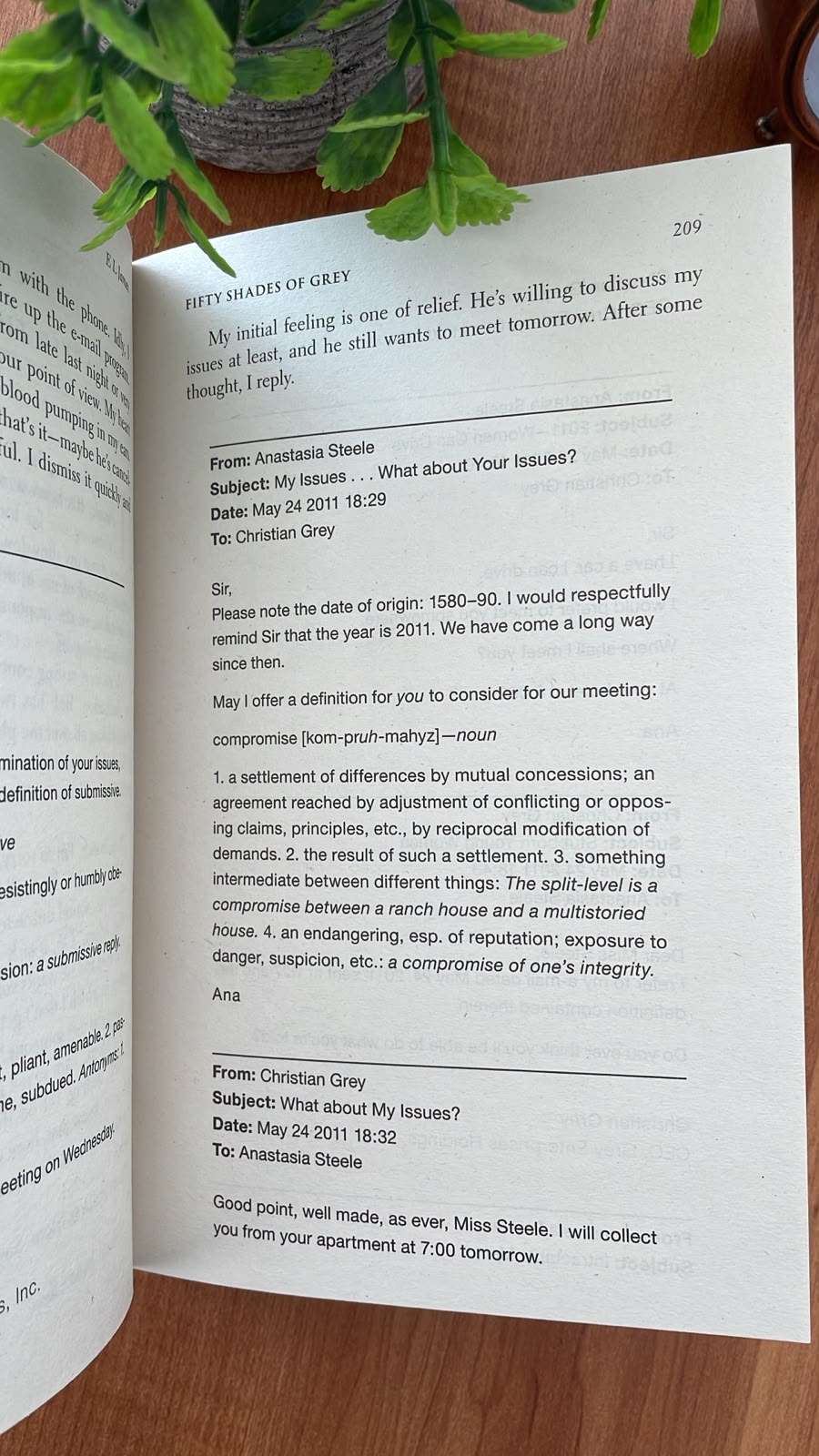








Description
A Practical Guide to Understanding Fifty Shades of Grey
by E. L. James — A contemporary romantic‑erotic novel that centers on the intense and unconventional relationship between two very different people. Instead of portraying a typical love story, the book explores power, intimacy, and emotional vulnerability within a complex relationship dynamic.
The central idea of Fifty Shades of Grey is not simply a romance, but an exploration of how personal histories, desires, and boundaries shape relationships. Through the experiences of the protagonists, readers encounter questions about consent, control, trust, and personal choice.
Rather than following a traditional coming‑of‑love arc, the novel uses its narrative to dive into nuances of attraction, negotiation of intimacy, and emotional evolution under unusual circumstances.
Meeting the Characters — Attraction and Curiosity
One of the earliest elements in Fifty Shades of Grey is how unexpected attraction leads to transformative encounters. The story begins when Anastasia “Ana” Steele, a 21‑year‑old college graduate, interviews Christian Grey, a wealthy and enigmatic entrepreneur. Their connection — at once awkward, intense, and provocative — sets the stage for a relationship that challenges both their assumptions about romance and intimacy.
Ana’s natural vulnerability and Christian’s controlled persona contrast sharply — making self‑discovery a key theme as the story unfolds.
Themes and Relationship Dynamics Explained
Instead of neatly packaged stages of love, this novel explores themes and emotional challenges through the relationship’s evolving power dynamics:
1. Power and Control
Christian’s need for control — emotionally, physically, and in relationships — stems from his past and shapes every interaction with Ana. The book examines how control and vulnerability intermingle, and how consent and autonomy play out in adult relationships.
2. Desire and Intimacy
The novel became globally known for its explicit depiction of erotic desire and consensual BDSM elements. While the erotic content sparked controversy, it also opened discussion about communication around sexual needs, boundaries, and the negotiation of desire within adult intimacy.
3. Emotional Growth and Conflict
As Ana navigates Christian’s world, she must confront her own self‑worth, boundaries, and emotional limits. Christian, in turn, must reconcile his past trauma with the possibility of a deeper emotional connection. This interplay of personal history and present emotion is central to the emotional arc of the story.
Because the book’s narrative is framed largely from Ana’s first‑person perspective, readers experience her internal dialogue — her doubts, curiosity, and evolving sense of agency — making the emotional journey personal and immersive.
Communication and Consent
A major focus of Fifty Shades of Grey is how communication shapes intimate relationships. Rather than assuming understanding, Christian and Ana go through explicit negotiation of desires, limits, and expectations — including written contracts outlining boundaries. These scenes highlight the complexity and importance of mutual consent and honest conversation in adult intimacy.
Although controversial, this portrayal sparked conversations about how couples communicate about intimate and emotional needs, even when those needs are outside typical relationship norms.
Handling Emotional Conflict and Growth
The relationship in Fifty Shades of Grey is not free from conflict. Rather than portraying effortless love, the book places its characters in situations requiring self‑reflection, negotiation, and emotional resilience as they navigate differences in expectations, desires, and values.
Ana’s assertiveness grows as she evaluates what she is comfortable with, while Christian slowly confronts aspects of his control and vulnerability that he has long suppressed. This dynamic underscores how relationships involve ongoing work, adaptability, and negotiation.
Relevance and Contemporary Impact
While Fifty Shades of Grey is rooted in adult romance and erotica, its relevance has sparked wide public interest and cultural conversation. The book topped global bestseller lists, was translated into dozens of languages, and ignited debates about romance, consent, and genre boundaries — leading to two sequels and a successful film adaptation.
Its provocative subject matter made it a pop cultural touchstone, affecting how modern romance fiction is discussed and consumed, and bringing discussions about desire and consent into mainstream reading communities.
Who Should Read This Book
This novel is ideal for:
- Readers interested in adult romance with psychological and emotional complexity
- Those curious about non‑traditional relationships and negotiation of intimacy
- Fans of controversial, culturally significant fiction
- Anyone wanting to explore how desire, vulnerability, and past experiences shape modern relationships
Because the book engages with challenging emotional and physical themes, it appeals to mature readers who approach relationships with curiosity about power, consent, and communication.
Lasting Impact
After engaging with Fifty Shades of Grey, many readers feel provoked to reflect on intimacy, boundaries, and personal agency in relationships. Instead of offering a conventional romance, the story invites readers to consider:
- How past experiences influence present relationships
- How communication — including frank conversation about desires and limits — shapes intimacy
- How trust and vulnerability evolve as relationships deepen
Ultimately, the novel’s impact comes not just from its romance but from how it sparked broad cultural discussion about erotic representation, personal boundaries, and emotional connection in contemporary relationships.
BookLounge Link
https://booklounge.lk/fifty-shades-of-grey-by-e-l-james/
Wikipedia Link
https://en.wikipedia.org/wiki/Fifty_Shades_of_Greyturn0search21
Here’s a detailed profile of E. L. James, written in the same style as your previous author summaries:
About the Author — E. L. James
E. L. James (born Erika Leonard in 1963 in London, England) is a contemporary British author best known for her globally bestselling Fifty Shades trilogy. She gained fame for transforming a fanfiction based on the Twilight series into an adult romance phenomenon, redefining popular perceptions of erotic fiction.
Early Life and Background
James grew up in London and worked in film and television before becoming a novelist. Her background in media and storytelling gave her the narrative skills to craft complex, character-driven romance with a cinematic feel. She initially wrote under the pen name E. L. James to maintain privacy.
Career Highlights
- Her debut novel, Fifty Shades of Grey (2011), became a worldwide bestseller, selling over 125 million copies across the trilogy.
- The trilogy includes Fifty Shades of Grey, Fifty Shades Darker, and Fifty Shades Freed.
- The books have been translated into multiple languages and adapted into a successful film series, making her one of the most commercially successful authors of the 21st century.
- James’s work sparked global discussion on sexuality, consent, and romance, influencing modern erotica and adult romance genres.
Writing Style and Themes
- Her novels focus on romantic and erotic relationships with a heavy emphasis on psychological and emotional dynamics.
- She explores themes of desire, power, trust, vulnerability, and personal growth within relationships.
- Her narrative style combines first-person perspective, immersive character development, and explicit depiction of adult intimacy.
Personal Life
James is married and lives in London. She has maintained a relatively private personal life despite her massive public profile. Her influence extends beyond literature into popular culture, inspiring discussions, parodies, and adaptations across media.
Legacy
E. L. James is credited with popularizing erotic romance for mainstream audiences, breaking sales records, and demonstrating the global appetite for stories that explore emotional and physical intimacy in unconventional ways. Her impact continues through ongoing discussions of sexuality, consent, and relationship dynamics in contemporary literature.





Reviews
There are no reviews yet.