








Description
A Classic Journey of Adventure and Courage
The Hobbit by J. R. R. Tolkien
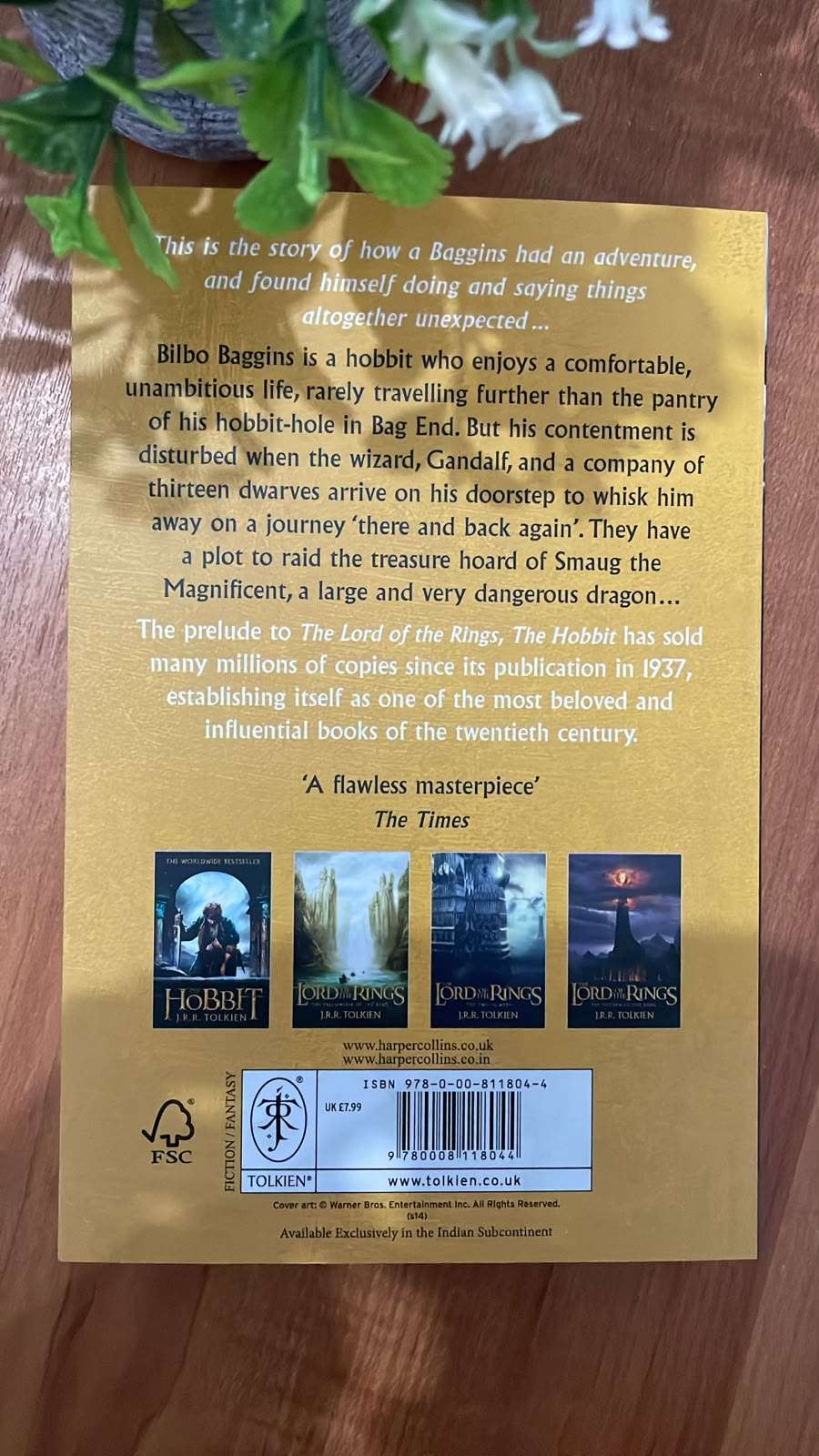
The Hobbit is a fantasy adventure novel that introduces readers to the magical world of Middle-earth. First published in 1937, the story follows the unexpected journey of Bilbo Baggins, a quiet hobbit who is drawn into a dangerous quest with a group of dwarves and a wizard.
The central idea of The Hobbit is that courage and personal growth often come from stepping outside one’s comfort zone. Through adventure, friendship, and difficult challenges, Bilbo discovers strengths he never knew he possessed.
An Unexpected Adventure Begins
At the start of the story, Bilbo Baggins lives a peaceful life in the Shire. His routine is interrupted when the wizard Gandalf arrives with thirteen dwarves seeking help on a dangerous mission.
Their goal is to reclaim their lost kingdom and treasure from the dragon Smaug. Although Bilbo initially feels unprepared and frightened, he eventually joins the journey as the group’s “burglar.”
This decision marks the beginning of an adventure that will change his life forever.
The Journey Through Middle-earth
As the group travels across forests, mountains, and caves, they face many dangers. Along the way, Bilbo encounters trolls, goblins, giant spiders, and other mysterious creatures.
One of the most important moments in the story occurs when Bilbo meets the creature Gollum deep inside a mountain cave. During this encounter, Bilbo discovers a magical ring that grants invisibility—an object that later becomes central to Tolkien’s larger fantasy world.
Through these experiences, Bilbo gradually becomes more confident and resourceful.
Courage and Personal Growth
A major theme in The Hobbit is personal transformation. At the beginning, Bilbo is cautious and comfortable with routine. However, the challenges of the journey force him to think creatively and act bravely.
Instead of relying only on strength, Bilbo often solves problems using intelligence and quick thinking. His growth proves that heroism does not always come from physical power but from determination and wisdom.
By the end of the story, Bilbo is no longer the same person who left the Shire.
Friendship and Loyalty
Another important message in The Hobbit is the value of friendship. Although the journey is dangerous, the characters support each other through trust and loyalty.
The dwarves gradually learn to respect Bilbo’s abilities, while Bilbo learns the importance of standing by his companions even in difficult situations.
These relationships highlight how cooperation and loyalty help overcome challenges.
A Foundation for an Epic Fantasy World
The Hobbit also introduces readers to the rich fantasy world that Tolkien later expands in The Lord of the Rings. Many locations, creatures, and historical elements introduced in this story become important parts of the larger Middle-earth mythology.
Because of its imaginative world-building, the book remains one of the most influential fantasy novels ever written.
Who Should Read This Book
This book is ideal for:
- Fantasy and adventure readers
- Young readers exploring classic literature
- Fans of imaginative world-building
- Anyone interested in heroic journeys and personal growth
Its storytelling style makes it enjoyable for both younger audiences and adults.
Useful Links
BookLounge:
https://booklounge.lk/?s=The+Hobbit
Wikipedia:
https://en.wikipedia.org/wiki/The_Hobbit
Lasting Impact
After reading The Hobbit, many readers feel inspired by the idea that even ordinary individuals can accomplish extraordinary things. The story reminds us that growth often begins with taking a single brave step into the unknown.






Reviews
There are no reviews yet.