








Description
A Practical Guide to Strategy and Power
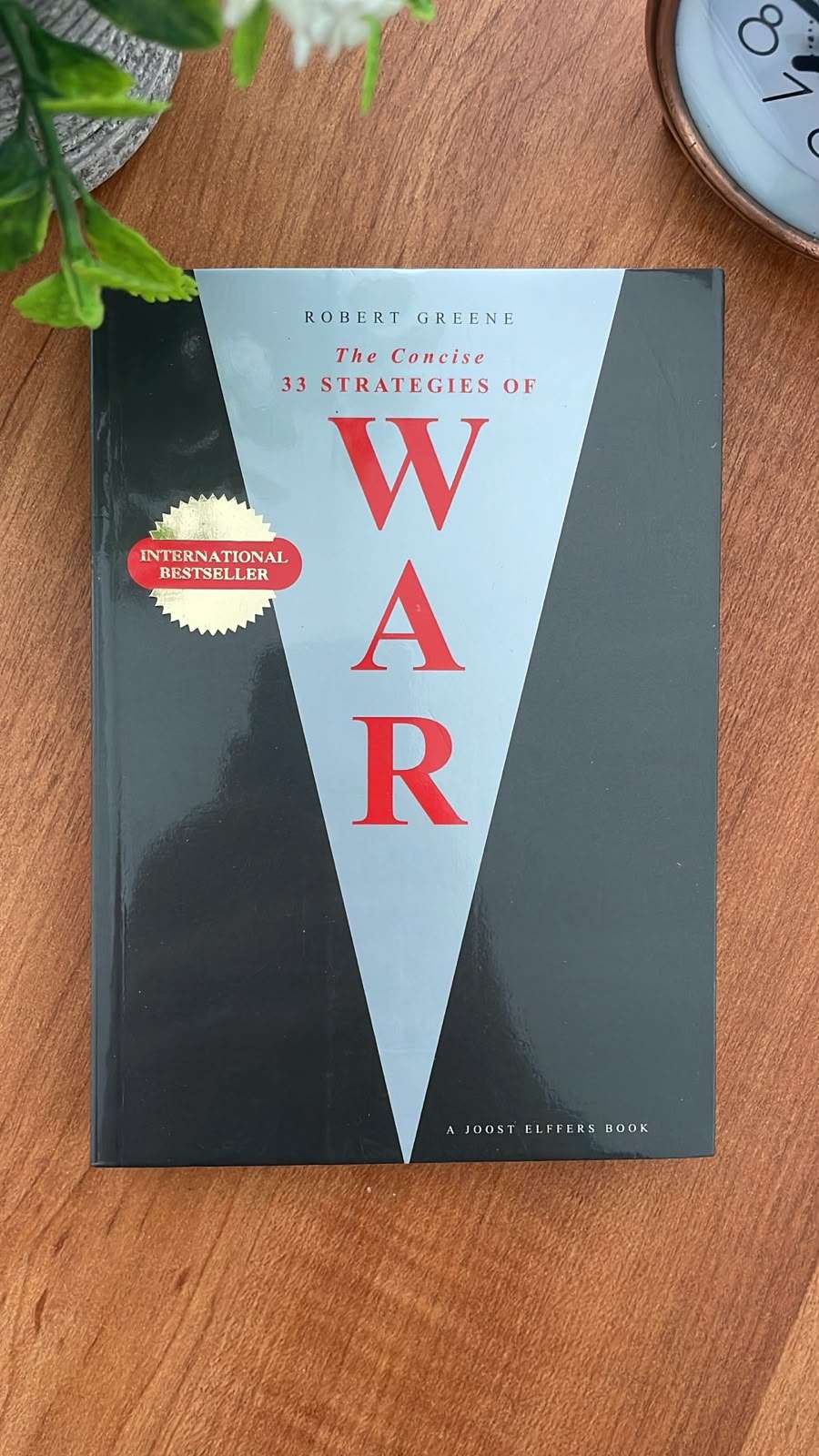
The Concise 33 Strategies of War by Robert Greene is a powerful guide to understanding strategy in everyday life. Adapted from the original larger work, this concise edition delivers the core lessons in a shorter and clearer format, making the ideas easier to apply.
Rather than focusing only on military battles, The Concise 33 Strategies of War explains how strategic thinking applies to career, relationships, leadership, competition, and personal growth. The book teaches readers how to remain calm under pressure, plan ahead, and respond intelligently to conflict.
Strategy here is not about aggression — it is about awareness and preparation.

Learning to Think Several Steps Ahead
One major lesson in The Concise 33 Strategies of War is anticipation. Many problems occur because people react emotionally instead of thinking ahead.
Robert Greene explains that successful individuals observe patterns before acting. By understanding motivations, timing, and consequences, you avoid unnecessary conflict.
Readers learn that winning often means preventing problems before they start.
Emotional Control as a Strategic Advantage
A recurring theme in The Concise 33 Strategies of War is emotional discipline. Anger, ego, and fear cloud judgment and lead to mistakes.
The book teaches how to:
Stay calm during pressure
Avoid impulsive reactions
Maintain psychological balance
Turn patience into advantage
Instead of reacting instantly, the reader learns to pause and choose the best response.
Offensive and Defensive Strategies
The book divides strategies into practical categories. Some teach protection, while others teach action.
Defensive strategies focus on avoiding traps and protecting reputation.
Offensive strategies focus on initiative and timing.
By combining both, readers develop flexibility. The Concise 33 Strategies of War shows that true strength comes from adaptability.
Applying Strategy in Everyday Life
Although inspired by military philosophy, the lessons apply to modern situations:
Workplace competition
Negotiations
Leadership decisions
Personal conflicts
Long-term planning
Readers discover strategy is not manipulation — it is clarity. Understanding people’s behavior allows smarter communication and fewer misunderstandings.
Learning From History
Robert Greene uses historical figures and events to explain each principle. These examples make complex ideas memorable and realistic.
Because humans behave consistently across time, ancient lessons remain useful today. The Concise 33 Strategies of War connects past wisdom to modern life.
Who Should Read This Book
This book is ideal for:
Professionals in competitive environments
Leaders and managers
Students developing confidence
Readers interested in psychology and power dynamics
The concise version makes deep ideas accessible without overwhelming detail.
Lasting Impact
After reading The Concise 33 Strategies of War, readers often notice improved decision-making. They react less emotionally, communicate more carefully, and recognize patterns earlier.
Instead of feeling controlled by circumstances, they begin directing them.
The book does not encourage conflict — it teaches understanding.
Browse more psychology and strategy books here:
https://booklounge.lk/product-category/self-help/
Learn more about the author:
https://powerseductionandwar.com/





Reviews
There are no reviews yet.