









Description
A Practical Guide to Long-Term Leadership and Sustainable Success
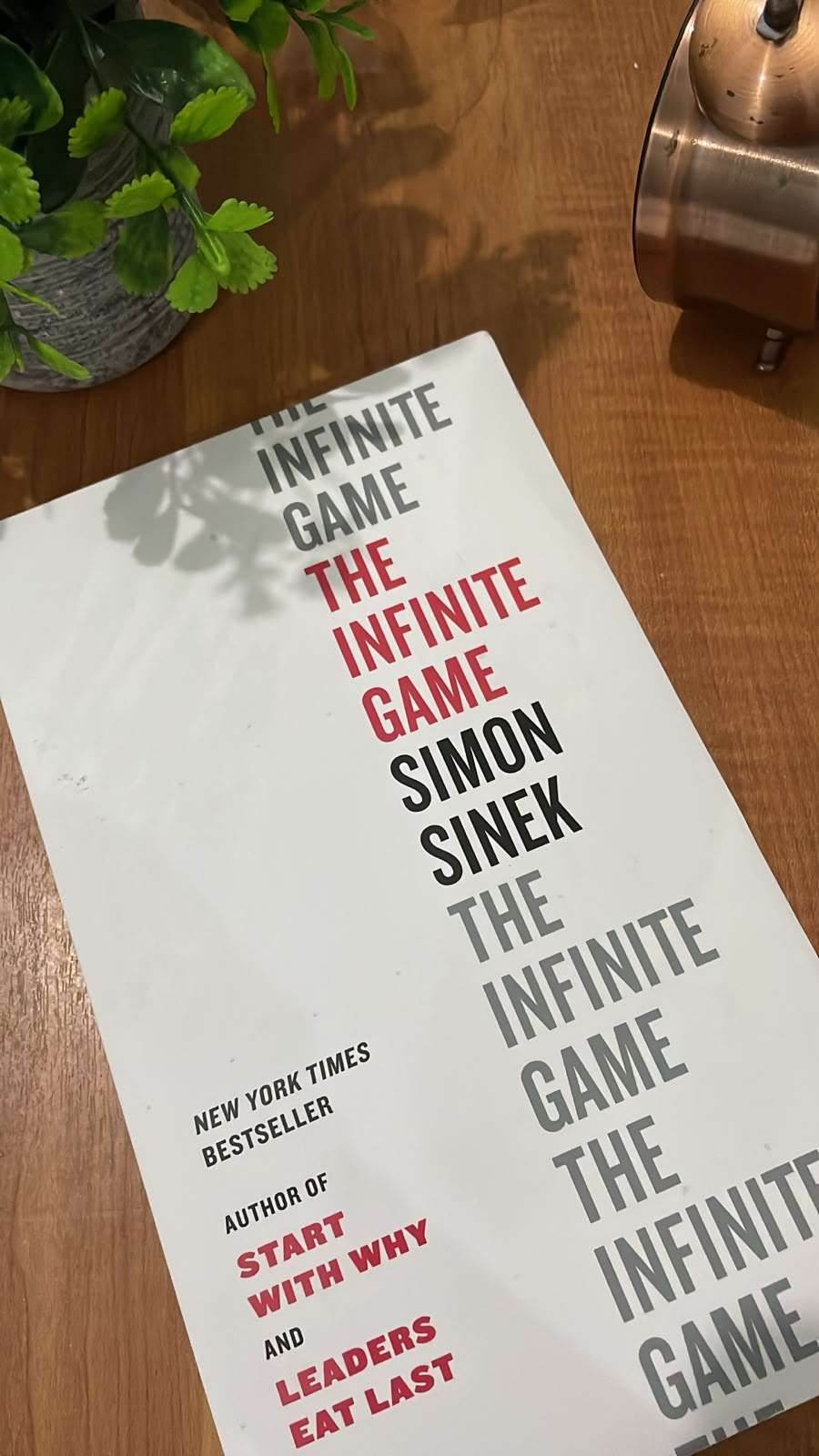
The Infinite Game by Simon Sinek
The Infinite Game is a modern leadership and business philosophy book that explores how organizations and individuals can achieve lasting success by adopting a long-term mindset. Instead of focusing only on short-term victories, the book explains that true leadership is about building institutions that can grow, adapt, and endure over time.
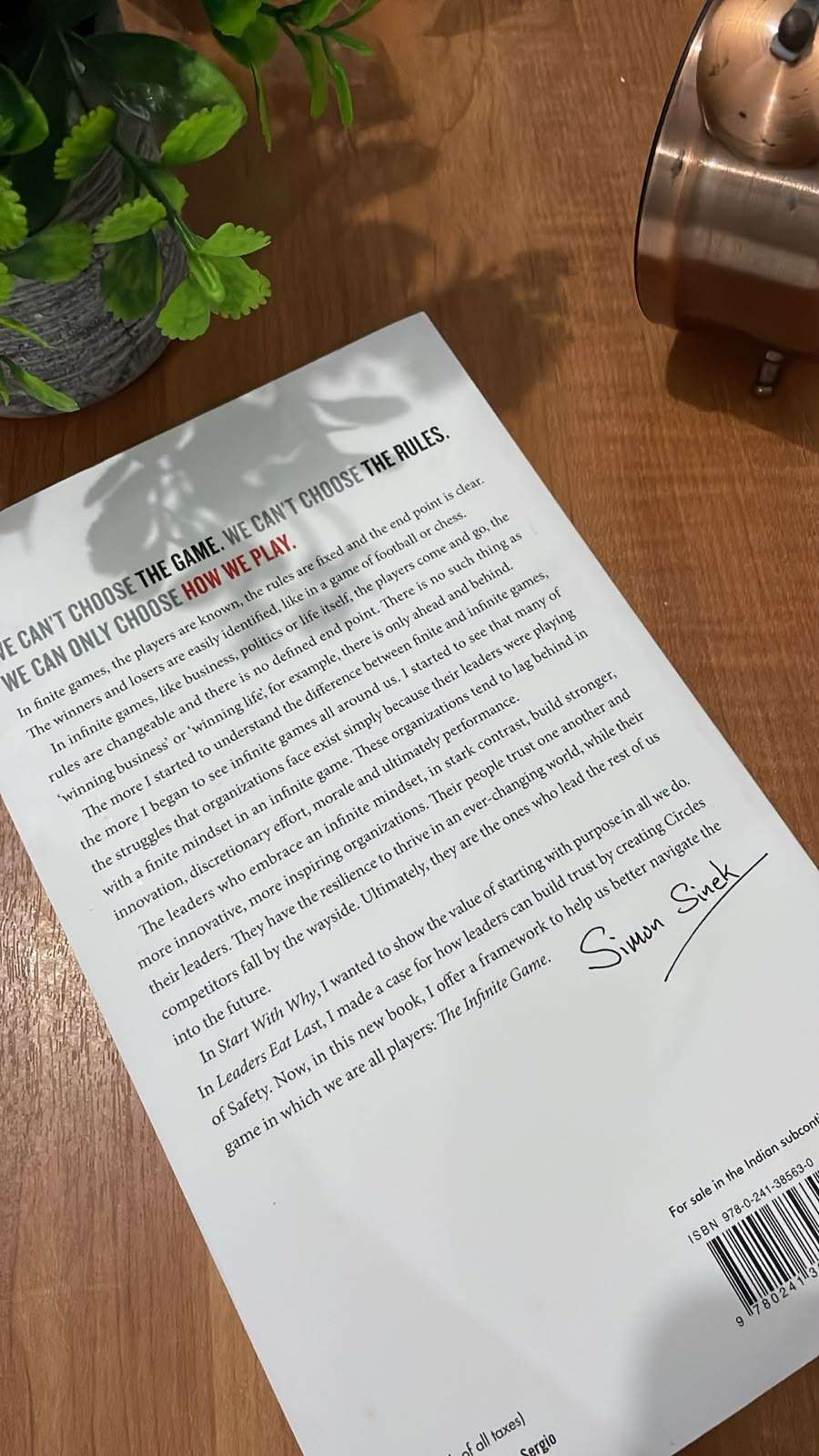
The central idea of The Infinite Game is that business, leadership, and life are not finite competitions with clear winners and losers. Instead, they are ongoing “infinite games” where the goal is to keep playing, improve continuously, and create lasting impact.
Understanding Finite and Infinite Games
One of the earliest lessons in The Infinite Game is the difference between finite games and infinite games.
Finite games have:
- Known players
- Fixed rules
- A clear endpoint and winner
Examples include sports competitions or exams.
Infinite games, however, involve:
- Changing players
- Evolving rules
- No final victory
Business, leadership, and society are examples of infinite games because they continue indefinitely. The book argues that many organizations struggle because they treat business like a short-term competition rather than a long-term mission.
The Importance of a Just Cause
A major principle in The Infinite Game is the idea of a “Just Cause.” This is a clear and inspiring purpose that motivates people to work together for something larger than themselves.
According to Simon Sinek, a strong Just Cause should be:
- Idealistic – striving for a better future
- Inclusive – inviting others to participate
- Service-oriented – benefiting people beyond the organization
- Resilient – able to survive challenges and changes
When organizations focus on purpose rather than profit alone, they build stronger teams and more loyal communities.
Building Trusting Teams
Another key theme in The Infinite Game is the importance of trust and psychological safety within teams.
Employees perform better when they feel:
- Respected and valued
- Safe to share ideas
- Supported during challenges
Leaders who create trusting environments encourage innovation and cooperation. This culture allows organizations to adapt more easily to change.
Ethical Competition
Instead of defeating competitors, Sinek encourages leaders to view rivals as “worthy competitors.”
A worthy competitor:
- Reveals weaknesses in your own organization
- Inspires improvement and innovation
- Encourages learning and growth
This perspective shifts competition from hostility to continuous improvement.
Courageous Leadership
The book also highlights the need for courageous leadership. Leaders often face pressure to prioritize short-term profits or quick results.
However, infinite-minded leaders focus on:
- Long-term sustainability
- Ethical decision-making
- Protecting employees and stakeholders
This mindset ensures that organizations remain strong and relevant even during difficult periods.
Resilience in Changing Environments
Because infinite games never truly end, adaptability becomes essential. Businesses must evolve with technological change, social expectations, and market dynamics.
Organizations that maintain a clear purpose and supportive culture are better prepared to survive uncertainty and remain competitive over time.
Who Should Read This Book
This book is ideal for:
- Business leaders and managers
- Entrepreneurs building long-term companies
- Professionals interested in leadership development
- Readers interested in strategy and organizational culture
The ideas apply not only to businesses but also to education, politics, and personal leadership.
Explore More Self-Development Books
Explore more leadership and self-development books here:
https://booklounge.lk/product-category/self-help/
Wikipedia page:
https://en.wikipedia.org/wiki/The_Infinite_Game_(book)
Lasting Impact
After reading The Infinite Game, many readers rethink how they define success. Instead of chasing short-term victories, they begin focusing on long-term purpose, ethical leadership, and continuous improvement.





Reviews
There are no reviews yet.