







Description
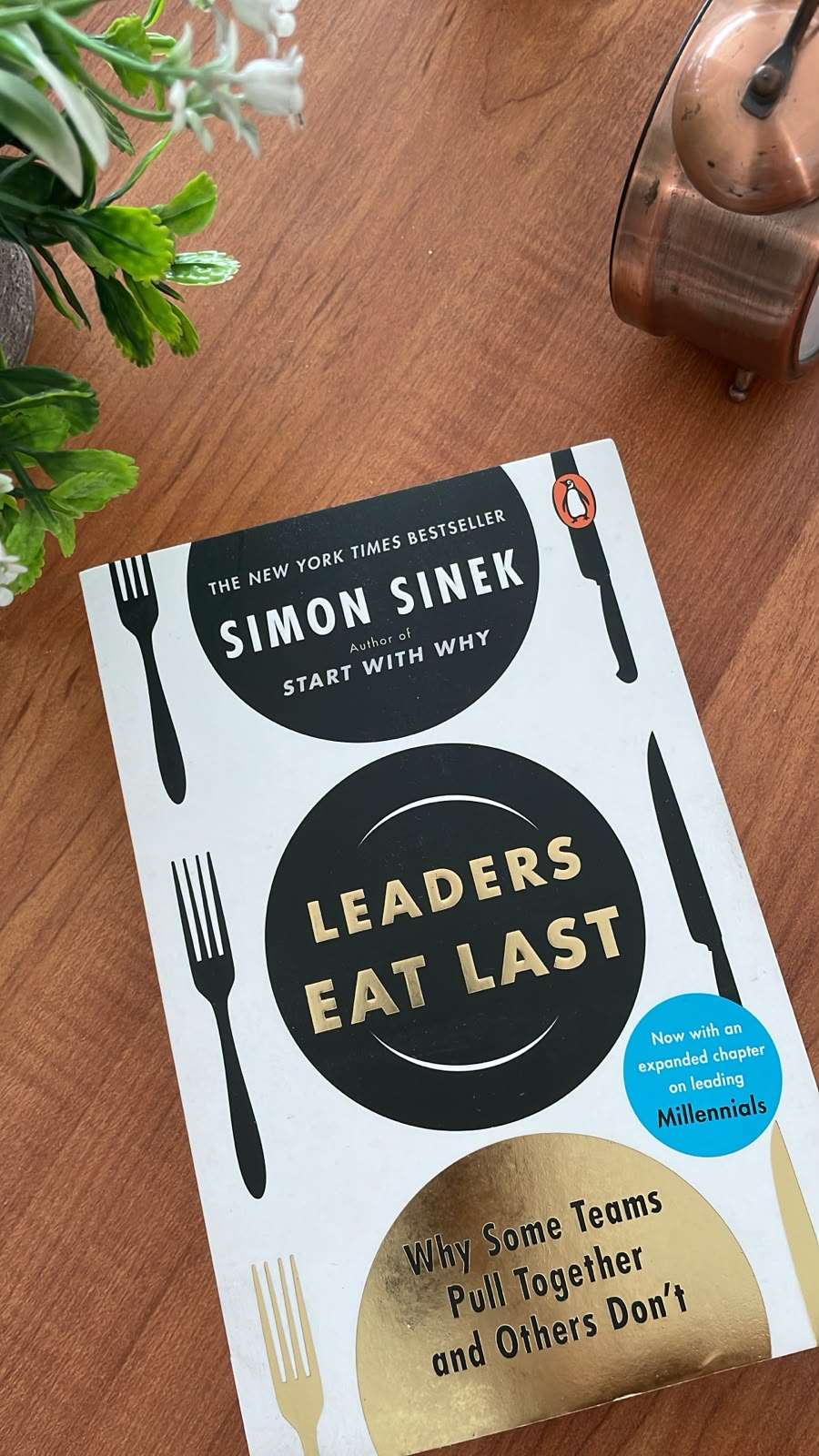
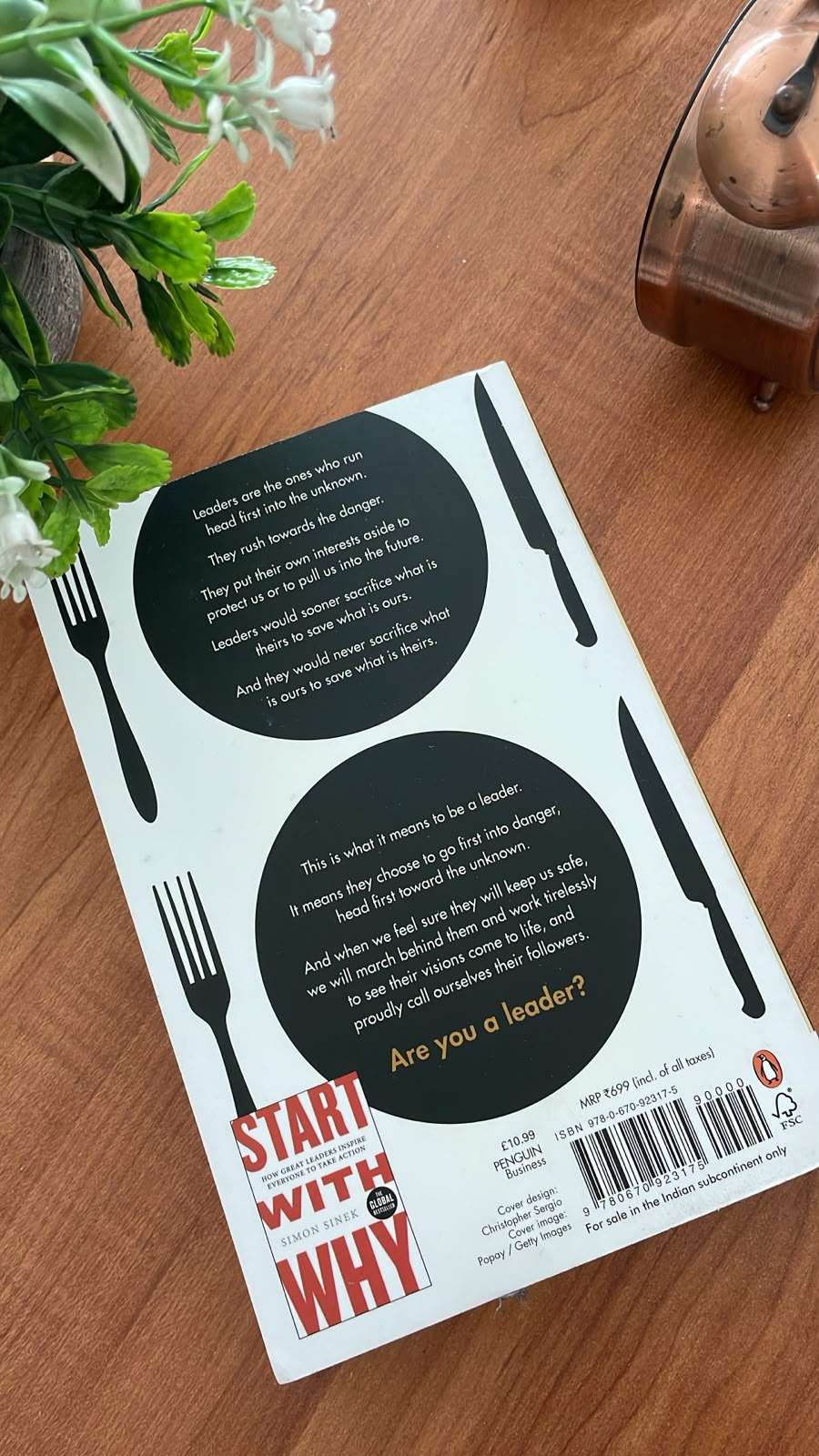
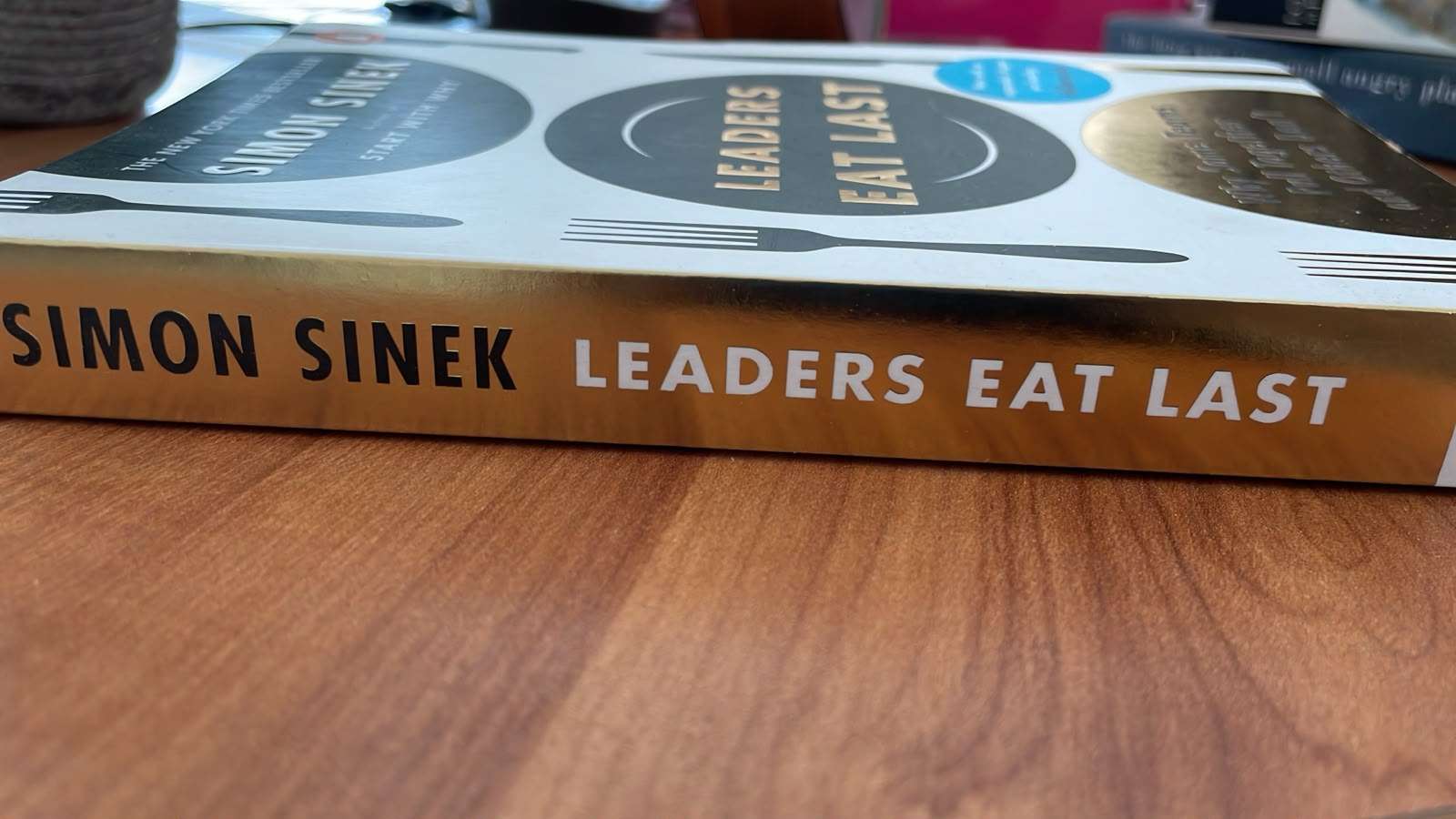
Leaders Eat Last by Simon Sinek
Leaders Eat Last is a leadership and organizational psychology book that explores how great leaders create environments where people feel safe, valued, and motivated. Rather than focusing on authority or power, the book argues that true leadership is about responsibility and service to others.
The central idea of Leaders Eat Last is that strong teams are built when leaders prioritize the well-being of their people. Inspired by a tradition in the United States Marine Corps—where officers allow their soldiers to eat first—the book uses this metaphor to show that leaders should place the needs of their team ahead of their own comfort or recognition.
Instead of commanding from the top, effective leaders build trust, loyalty, and cooperation by protecting and supporting those they lead.
Leadership Begins With Responsibility
One of the earliest lessons in Leaders Eat Last is that leadership is not about rank or title. It is about the willingness to care for the people within your responsibility.
Many workplaces struggle because leaders prioritize short-term results, personal success, or shareholder pressure over employee well-being. When employees feel unsafe or undervalued, productivity drops and collaboration weakens.
Simon Sinek explains that the best leaders create what he calls a “Circle of Safety.” In this environment, employees feel protected from internal competition and fear. When people feel secure within their organization, they naturally become more cooperative, innovative, and committed to the mission.
The Biological Science of Leadership
A unique feature of Leaders Eat Last is its explanation of leadership through human biology and psychology. The book describes how certain chemicals influence workplace behavior.
For example:
- Dopamine motivates goal achievement and rewards progress
- Serotonin creates pride and recognition within social groups
- Oxytocin strengthens trust and human connection
- Cortisol triggers stress and fear
Healthy organizations encourage chemicals that build trust and cooperation, while toxic environments increase stress hormones. According to Sinek, leaders influence which of these dominate the workplace.
When trust grows, teams perform better not because they are forced to, but because they genuinely want to succeed together.
The Circle of Safety
One of the most important concepts in Leaders Eat Last is the Circle of Safety.
In organizations where employees feel protected by leadership, they focus their energy on solving external challenges—such as competition, innovation, or customer needs. But in unsafe environments, employees spend energy protecting themselves from internal politics, blame, or job insecurity.
Leaders expand the Circle of Safety by:
- Supporting employees during mistakes
- Encouraging collaboration rather than rivalry
- Demonstrating fairness and transparency
- Protecting the team from unnecessary pressure
When people feel safe, they take risks, share ideas, and support each other.
Trust and Loyalty in Organizations
Another major theme in Leaders Eat Last is trust. Trust cannot be forced; it develops through consistent behavior over time.
Employees trust leaders who:
- Keep promises
- Admit mistakes
- Take responsibility for failures
- Share credit for success
When leaders consistently act in the interest of their team, loyalty grows naturally. Workers become more engaged and committed because they feel respected and valued.
Sinek argues that loyalty in organizations mirrors loyalty in families and communities—it is built through care, not authority.
Short-Term Thinking vs Long-Term Leadership
The book also criticizes leadership models that prioritize immediate results over long-term stability. Many companies focus heavily on quarterly profits, sometimes at the expense of employee well-being.
Simon Sinek explains that while short-term performance may improve temporarily, long-term damage occurs when employees feel replaceable or expendable.
Strong leaders think beyond immediate metrics. They invest in people, relationships, and culture. Over time, this approach leads to more sustainable success and stronger organizational performance.
Leadership During Difficult Times
Leaders Eat Last emphasizes that leadership matters most during crises. When challenges arise, employees look to leaders for stability and reassurance.
Effective leaders respond by:
- Communicating clearly
- Remaining calm under pressure
- Protecting the team from panic or blame
- Encouraging collective problem-solving
Instead of shifting responsibility downward, strong leaders take responsibility upward. This behavior builds trust even during uncertainty.
Leadership in the Modern Workplace
Modern workplaces face challenges such as rapid technological change, global competition, and remote collaboration. These pressures can increase stress and weaken team connection.
Leaders Eat Last reminds leaders that technology and efficiency should never replace human connection.
Organizations succeed not only because of systems and strategies, but because people feel motivated to contribute their best efforts.
By focusing on trust, empathy, and shared purpose, leaders can maintain strong cultures even in fast-changing environments.
Long-Term Impact of Service-Driven Leadership
The ultimate message of Leaders Eat Last is that leadership is a service, not a privilege.
Great leaders understand that their role is to support the growth, safety, and success of the people they lead. When employees feel protected and respected, they naturally give their energy and creativity back to the organization.
This approach transforms workplaces from competitive environments into communities where individuals work together toward a shared goal.
Who Should Read This Book
This book is ideal for:
- Managers and team leaders
- Business owners and entrepreneurs
- Professionals interested in leadership psychology
- Students studying management or organizational behavior
- Anyone who wants to build stronger teams
The lessons apply not only to corporate leadership but also to education, government, and community organizations.
Lasting Impact
After reading Leaders Eat Last, many readers begin to see leadership differently. Instead of focusing on authority or control, they recognize the importance of empathy, trust, and responsibility.
Here are the three links you requested for the book Leaders Eat Last by Simon Sinek.
Non-Fiction / Book Information Link
You can read details and overview of the book here:
https://www.finnotes.org/publications/leaders-eat-last (FinNotes)
Book Lounge Link
You can explore similar self-help and leadership books on Book Lounge here:
https://booklounge.lk/product-category/self-help/
Wikipedia-Style Reference Link
A catalog reference and bibliographic information for the book is available here:
https://openlibrary.org/books/OL25448187M/Leaders_Eat_Last (Open Library)





Reviews
There are no reviews yet.