







Description
Mein Kampf — Historical and Ideological Context
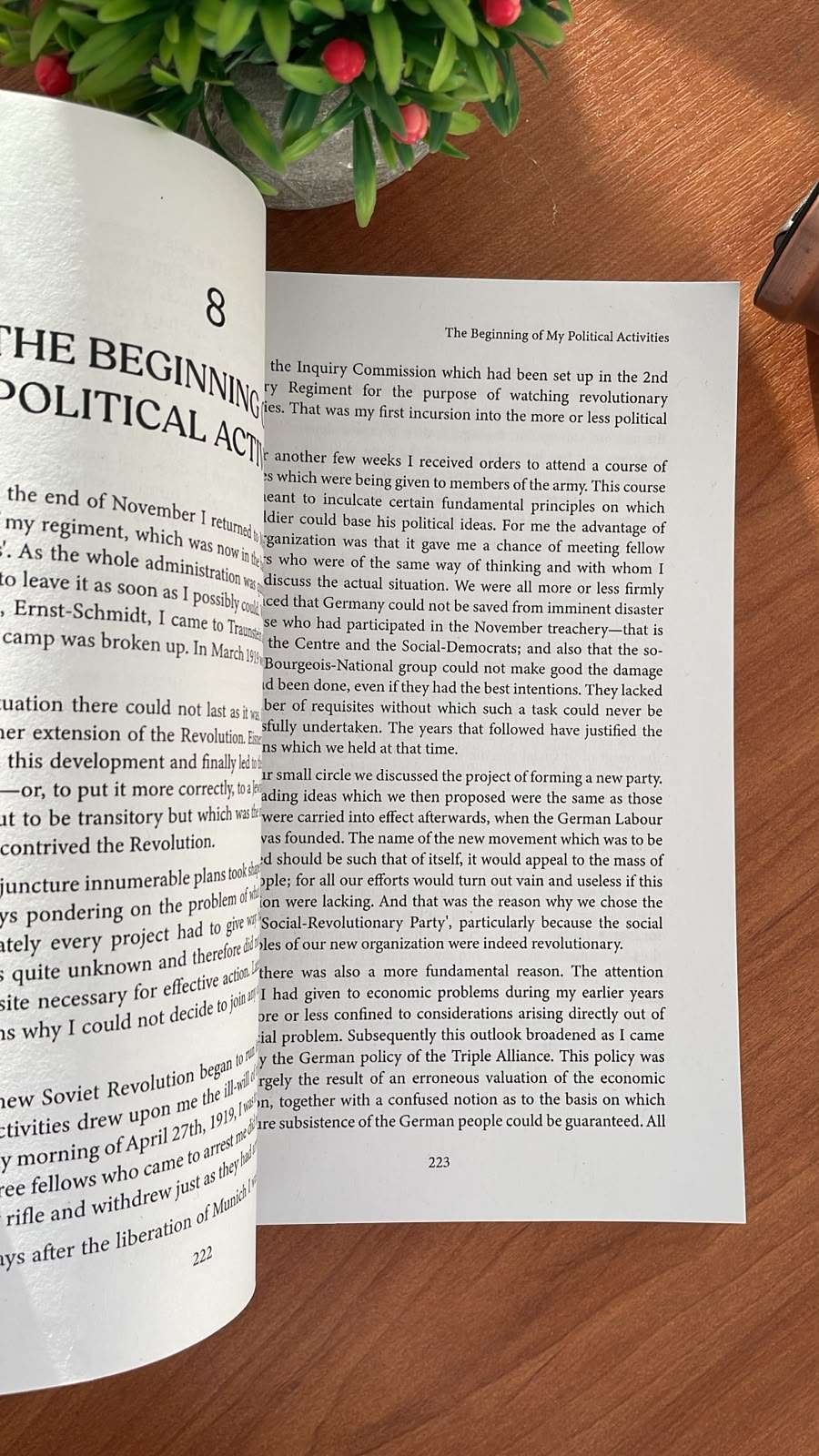
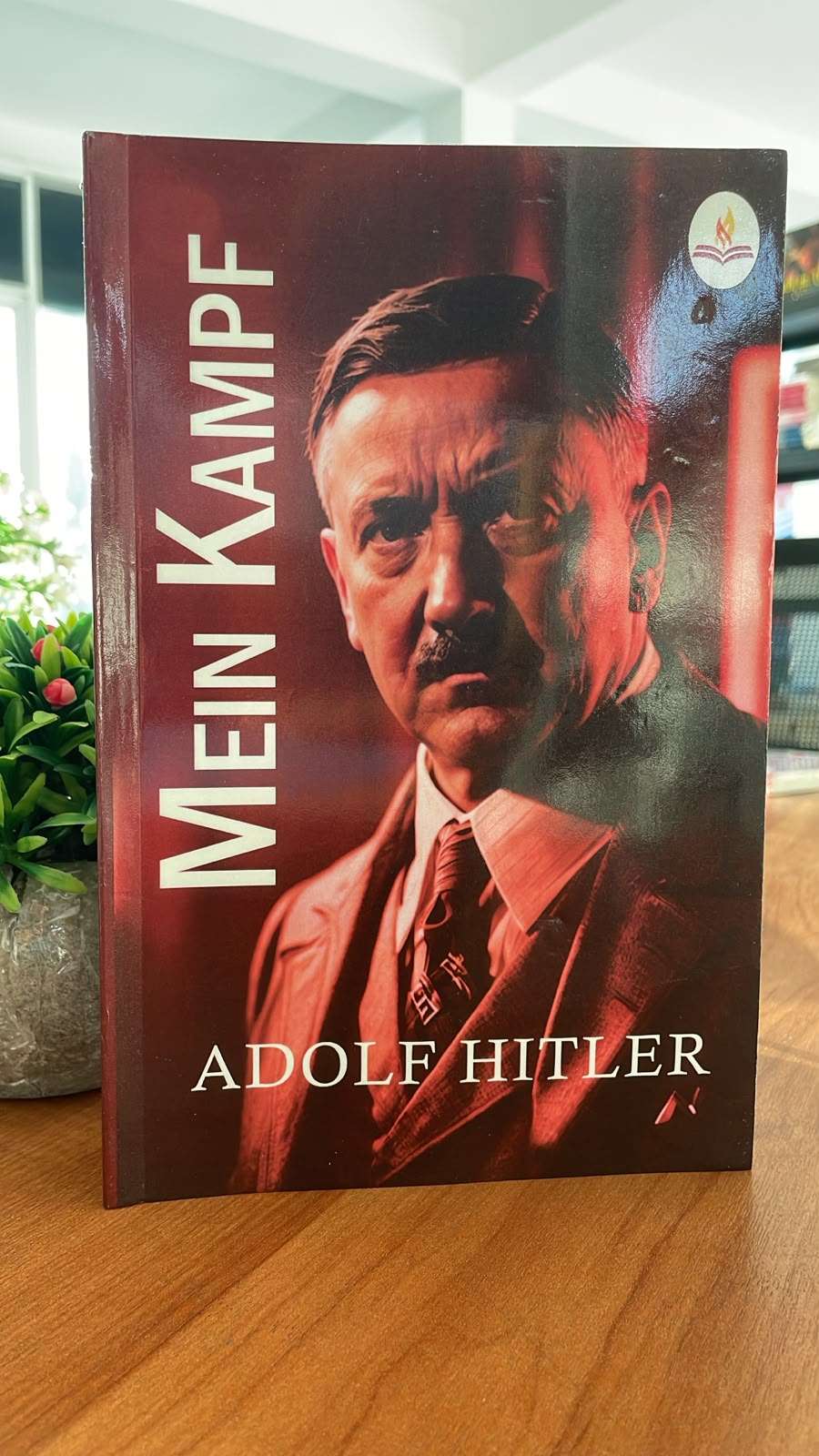
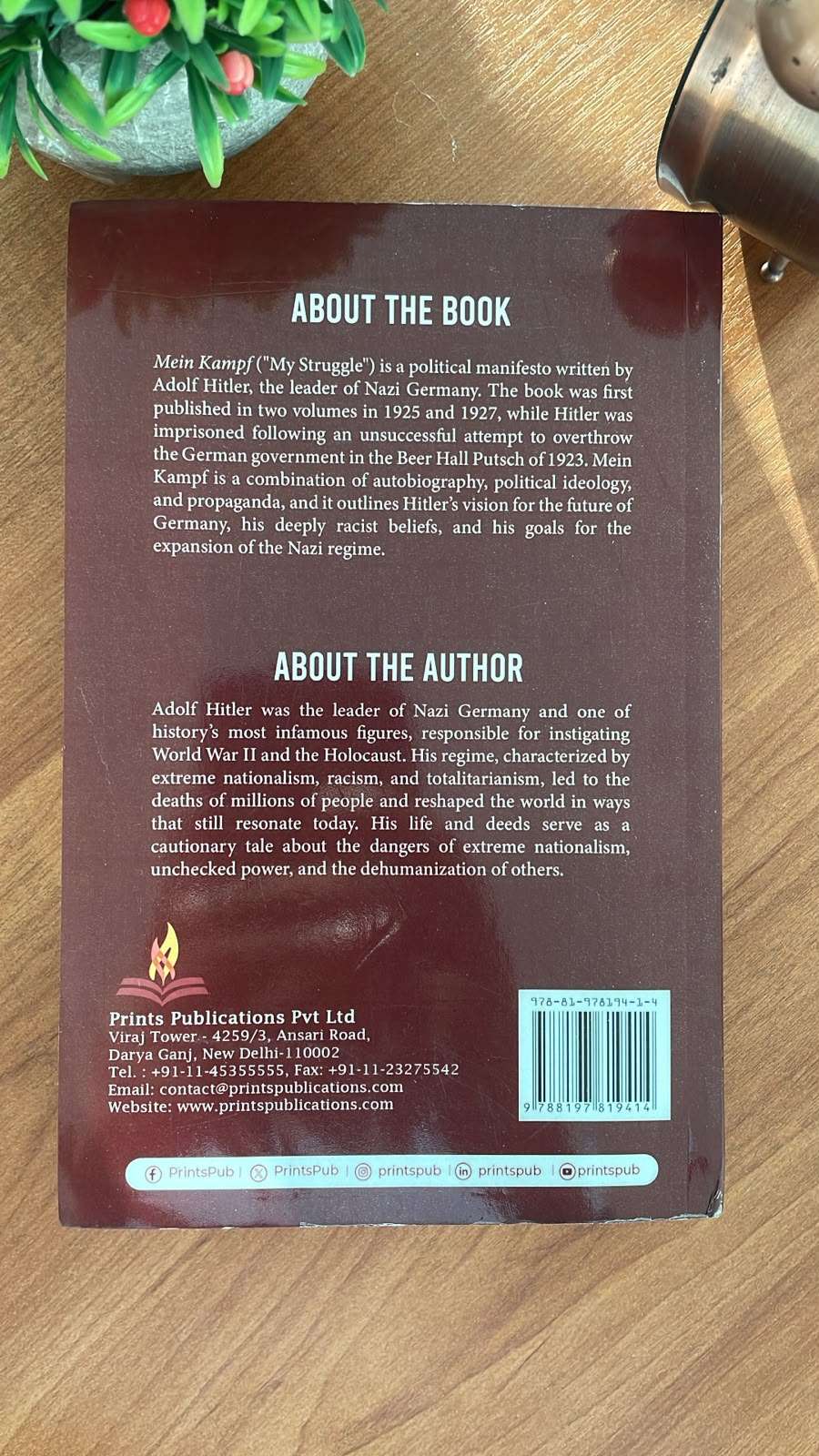
Mein Kampf (German for My Struggle) is a 1925 autobiographical and political manifesto by Adolf Hitler, the leader of the National Socialist (Nazi) Party in Germany. Written during his imprisonment after the failed Beer Hall Putsch of 1923, the book became a foundational text of Nazi ideology and the political blueprint for Hitler’s plans for Germany and Europe
Unlike self‑help or relationship guides, Mein Kampf is not written to teach personal growth or emotional intelligence. Instead, it lays out Hitler’s worldview — rooted in extreme nationalism, racial hierarchy, and authoritarian politics — which later underpinned the policies of Nazi Germany
Origins and Purpose
Hitler began writing Mein Kampf in 1924 while serving a prison sentence for high treason following his unsuccessful coup attempt in Munich. He intended the book to explain his life story, political beliefs, and his vision for Germany’s future. It was published in two volumes: the first in 1925 (Die Abrechnung, “The Settlement [of Accounts]”), and the second in 1926 (Die Nationalsozialistische Bewegung, “The National Socialist Movement”)
The structure of the book blends autobiography with political manifesto. The early sections recount Hitler’s early life, his experience in World War I, and his developing ideological convictions. Later portions argue for the transformation of Germany along National Socialist lines, including the restructuring of society and state
Core Themes and Ideological Content
The most prominent themes in Mein Kampf reflect Hitler’s extremist worldview:
- Racist ideology: Hitler asserts the superiority of the so‑called “Aryan” race and characterizes Jews and other groups as threats to society. (Encyclopedia Britannica)
- Anti‑Semitism: Throughout the book, Hitler blames Jews for many of Germany’s social and political problems, and frames them as enemies of the German people. (Encyclopedia Britannica)
- Revision of the post‑World War I order: Hitler rejects the Treaty of Versailles and decries the perceived humiliation of Germany after World War I. (Wikipedia)
- Authoritarian nationalism: The book advocates a strong, centralized state led by a singular leader (the Führer) and rejects democratic parliamentary systems. (World of History Cheatsheet)
These elements later translated into state policy and propaganda after the Nazi Party’s rise to power in the 1930s. (Wikipedia)
Communication, Persuasion, and Propaganda
While Mein Kampf is not a text about communication in a positive or empathetic sense, it illustrates the use of language and propaganda for political mobilization. Hitler describes how repetitive, emotionally charged messaging could shape mass support. His views on propaganda later influenced Nazi communication strategies, which heavily relied on simplifying complex ideas into emotionally resonant slogans
Reception, Legacy, and Modern Context
At the time of its first publication, Mein Kampf was not an immediate commercial success. However, as Hitler’s political power grew in the late 1920s and early 1930s, sales increased. By the time the Nazis controlled Germany, the book had become widely distributed and was even given as gifts at state‑sponsored events.
After World War II, Mein Kampf was suppressed in many countries because of its association with Nazism and the crimes of the Holocaust. Germany held the copyright until it expired in 2016, after which annotated editions were published for critical and educational study
Modern editions often include extensive scholarly commentary to contextualize and critique the harmful ideology in the text. This approach is used in academic settings to understand how propaganda and extremist rhetoric operate, and to study the historical roots of fascism, racism, and totalitarian governance.
Controversies and Caution
Mein Kampf remains one of the most controversial works in modern history due to its explicit racism and its role in justifying violence and genocide. Many countries once banned, restricted, or critically annotated its publication and distribution to prevent uncritical propagation of its ideas. The book’s influence on neo‑Nazi groups and extremist movements continues to be a concern in contemporary political discourse
Reference Link
Wikipedia Page
https://en.wikipedia.org/wiki/Mein_Kampf — full reference including publication history, themes, influence, and modern editions.
Here’s the Book Lounge link for Mein Kampf by Adolf Hitler — the edition available for purchase on the Sri Lankan online bookstore Book Lounge:
Mein Kampf by Adolf Hitler – Book Lounge Sri Lanka — this page shows the book’s listing, price, and details on how to order in Sri Lanka. (The Book Lounge)





Reviews
There are no reviews yet.