







Description
A Practical Guide to Understanding Decision-Making
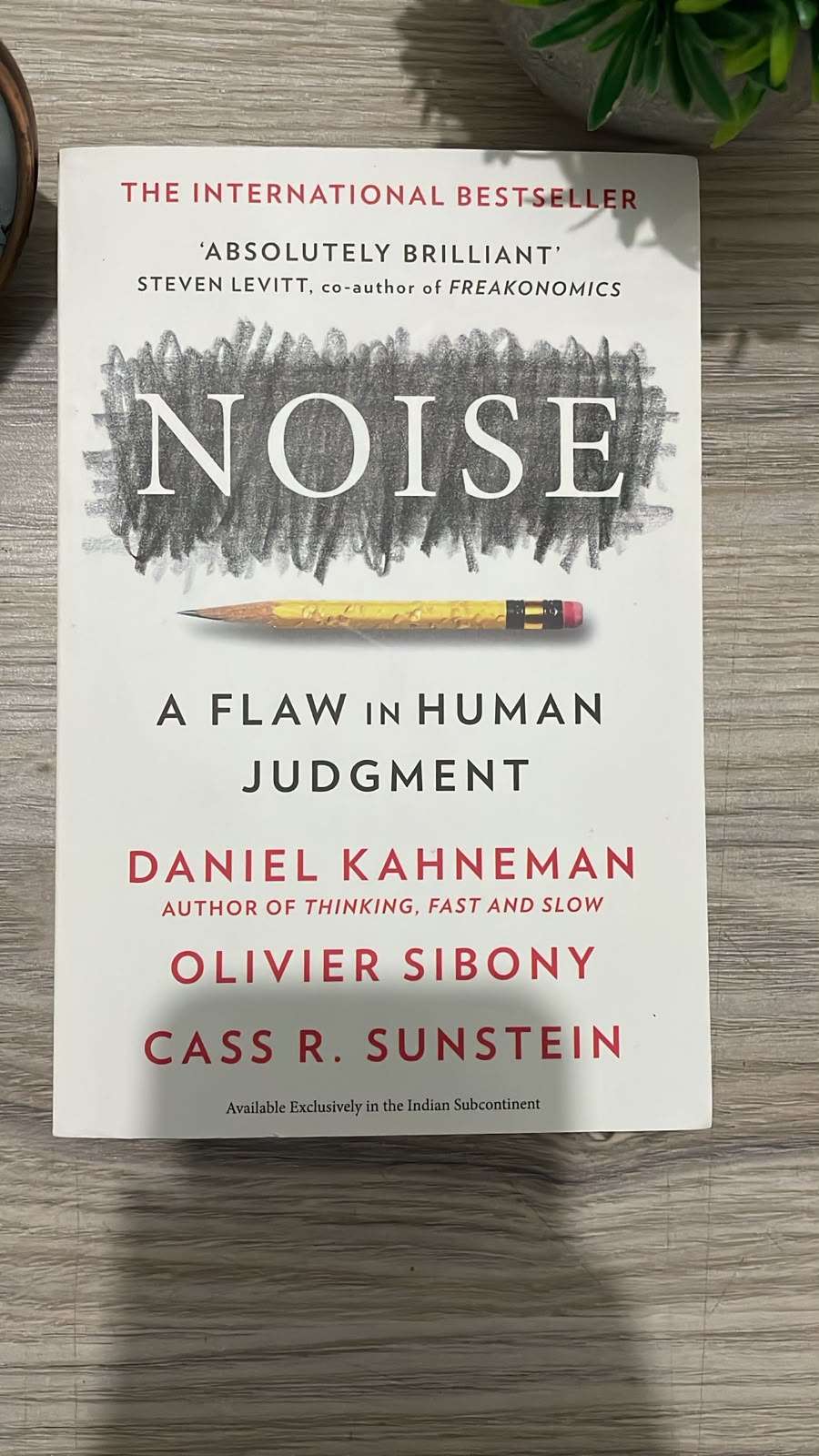
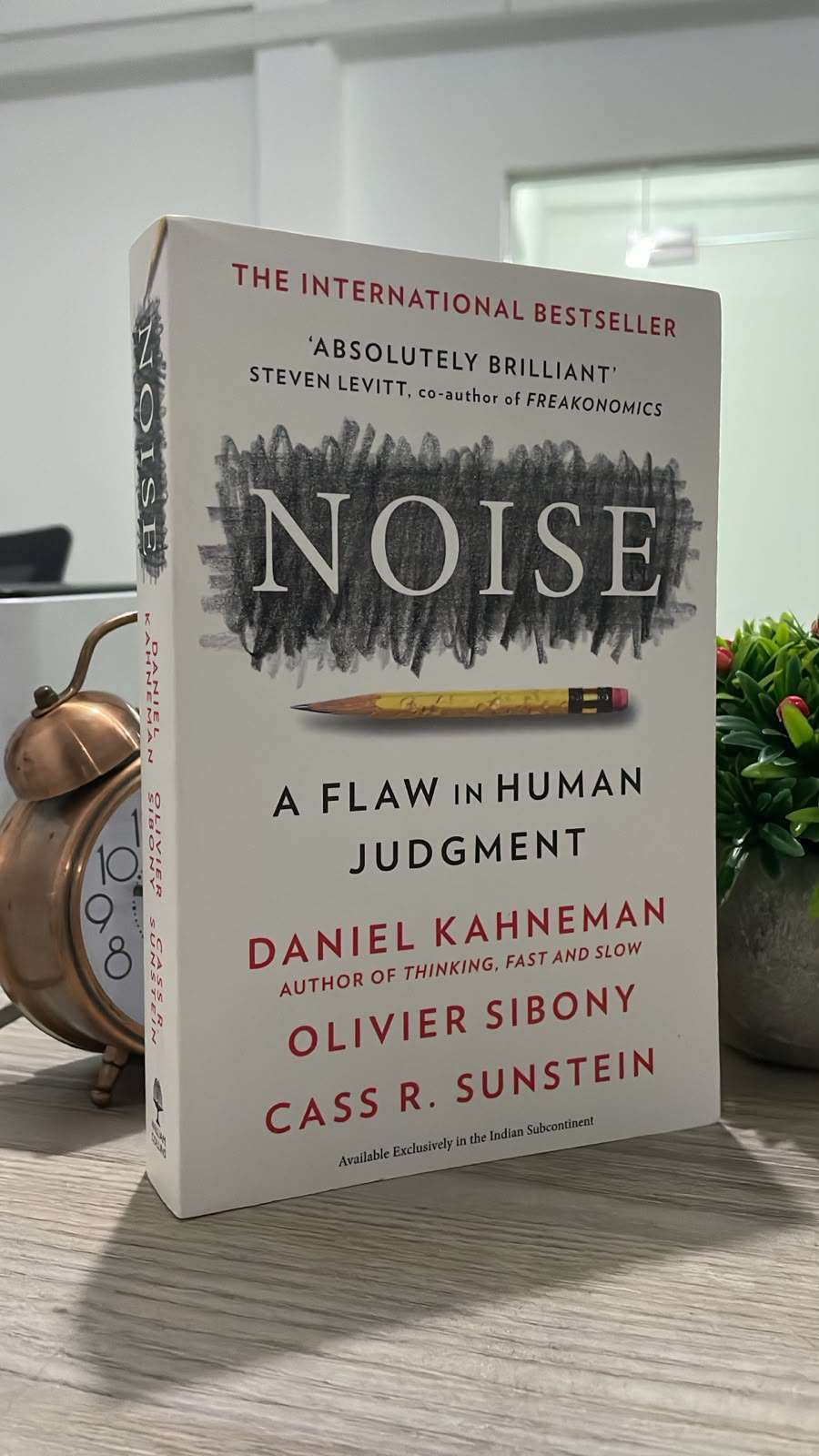
Noise: A Flaw in Human Judgment by Daniel Kahneman, Olivier Sibony, and Cass R. Sunstein
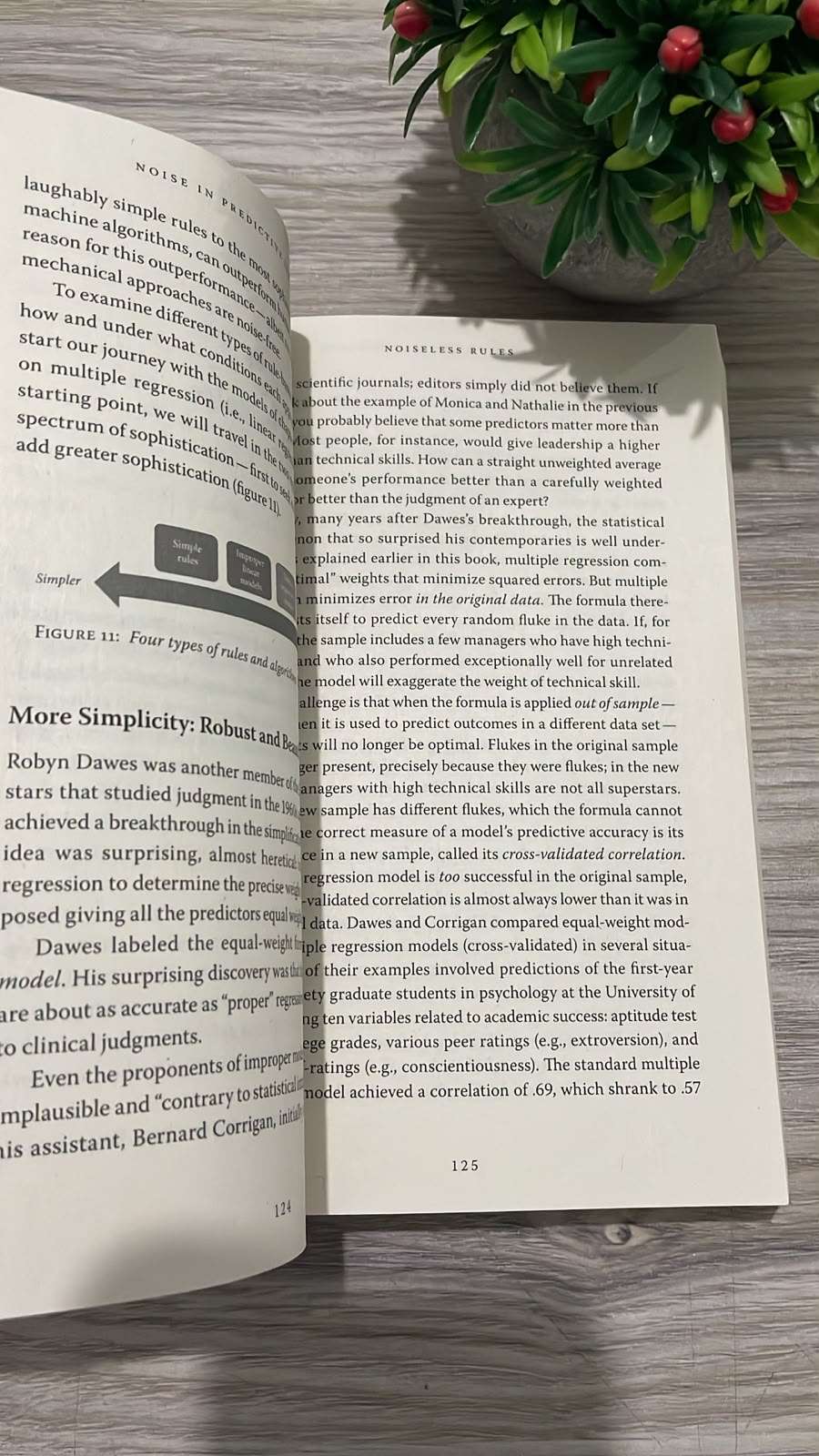
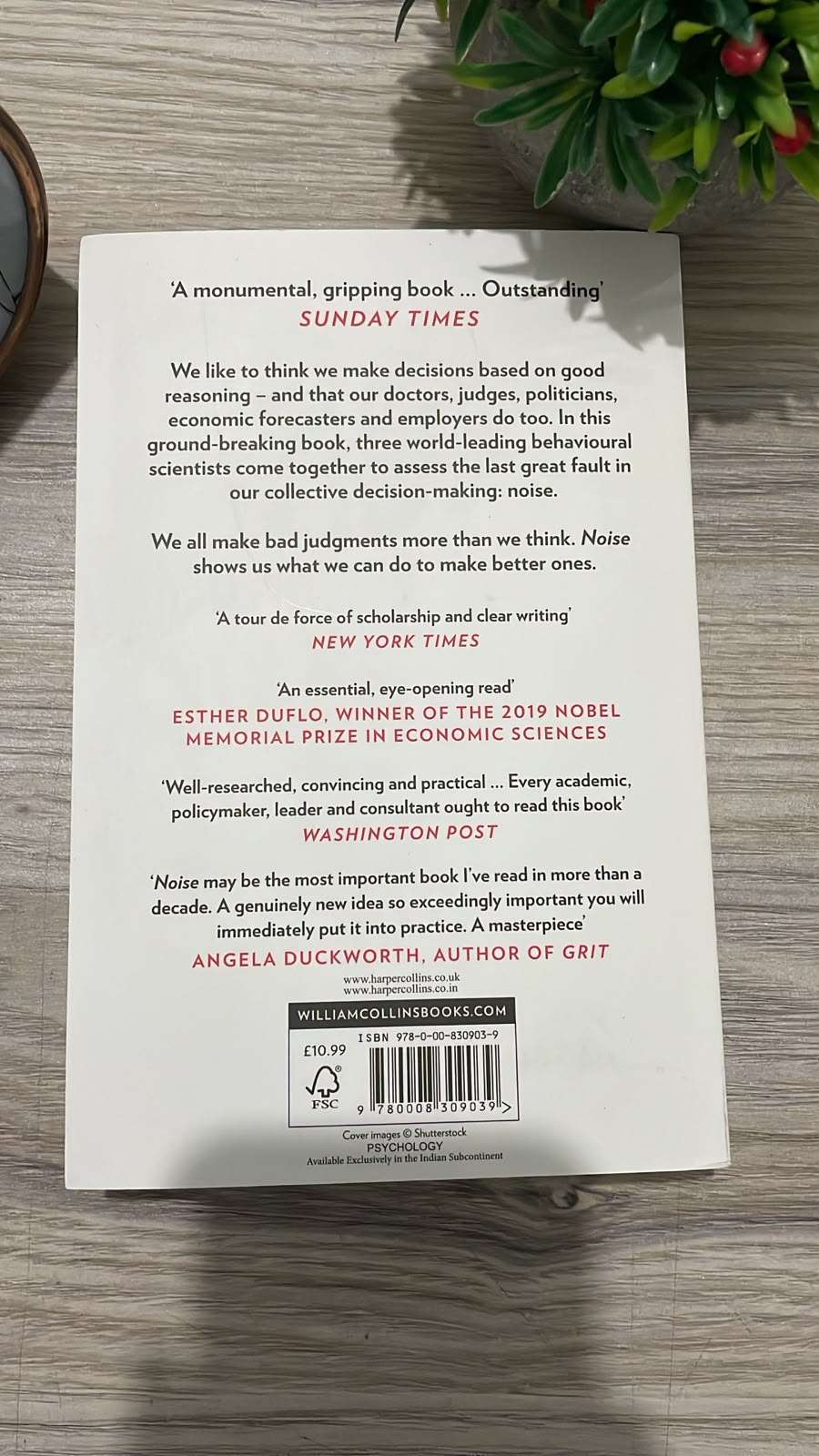
Noise: A Flaw in Human Judgment is a modern psychology and behavioral science book that explores how human decisions are often inconsistent and unreliable. Instead of focusing only on bias, the book introduces the concept of “noise”—random variations in judgment that cause different people to make different decisions in identical situations. The authors explain that these hidden inconsistencies affect fields such as medicine, law, business, and everyday life.
The central idea of Noise is that poor decisions are not always caused by prejudice or bias. Often, they result from unpredictable differences in judgment between individuals. By understanding how noise works, organizations and individuals can create systems that improve fairness, accuracy, and consistency in decision-making.
Understanding the Hidden Problem of Noise
One of the earliest lessons in Noise is recognizing that inconsistency in judgment is far more common than most people realize. In many professional environments, two experts evaluating the same case can reach very different conclusions.
For example, judges may give different sentences for similar crimes, doctors may recommend different treatments for the same patient, and hiring managers may evaluate candidates differently depending on mood or context. These differences are not always intentional; they arise from subtle factors such as emotions, fatigue, personal experiences, or even the time of day.
The book teaches readers to identify these hidden variations and understand how they influence important decisions.
Noise Versus Bias
Many people are familiar with the concept of bias—systematic errors that push judgments in a predictable direction. However, Noise highlights a different problem: random inconsistency.
While bias means everyone leans in the same incorrect direction, noise means judgments scatter unpredictably. The authors explain that both problems reduce decision quality, but noise often goes unnoticed because it is harder to detect.
Readers learn to recognize how noise operates in areas such as:
- Performance evaluations
- Medical diagnoses
- Legal judgments
- Business forecasting
- Hiring and promotions
Understanding the difference between bias and noise helps organizations create better decision processes.
The Sources of Judgment Errors
The book explains that noise emerges from several psychological and situational factors. Even trained professionals can produce inconsistent results when these influences are present.
Some common sources include:
- Differences in personal experience and interpretation
- Mood and emotional state
- Time pressure or fatigue
- Varying standards or expectations
- Overconfidence in personal judgment
Because these factors affect everyone differently, decisions can vary widely even when the information is identical.
Improving Decision Quality
A major strength of Noise is its focus on practical solutions. The authors emphasize that improving decisions does not depend solely on individual intelligence or expertise. Instead, organizations can reduce noise by designing structured processes.
Some recommended strategies include:
- Using standardized evaluation guidelines
- Breaking complex decisions into smaller steps
- Gathering multiple independent judgments before discussion
- Applying statistical models or algorithms when possible
These methods help reduce randomness and improve fairness across decisions.
Decision-Making in Modern Institutions
Modern institutions rely heavily on human judgment. However, the book reveals that many systems assume consistency where none actually exists.
By measuring and analyzing noise, organizations can identify weaknesses in their decision processes. This approach is particularly valuable in areas where fairness and accuracy are critical, such as law enforcement, healthcare, and financial forecasting.
The book argues that reducing noise is one of the most effective ways to improve institutional reliability.
Long-Term Thinking and Judgment Discipline
Beyond organizational systems, Noise encourages individuals to think more carefully about their own decision-making habits. People often trust their intuition, believing that experience automatically leads to accurate judgment.
However, the authors show that even experienced professionals can produce inconsistent decisions without realizing it. Developing discipline in judgment—through reflection, structure, and awareness—can significantly improve outcomes over time.
Small adjustments in how decisions are evaluated can lead to much more reliable results.
Who Should Read This Book
Noise: A Flaw in Human Judgment is ideal for:
- Professionals involved in decision-making roles
- Business leaders and managers
- Students of psychology and behavioral economics
- Readers interested in improving personal judgment
- Anyone curious about how human decisions actually work
The book is particularly valuable for people working in organizations where fairness, accuracy, and consistency are important.
Explore More Psychology and Self-Development Books
Explore similar titles here:
https://booklounge.lk/product-category/self-help/
Learn more about the author:
https://kahneman.science/
Here are the reliable reference links for the book.
Noise: A Flaw in Human Judgment
1. Wikipedia Link
https://en.wikipedia.org/wiki/Noise:_A_Flaw_in_Human_Judgment
This page provides background about the book, its concept of “noise” in decision-making, and details about the authors.
2. Non-Fiction / Publisher Page
https://www.hachettebookgroup.com/titles/daniel-kahneman/noise/9780316451383/
This is the official publisher page describing the book’s themes, reviews, and publication information.
Authors
- Daniel Kahneman
- Olivier Sibony
- Cass R. Sunstein
Lasting Impact
After reading Noise, many readers begin to see decision-making in a completely different way. Instead of assuming that judgments are always rational or consistent, they recognize the hidden variability that shapes outcomes.





Reviews
There are no reviews yet.