









Description
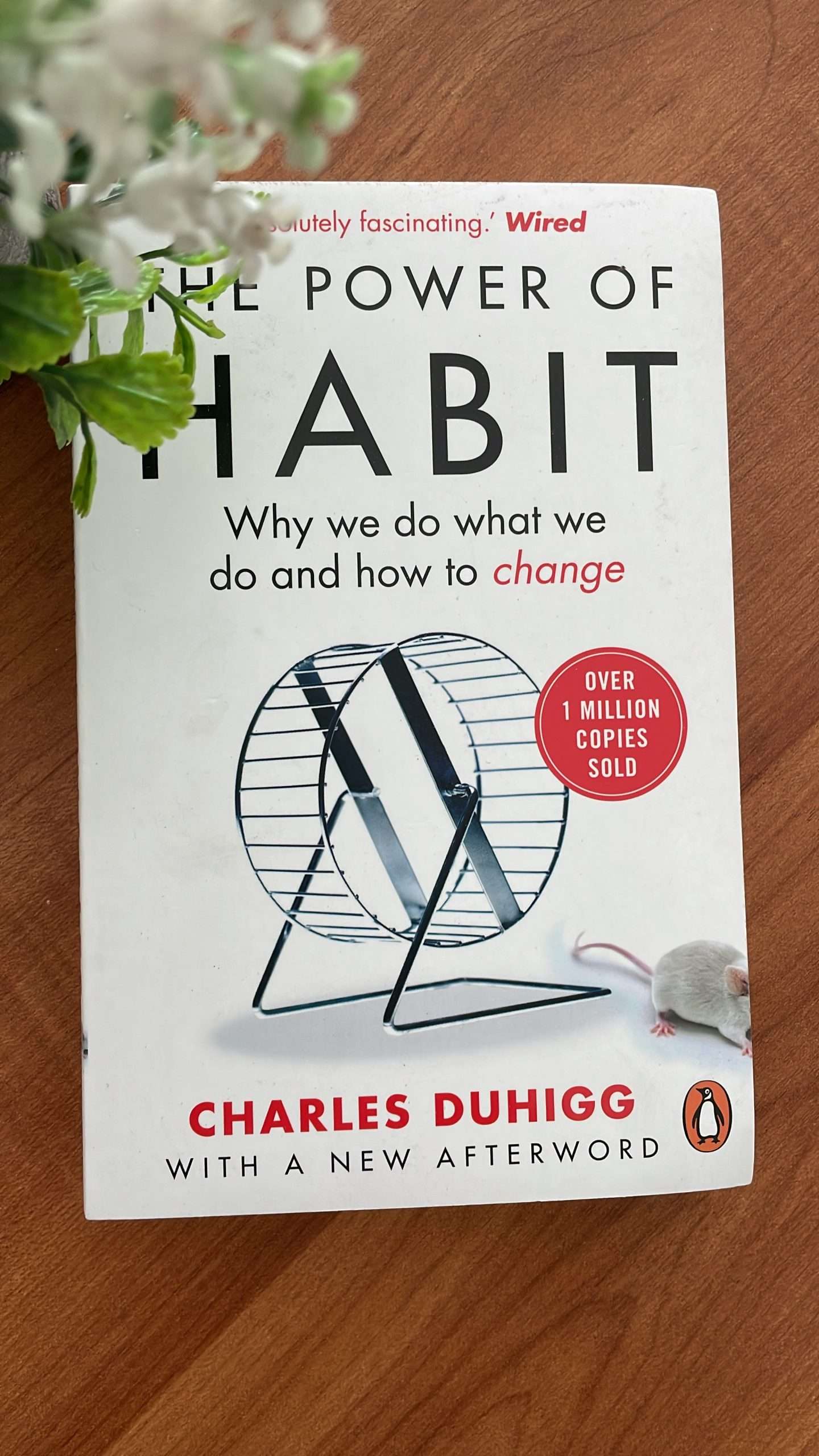
The Power of Habit by Charles Duhigg is an engaging and research-based exploration of why habits exist, how they influence everyday behaviour and how they can be changed. Its complete UK title is The Power of Habit: Why We Do What We Do, and How to Change.
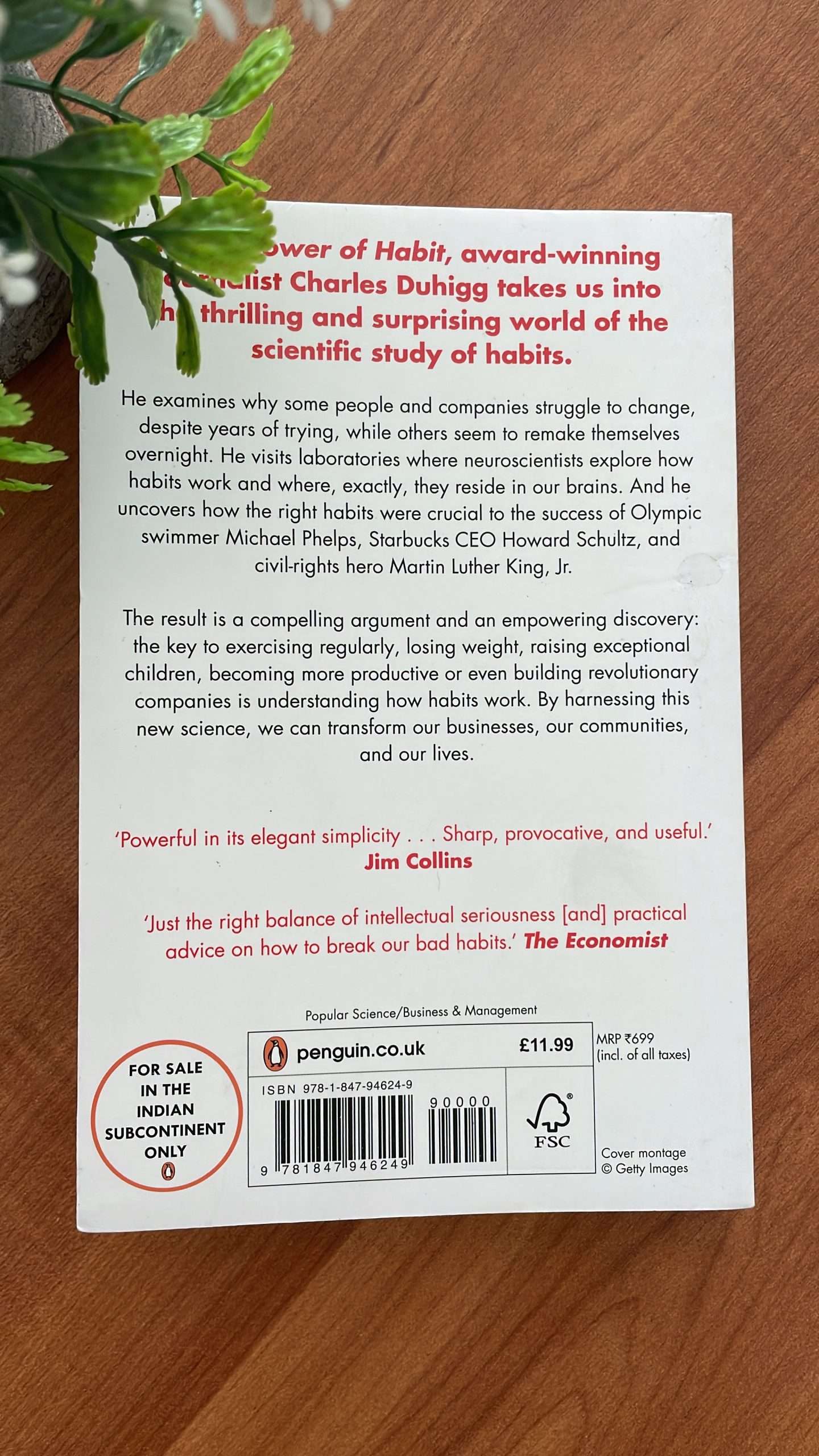
Through scientific research, interviews and memorable real-world stories, Charles Duhigg examines the routines that shape individuals, businesses, teams and communities. He explains that many actions that appear to be carefully considered decisions are actually behaviours that have become automatic through repetition.
Understanding these patterns can help people recognise why they repeatedly perform certain actions, even when those actions do not support their goals. The book shows that habits are powerful, but they are not necessarily permanent.
Why Read The Power of Habit by Charles Duhigg?
The Power of Habit by Charles Duhigg provides a clear introduction to the science and psychology of habitual behaviour. Instead of describing change as a simple matter of motivation, the book examines the systems and triggers that cause behaviours to repeat.
This approach can be helpful for readers who have struggled to maintain exercise routines, improve productivity, control spending, study consistently or replace an unwanted behaviour. Duhigg encourages readers to observe what happens before a habit, what action follows and what benefit or feeling keeps the pattern active.
The book also extends beyond personal development. It examines how companies, sports teams and social movements use routines to influence performance, culture and decision-making.
Understanding the Habit Loop
One of the book’s central ideas is the habit loop. Duhigg describes this loop through three connected elements:
- Cue – the trigger that begins the behaviour
- Routine – the physical, mental or emotional action
- Reward – the benefit that encourages the brain to remember the pattern
A cue may be a particular time, location, emotional feeling, person or previous action. The routine is the behaviour that follows, while the reward satisfies a need or creates a positive response.
For example, someone may feel tired during the afternoon, purchase a snack and experience a temporary increase in energy or enjoyment. With repetition, the time of day can become a cue that automatically creates the desire for the snack.
Recognising the cue, routine and reward allows the person to examine the habit more clearly rather than depending only on willpower.
Changing an Existing Habit
The Power of Habit by Charles Duhigg explains that unwanted habits are often easier to change when the existing cue and reward are understood.
Duhigg presents the idea of replacing the old routine with a different behaviour that responds to the same cue and produces a similar reward. Someone who takes a break primarily for social interaction, for example, may be able to replace an unhealthy routine with a short conversation or walk.
This process requires observation and experimentation. The reward a person assumes they want may not be the reward actually driving the behaviour. A habit that appears to be about food may instead be connected to boredom, stress or the need for a break.
By testing different routines, readers can gain a more accurate understanding of the need behind the habit.
What Are Keystone Habits?
The book introduces keystone habits—behaviours that can produce positive changes in several other areas of life.
Exercise is often used as an example because developing a regular exercise routine may influence eating, sleep, confidence and productivity. The original change may be relatively small, but it can create momentum that affects other decisions.
Keystone habits also exist within organisations. A company that focuses consistently on one important practice, such as safety or quality, may improve communication, accountability and operational discipline.
This idea encourages readers to avoid trying to change every part of life simultaneously. Selecting one influential behaviour may create a stronger foundation for wider improvement.
Willpower as a Habit
Willpower is commonly treated as a personality characteristic that some people naturally possess. Duhigg examines how self-control can also be supported through routines and preparation.
People often find it harder to make careful decisions when they are tired, stressed or emotionally overwhelmed. Preparing a response before a difficult situation occurs can reduce the need to make a new decision during the moment of pressure.
A student might establish a fixed study time and remove distracting devices beforehand. An employee may prepare a checklist for handling a challenging customer. Someone improving their diet may plan meals before becoming hungry.
These routines do not eliminate difficulty, but they make the desired action easier to begin and repeat.
Habits in Business and Organisations
The Power of Habit by Charles Duhigg also explores how organisational habits influence companies. Businesses develop routines for communication, product development, customer service, safety and decision-making.
Some routines improve efficiency because employees understand what to do without requiring constant instructions. Other routines may continue even when they are no longer effective.
Leaders can improve an organisation by identifying the routines that produce repeated problems. A delayed order, recurring customer complaint or frequent stock error may be caused by an established process rather than one isolated mistake.
Changing the organisational routine can produce more reliable improvement than simply asking employees to work harder.
How Companies Study Consumer Habits
The book examines how businesses study consumer behaviour to understand when and why people purchase products. Shopping patterns, timing and previous purchases can reveal routines that influence future decisions.
This section helps readers understand that habits do not affect only private choices. They also influence marketing, retail and the way companies communicate with customers.
Learning how organisations use behavioural patterns can make consumers more aware of the cues influencing their spending. It can also help ethical businesses design products and services that genuinely support customer needs.
Habits in Sport and High Performance
Duhigg uses examples from professional sport to demonstrate how routines help athletes and teams perform under pressure.
During an important competition, there may not be enough time to analyse every possible response. Training creates patterns that allow athletes to react quickly and confidently.
Successful routines reduce unnecessary decision-making and help people concentrate on the most important signals. This principle can be applied to presentations, examinations, customer service, emergency situations and other demanding environments.
Preparation allows useful behaviour to become more automatic when pressure is high.
Habits and Social Change
The book also examines the role of social habits in communities and movements. Large-scale change depends not only on individual motivation but also on relationships, shared routines and a sense of identity.
People may participate because of strong personal relationships and continue because they become connected to a larger community. Shared habits can help groups organise, communicate and maintain commitment over time.
This demonstrates that habits influence more than productivity or personal goals. They can contribute to collective action and long-term cultural change.
How to Apply the Book’s Lessons
Readers can begin applying the ideas by selecting one habit and recording the circumstances surrounding it.
Useful questions include:
- What happens immediately before the routine?
- What time and location are involved?
- What emotion is present?
- Who else is nearby?
- What reward does the behaviour provide?
- Which alternative routine could provide a similar reward?
Changing a habit may require several experiments. A routine that works for one person may not work for another because the cues and rewards are different.
The book encourages curiosity rather than self-criticism. An unwanted habit can be examined as a pattern that developed for a reason and can potentially be redesigned.
Habits for Productivity and Work
The principles can support professionals who want to manage time, reduce distractions and complete important work consistently.
A productive routine may involve beginning work at the same time, preparing the workspace, identifying one priority and creating a clear reward after completion.
Managers can also examine meeting habits, approval procedures and communication routines. A meeting that regularly wastes time may require a different structure rather than repeated reminders to be more efficient.
Small changes to repeated systems can create meaningful improvements across an entire team.
Habits for Students and Learning
Students can use the habit-loop framework to make studying more consistent. A specific location and time can become the cue, focused study becomes the routine and a planned break becomes the reward.
Beginning with a manageable period may be more effective than attempting an unrealistic study schedule. Repetition helps the routine feel more familiar and reduces the difficulty of getting started.
The ideas may also help teachers and parents create environments that encourage reading, preparation and responsibility without depending only on repeated instructions.
Who Should Read This Book?
This book is recommended for:
- Readers interested in habits and behavioural psychology
- People trying to replace unwanted routines
- Students seeking more consistent study habits
- Professionals interested in productivity
- Entrepreneurs and business owners
- Managers improving workplace systems
- Readers interested in marketing and consumer behaviour
- Fans of personal-development and psychology books
The book combines scientific explanations with storytelling, making complex ideas accessible to general readers.
About Charles Duhigg
Charles Duhigg is a Pulitzer Prize-winning investigative journalist and the author of The Power of Habit, Smarter Faster Better and Supercommunicators.
He studied at Yale University and Harvard Business School and has received awards for his work in journalism. His writing focuses on behaviour, communication, productivity and the systems that influence individuals and organisations.
In The Power of Habit by Charles Duhigg, he combines scientific research and detailed reporting to explain how habits operate and why understanding them can support meaningful change.
Official publication information is available from the
Penguin page for The Power of Habit.
Readers can also learn more about the author from the
official Charles Duhigg author page.
Why Buy from Book Lounge Sri Lanka?
Book Lounge is an online bookstore serving readers, students and professionals throughout Sri Lanka.
Readers interested in habits, motivation and personal development can explore the
Book Lounge Self Help collection.
You can also browse psychology, business and behavioural-science titles through the
Book Lounge Non-Fiction collection.
Explore all available books through the
Book Lounge online store.
For help with availability, recommendations, payments or delivery, visit the
Book Lounge contact page.
Buy The Power of Habit Online in Sri Lanka
Buy The Power of Habit by Charles Duhigg online in Sri Lanka from Book Lounge and discover how cues, routines and rewards influence everyday behaviour.
Order The Power of Habit by Charles Duhigg from Book Lounge today and learn how understanding your habits can help you create more effective routines in life, work and business.





Reviews
There are no reviews yet.