







Description
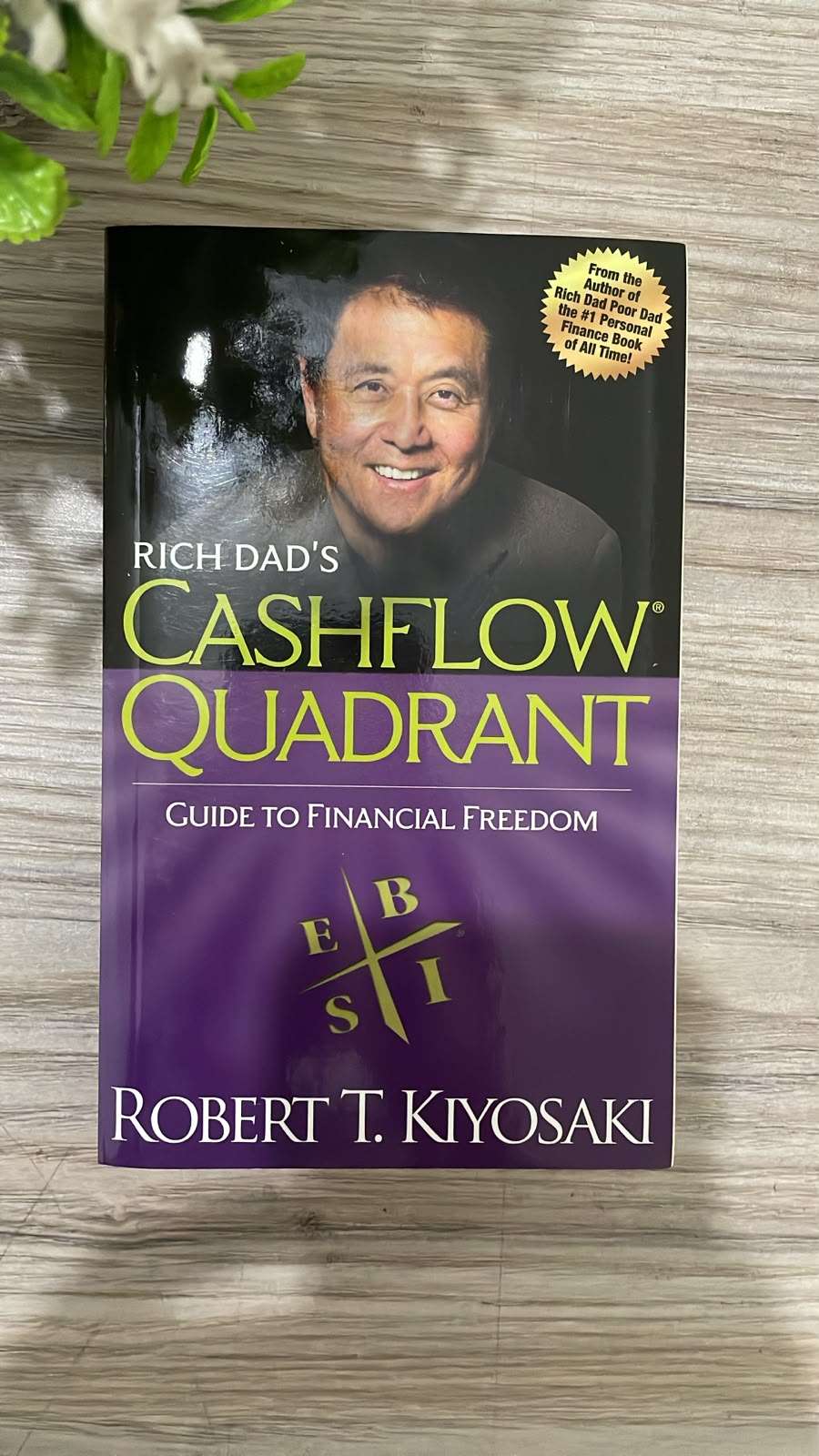
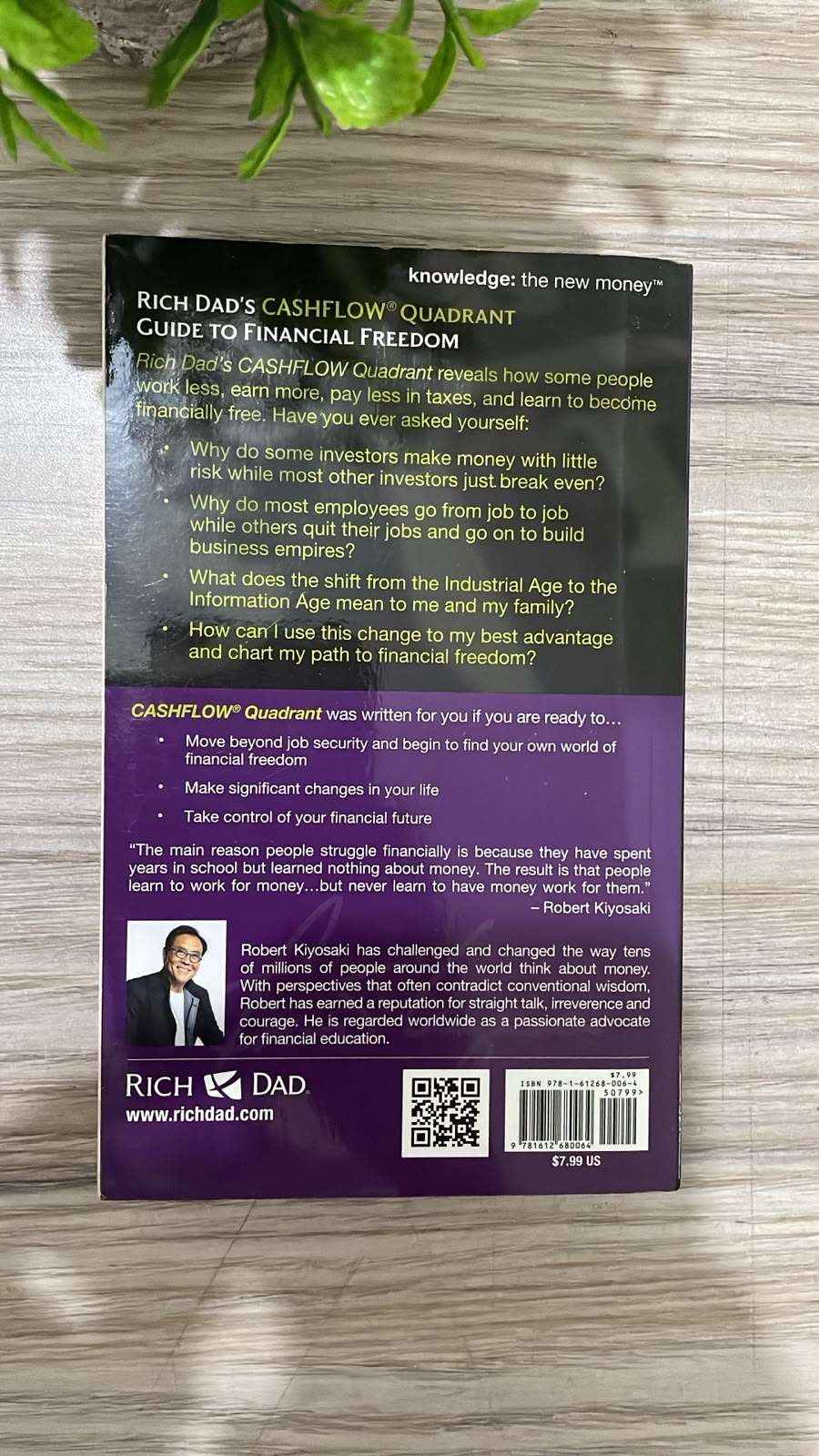
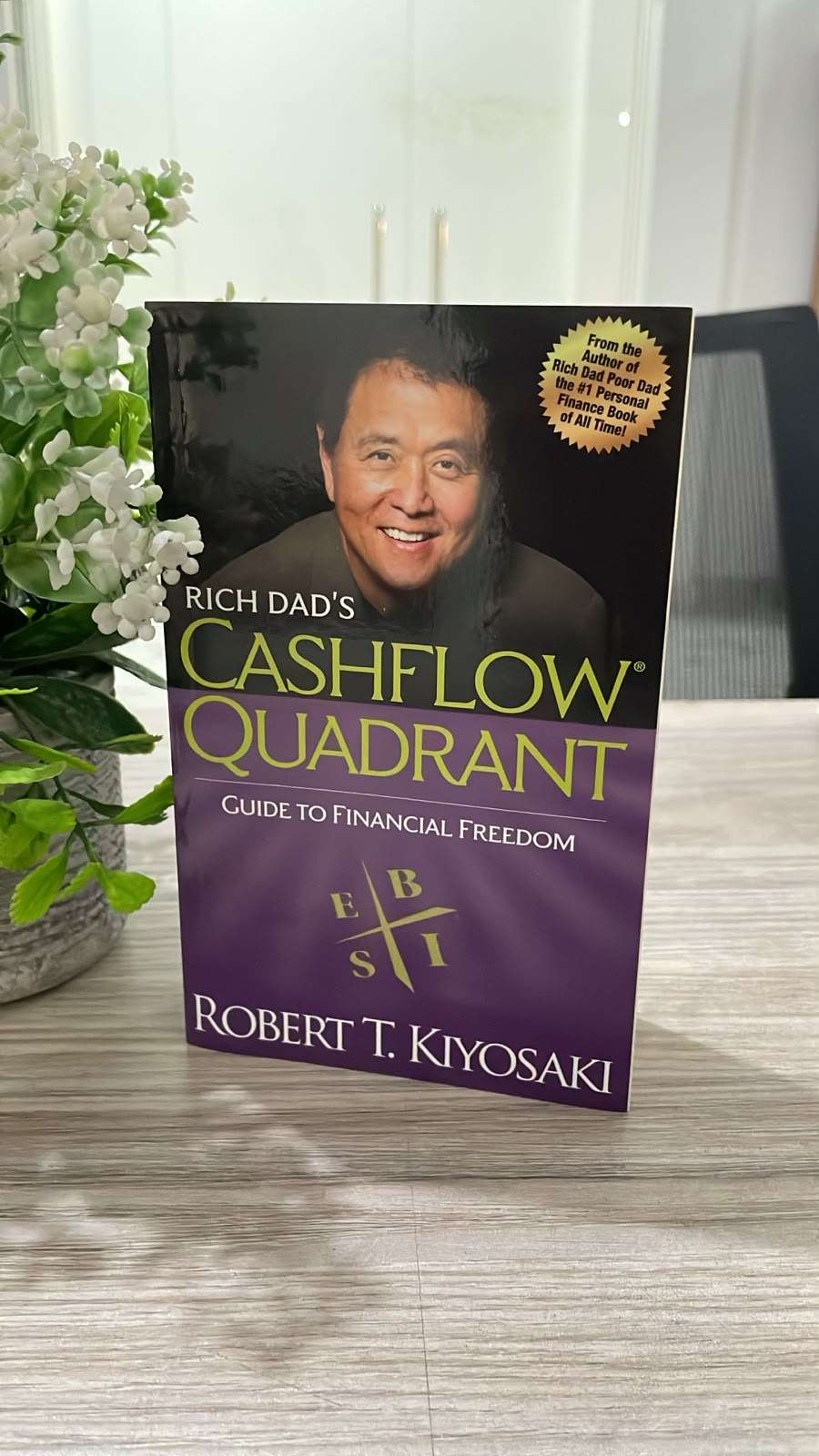
Rich Dad’s CASHFLOW Quadrant by Robert T. Kiyosaki is a personal-finance and entrepreneurship book about the different ways people earn money and the mindsets associated with each source of income. Its complete title is Rich Dad’s CASHFLOW Quadrant: Rich Dad’s Guide to Financial Freedom.
The book continues many of the financial ideas introduced in Rich Dad Poor Dad. Robert T. Kiyosaki explains that people may earn income as employees, self-employed professionals, business owners or investors. He organises these four groups into a framework known as the CASHFLOW Quadrant.
The four sections are identified by the letters E, S, B and I:
- E – Employee
- S – Self-Employed or Small-Business Owner
- B – Business Owner
- I – Investor
Kiyosaki argues that each quadrant requires different attitudes towards security, risk, control, money and work. Readers are encouraged to understand their current income position and consider whether they want to develop skills that allow them to earn from additional quadrants.
Why Read Rich Dad’s CASHFLOW Quadrant by Robert T. Kiyosaki?
Rich Dad’s CASHFLOW Quadrant by Robert T. Kiyosaki is recommended for readers who want to understand the difference between earning money through personal labour and earning through businesses or investments.
A person may work hard and earn a good salary while still depending completely on one employer. A self-employed professional may earn more but remain responsible for completing nearly every important task personally.
Business owners and investors attempt to create income through systems, teams, intellectual property, companies and assets. Their income may not depend entirely on the number of hours they work personally.
The book does not suggest that everyone must immediately leave employment. It encourages readers to improve their financial knowledge and begin developing additional skills and sources of income responsibly.
The Employee Quadrant
The Employee, represented by E, earns income by working for an organisation or another person.
Employees commonly value security, predictable income, benefits and clearly defined responsibilities. Employment can provide professional experience, training and financial stability.
However, employees may have limited control over their working hours, salary, company decisions and continued employment. When the job ends, the income commonly ends as well.
Kiyosaki encourages employees to use their income and experience to build financial knowledge, savings and assets rather than depending permanently on one salary.
The Self-Employed Quadrant
The Self-Employed quadrant includes freelancers, consultants, specialists and small-business owners whose income depends heavily on their personal work.
People in this quadrant often value independence and control. They may prefer completing work according to their own standards rather than following an employer’s instructions.
However, self-employment can create another form of dependence. When the person stops working, the business may stop producing income.
A highly skilled doctor, lawyer, designer, consultant or shop owner may effectively own a job rather than a business that can operate independently.
The Business Owner Quadrant
A Business Owner, represented by B, creates or owns a system through which other people and processes work together.
The important difference between S and B is not simply the size of the company. It is whether the business can continue functioning without requiring the owner to perform every task personally.
A successful business may depend on employees, operating procedures, technology, leadership, branding, customer relationships and financial controls.
Moving into the B quadrant therefore requires skills such as delegation, recruitment, sales, communication, financial management and system development.
The Investor Quadrant
An Investor, represented by I, uses money to acquire assets that may generate income or increase in value.
Investments may include shares, bonds, property, investment funds, businesses or other financial assets. Each investment has different risks, costs and possible returns.
Kiyosaki encourages readers to develop enough financial education to evaluate opportunities rather than depending only on recommendations or emotional excitement.
Investing can result in financial loss. Readers should understand the asset, possible downside, fees, taxes and local regulations before committing money.
The Left and Right Sides of the Quadrant
The E and S quadrants appear on the left side of the CASHFLOW Quadrant. The B and I quadrants appear on the right.
People on the left commonly earn income through their own labour, skills or time. People on the right attempt to earn through systems, teams, businesses and investments.
This distinction does not mean that every employee is financially unsuccessful or that every business owner and investor becomes wealthy.
An employee can save and invest wisely, while a poorly managed business may lose money. The framework is most useful as a way to understand income sources rather than as a guarantee of success.
Job Security and Financial Security
Rich Dad’s CASHFLOW Quadrant by Robert T. Kiyosaki distinguishes between job security and financial security.
Job security depends on continued employment. Financial security may come from savings, manageable expenses, insurance, useful skills and multiple sources of income.
A person with only one income source can become vulnerable when the employer reduces staff, the industry changes or illness prevents continued work.
Developing savings and additional income sources can provide greater flexibility, but this process should be completed gradually and responsibly.
Changing Quadrants Requires a Change in Mindset
Kiyosaki argues that moving from one quadrant to another involves more than changing occupations.
An employee may expect a regular salary and clear instructions. A business owner must often make decisions without guaranteed results and accept responsibility for employees, customers and expenses.
A self-employed person may believe that no one can complete the work as well as they can. Moving into the B quadrant requires learning to trust, train and manage other people.
An investor must become comfortable evaluating uncertainty while avoiding decisions driven entirely by fear or greed.
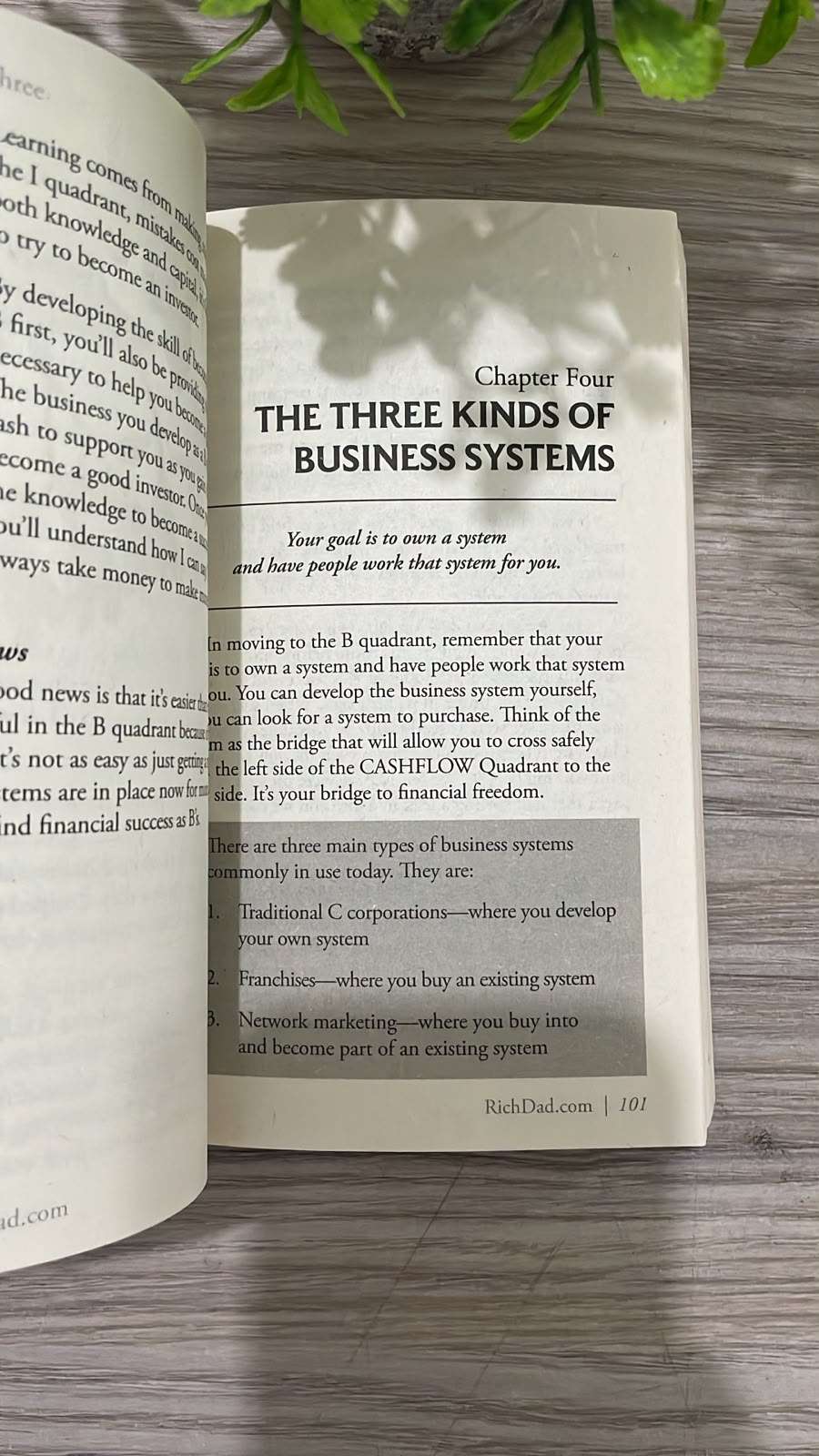
Building Systems Rather Than Creating Another Job
A business becomes more valuable when it depends on repeatable systems rather than only on the owner’s constant presence.
Systems may cover:
- Sales and customer service
- Purchasing and inventory
- Accounting and cash-flow management
- Recruitment and staff training
- Marketing and communication
- Product delivery and quality control
- Technology and data management
Clear systems can help a company maintain consistent standards, train employees and reduce unnecessary dependence on one individual.
Financial Education
The book repeatedly emphasises financial education. Readers are encouraged to understand income statements, balance sheets, cash flow, assets, liabilities, debt and investment risk.
Financial knowledge can help people recognise the difference between increasing income and increasing wealth.
A person may earn more money but remain financially stressed when expenses and debt grow at the same rate. Another person may use part of their income to acquire assets and gradually create additional cash flow.
Financial education does not eliminate uncertainty, but it can help readers identify decisions they do not yet understand.
Assets and Cash Flow
Kiyosaki’s financial philosophy focuses on acquiring assets that produce income.
In the simplified Rich Dad framework, an asset places money into the owner’s pocket, while a liability removes money from it.
Formal accounting definitions are more detailed, so readers should not rely only on this simplified rule when making financial or tax decisions.
An income-producing property, for example, may still lose money after loan repayments, repairs, vacancies, taxes and management costs are considered.
Moving from Self-Employment to Business Ownership
Many entrepreneurs begin in the S quadrant. They provide a service personally, communicate with customers and manage every part of the operation.
Growth requires them to document processes, train employees and create systems that can operate without their direct involvement in every transaction.
This transition can be difficult because delegation may feel like losing control. However, refusing to delegate can prevent the business from growing beyond the owner’s available time.
The book encourages entrepreneurs to build a business rather than simply create a more demanding personal job.
Using Employment as a Learning Opportunity
Employment can provide valuable skills, industry knowledge, professional contacts and capital.
A person who wants to become a business owner may benefit from learning sales, accounting, management, operations or customer service while working for an established organisation.
The objective is not to view employment as failure. It is to use each stage intentionally and understand which skills will support future goals.
Risk and Responsibility
Business ownership and investing can create opportunities, but they also involve risk.
A business may fail because of weak demand, high expenses, poor cash flow, competition or ineffective management. Investments can lose value because of market changes, economic conditions or company-specific problems.
Readers should maintain emergency savings, research opportunities carefully and avoid investing money required for essential living expenses.
Borrowing can increase potential returns, but it can also increase losses and repayment pressure.
Taxes and Legal Structures
The book discusses how employees, self-employed people, companies and investors may be treated differently by tax systems.
Tax laws vary between countries and change over time. The examples in the book should not be treated as current Sri Lankan tax advice.
Sri Lankan readers should consult qualified local accountants, tax advisers and legal professionals before creating a company, claiming expenses or making investment decisions based on tax considerations.
Practical Lessons from the CASHFLOW Quadrant
Readers can apply the book’s broad ideas through responsible actions such as:
- Identifying every current source of income
- Tracking monthly income and expenses
- Building an emergency fund
- Reducing expensive consumer debt
- Developing sales and communication skills
- Learning how businesses and financial statements work
- Testing a small business idea before making a large commitment
- Studying one investment category carefully
- Building systems that reduce dependence on one person
- Consulting qualified professionals before major decisions
Who Should Read This Book?
This book is recommended for:
- Employees exploring additional sources of income
- Freelancers and self-employed professionals
- Entrepreneurs and small-business owners
- Readers interested in investing
- Students and young professionals
- Fans of Rich Dad Poor Dad
- People interested in financial independence
- Readers developing their financial education
Important Financial Disclaimer
This book presents Robert Kiyosaki’s personal financial philosophy and general educational ideas. It does not provide personalised investment, accounting, legal or tax advice.
Business ownership, borrowing and investing involve risk, including the possible loss of money. Readers should complete independent research and obtain advice from appropriately qualified professionals before making significant financial decisions.
About Robert T. Kiyosaki
Robert T. Kiyosaki is an entrepreneur, author and financial educator best known for Rich Dad Poor Dad and the wider Rich Dad series.
His books focus on financial education, entrepreneurship, assets, cash flow and investing. He also helped create the CASHFLOW educational board game.
In Rich Dad’s CASHFLOW Quadrant by Robert T. Kiyosaki, he expands his financial framework by explaining the four main ways people earn income and the different mindsets associated with them.
Official information about the book is available from the
Rich Dad Store page for CASHFLOW Quadrant.
Readers can explore the E, S, B and I framework through the
official Rich Dad CASHFLOW Quadrant guide.
More information about the author is available from the
official Robert Kiyosaki profile.
Why Buy from Book Lounge Sri Lanka?
Book Lounge is an online bookstore serving students, professionals, entrepreneurs and general readers throughout Sri Lanka.
Explore more finance, business and educational titles through the
Book Lounge Non-Fiction collection.
You can also browse motivational and personal-development books through the
Book Lounge Self Help collection.
View all currently available books through the
Book Lounge online store.
For assistance with availability, payments or delivery, visit the
Book Lounge contact page.
Buy Rich Dad’s CASHFLOW Quadrant Online in Sri Lanka
Buy Rich Dad’s CASHFLOW Quadrant by Robert T. Kiyosaki online in Sri Lanka from Book Lounge and explore the Employee, Self-Employed, Business Owner and Investor paths to income.
Order Rich Dad’s CASHFLOW Quadrant by Robert T. Kiyosaki from Book Lounge today and begin developing a clearer understanding of business systems, investing, cash flow and financial freedom.






Reviews
There are no reviews yet.