








Description
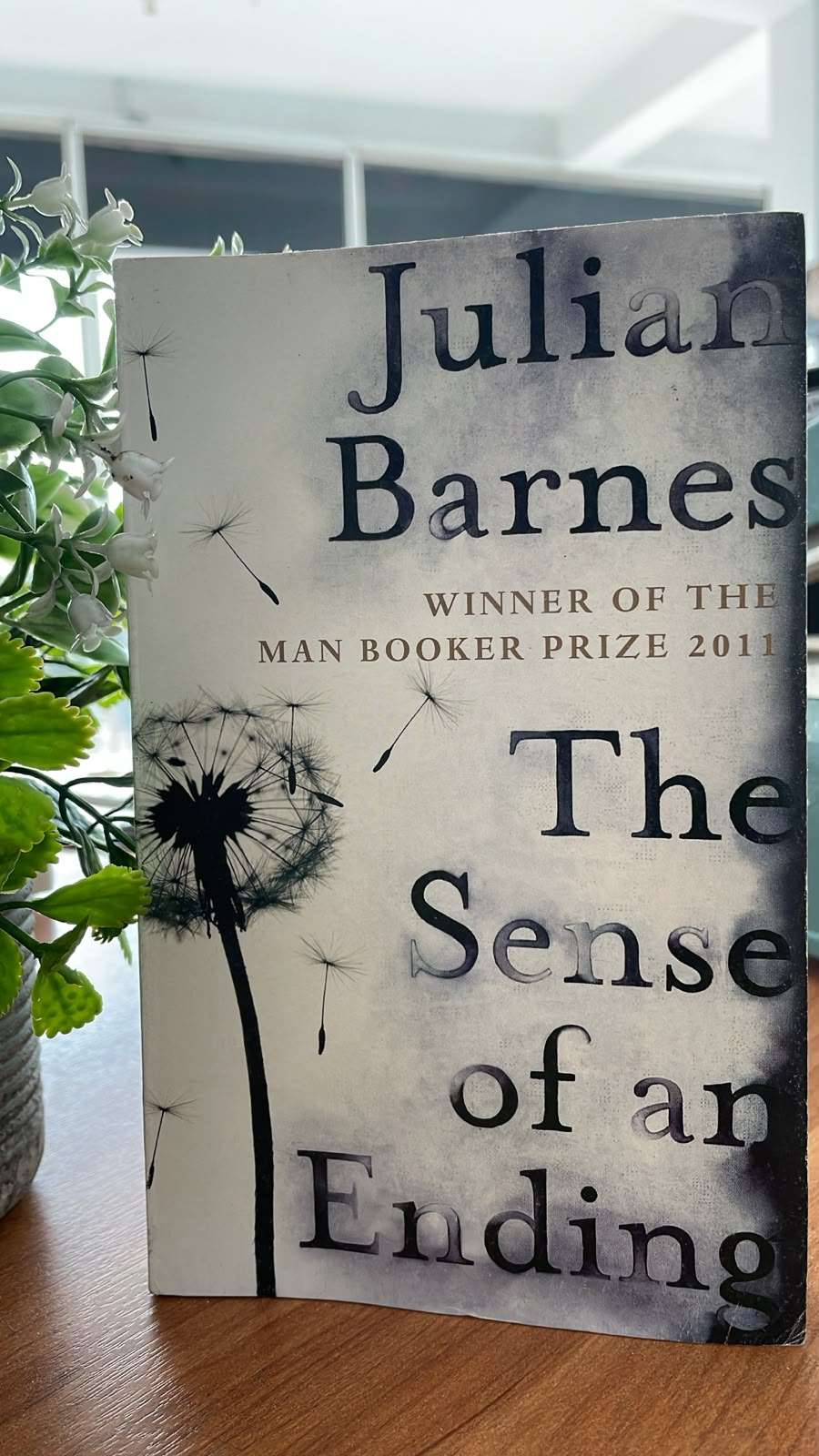
The Sense of an Ending by Julian Barnes is a concise yet deeply layered literary novel about memory, time, regret and personal responsibility. Winner of the 2011 Booker Prize, the story follows Tony Webster, a retired man who believes that he has created a quiet, orderly and reasonably successful life.
Tony has experienced a career, marriage, divorce and fatherhood. He maintains a calm relationship with his former wife and believes that he has never intentionally caused serious harm to another person. However, an unexpected lawyer’s letter and a mysterious inheritance force him to return to events he thought had been left safely in the past.
As Tony attempts to understand the inheritance, he revisits his school friendships, his relationship with Veronica and the life of his intelligent friend Adrian Finn. What initially appears to be a straightforward recollection gradually becomes more uncertain. Tony begins to recognise that memory is not a perfect record and that the stories people tell about themselves may conceal important omissions.
Why Read The Sense of an Ending by Julian Barnes?
The Sense of an Ending by Julian Barnes is an excellent choice for readers who enjoy psychologically complex novels that continue to develop after the final page. Although relatively short, the book explores important questions about how people remember their lives and how those memories influence their identities.
Tony initially presents himself as a reliable and ordinary narrator. He appears thoughtful, calm and willing to acknowledge that memory can be imperfect. However, as new information becomes available, readers must decide how much confidence they should place in his account.
The novel demonstrates that memory is not simply a collection of facts stored unchanged in the mind. People may forget painful details, reshape events to protect themselves or place greater importance on experiences that support the identity they want to maintain.
This makes the book both a compelling story and a philosophical investigation. Readers are encouraged to examine not only Tony’s memories but also the way they understand their own past experiences.
A Story About Memory and Uncertainty
Memory is the central subject of the novel. Tony remembers particular moments from school, university and early adulthood, but those memories are incomplete. Some details remain clear, while others have faded or been influenced by later experiences.
When Tony receives new evidence about the past, he discovers that his earlier interpretation may not have been accurate. The people involved may have understood events very differently, and some consequences may have continued long after Tony stopped thinking about them.
The novel asks whether remembering something sincerely means that the memory is true. A person may not be deliberately lying but may still create a version of events that is incomplete or misleading.
The Sense of an Ending by Julian Barnes therefore presents memory as something active. People organise, revise and interpret the past whenever they attempt to explain it.
Tony Webster and the Unreliable Narrator
Tony Webster tells the story from his own perspective. Because readers experience events through his memories, they receive only the information Tony knows, remembers or chooses to share.
At first, Tony appears trustworthy because he openly admits that memory can fail. Nevertheless, this awareness does not automatically make his account accurate. He may recognise the general weakness of memory without understanding the particular ways in which his own recollections have changed.
This creates the structure of an unreliable narrator. Readers must examine Tony’s language, assumptions and emotional reactions rather than accepting every conclusion immediately.
The technique makes the novel feel like a psychological mystery. The mystery is not simply about discovering what happened. It is also about understanding why Tony created a particular story about his life and why he maintained that story for so long.
Friendship, Youth and Adrian Finn
During his school years, Tony belongs to a close group of intelligent young friends. Their discussions involve philosophy, books, history, relationships and the meaning of life.
Adrian Finn joins the group and quickly distinguishes himself through his intelligence and seriousness. He considers ideas carefully and appears more intellectually mature than the others.
The young men promise to remain friends, but adulthood gradually takes them in different directions. Relationships change, ambitions develop and the confidence of youth is challenged by difficult decisions.
Tony’s memories of Adrian become increasingly important when the past returns. His understanding of their friendship is connected to larger questions about loyalty, jealousy, responsibility and the consequences of actions that once appeared temporary.
Love, Veronica and Emotional Misunderstanding
Tony’s relationship with Veronica becomes another important part of the story. Looking back, he describes their personalities, disagreements and eventual separation from his own perspective.
However, adult Tony may not fully understand what Veronica experienced or why she behaved as she did. Their conversations reveal how two people can share the same relationship while developing very different interpretations of it.
The novel explores the harm that may be caused by pride, resentment and emotional immaturity. Words written or spoken during anger can continue affecting others long after the person responsible has forgotten them.
Veronica’s return to Tony’s life challenges the simple explanation he has created about their past. She possesses knowledge that he wants, but communication between them remains difficult.
History, Evidence and Personal Narratives
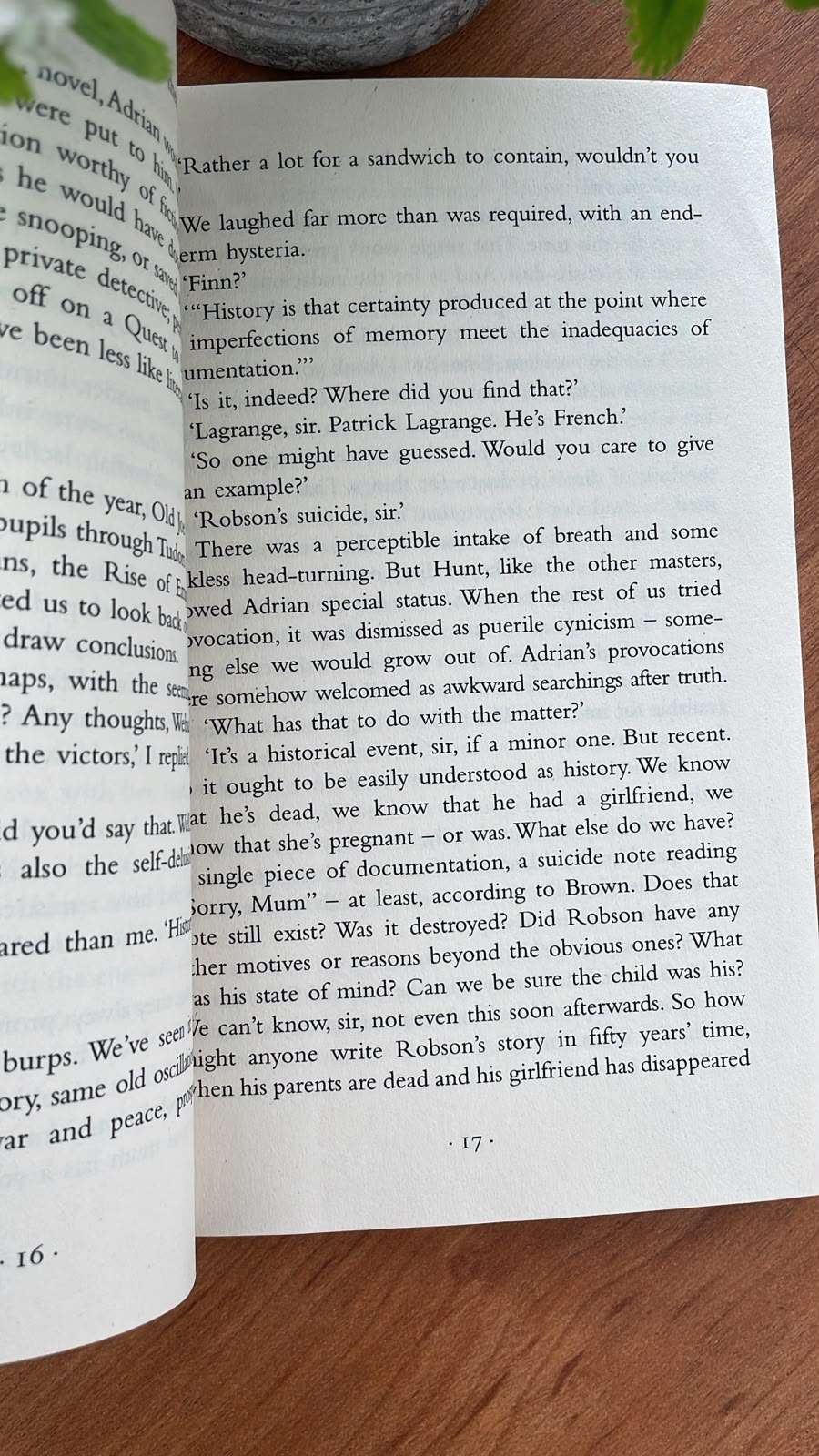
The characters discuss the meaning of history and the relationship between memory and evidence. These discussions are not separate from the central story. They prepare readers for Tony’s later attempt to reconstruct his own past.
Historical accounts depend on documents, testimony and interpretation. Personal history presents a similar problem because memories may conflict and important evidence may be unavailable.
Tony has spent years accepting one account of his life. When documents and other people challenge that account, he must decide whether he is willing to examine himself honestly.
The Sense of an Ending by Julian Barnes shows that people often behave like historians of their own lives. They select significant moments, explain causes and create a narrative connecting the person they once were with the person they believe they are now.
Regret and Personal Responsibility
As Tony searches for answers, the novel moves from curiosity towards questions of moral responsibility. It becomes increasingly difficult for him to view the past as something completely separate from his present life.
A person may believe that an action was insignificant because they did not witness its later consequences. However, lack of knowledge does not necessarily remove responsibility.
The story examines the difference between making a mistake and refusing to recognise that a mistake occurred. Tony must consider whether his peaceful self-image depends on forgetting or minimising experiences that do not support it.
Regret in the novel is complicated because the past cannot simply be corrected. Understanding may arrive after the people involved have changed, disappeared or become unwilling to provide forgiveness.
Time, Ageing and Self-Understanding
Tony’s retirement gives him time to reflect, but age does not automatically provide complete wisdom. Experience may increase understanding, yet people can also spend decades repeating the same comfortable explanation of their lives.
The novel considers what happens when a person reaches later life and discovers that an important memory may be wrong. Such a discovery affects not only the past but also the individual’s current identity.
If Tony has misunderstood his earlier actions, he may also have misunderstood the person he became. The book asks whether genuine self-knowledge is possible when memory is incomplete and other people’s perspectives remain partly inaccessible.
These themes make the novel especially meaningful for readers interested in ageing, identity and the stories people construct to explain their choices.
A Compact Psychological Mystery
Despite its philosophical themes, the novel remains suspenseful. The lawyer’s letter, missing documents, unexpected inheritance and Tony’s conversations with Veronica create a mystery that gradually reveals new possibilities.
Barnes provides information carefully, allowing readers to reconsider earlier scenes as Tony’s understanding changes. A detail that initially appeared unimportant may acquire greater significance later.
The concise length strengthens this effect because each conversation, memory and document contributes to the larger structure. The novel rewards careful reading and may reveal additional connections when read a second time.
Who Should Read This Novel?
This book is recommended for:
- Readers of literary and contemporary fiction
- Fans of psychological and philosophical novels
- Readers interested in memory and unreliable narrators
- Book clubs and literature discussion groups
- Readers who enjoy concise but meaningful books
- Fans of Booker Prize-winning fiction
- Readers interested in regret, ageing and identity
- Fans of authors such as Ian McEwan and Kazuo Ishiguro
The novel is relatively short, but its structure and themes invite careful attention. It is particularly suitable for readers who enjoy books that leave important questions open for interpretation and discussion.
Winner of the 2011 Booker Prize
The Sense of an Ending won the Booker Prize in 2011. The Booker Prize judges praised its writing, subtle plotting and ability to reveal greater depth through repeated reading.
The award recognised the novel’s achievement in combining a compelling personal story with broader questions about memory, morality and human responsibility.
Its Booker Prize recognition makes it an excellent choice for readers collecting major award-winning novels or exploring important works of contemporary British fiction.
About Julian Barnes
Julian Barnes is an acclaimed British novelist, essayist, critic and short-story writer. He was born in Leicester, England, and studied modern languages at Magdalen College, Oxford.
After graduating, Barnes worked as a lexicographer for the Oxford English Dictionary supplement. He later worked as a reviewer, literary editor and television critic before becoming widely recognised for his fiction and essays.
His novels include Flaubert’s Parrot, England, England, Arthur & George, The Noise of Time, The Only Story and Elizabeth Finch. Several of his works have received major literary nominations and awards.
In The Sense of an Ending by Julian Barnes, he uses precise and controlled storytelling to explore the unstable relationship between memory, time and personal identity.
Official publication information is available from the
Penguin Random House page for The Sense of an Ending.
More information about the novel and writer is available from the
official Julian Barnes website.
Readers can also view the novel’s award information through the
official Booker Prize page.
Why Buy from Book Lounge Sri Lanka?
Book Lounge is an online bookstore serving readers, students and families throughout Sri Lanka.
Readers interested in literary, psychological and contemporary novels can explore the
Book Lounge Fiction collection.
You can also discover popular titles through the
Book Lounge Best-Selling Books section or browse all available books through the
Book Lounge online store.
For assistance with availability, recommendations, payments, delivery or an existing order, visit the
Book Lounge contact page.
Buy The Sense of an Ending Online in Sri Lanka
Buy The Sense of an Ending by Julian Barnes online in Sri Lanka from Book Lounge and discover a compelling literary mystery about memory, history, regret and personal responsibility.
Order The Sense of an Ending by Julian Barnes from Book Lounge today and experience the concise, intelligent and emotionally powerful novel that won the 2011 Booker Prize.





Reviews
There are no reviews yet.