







Description
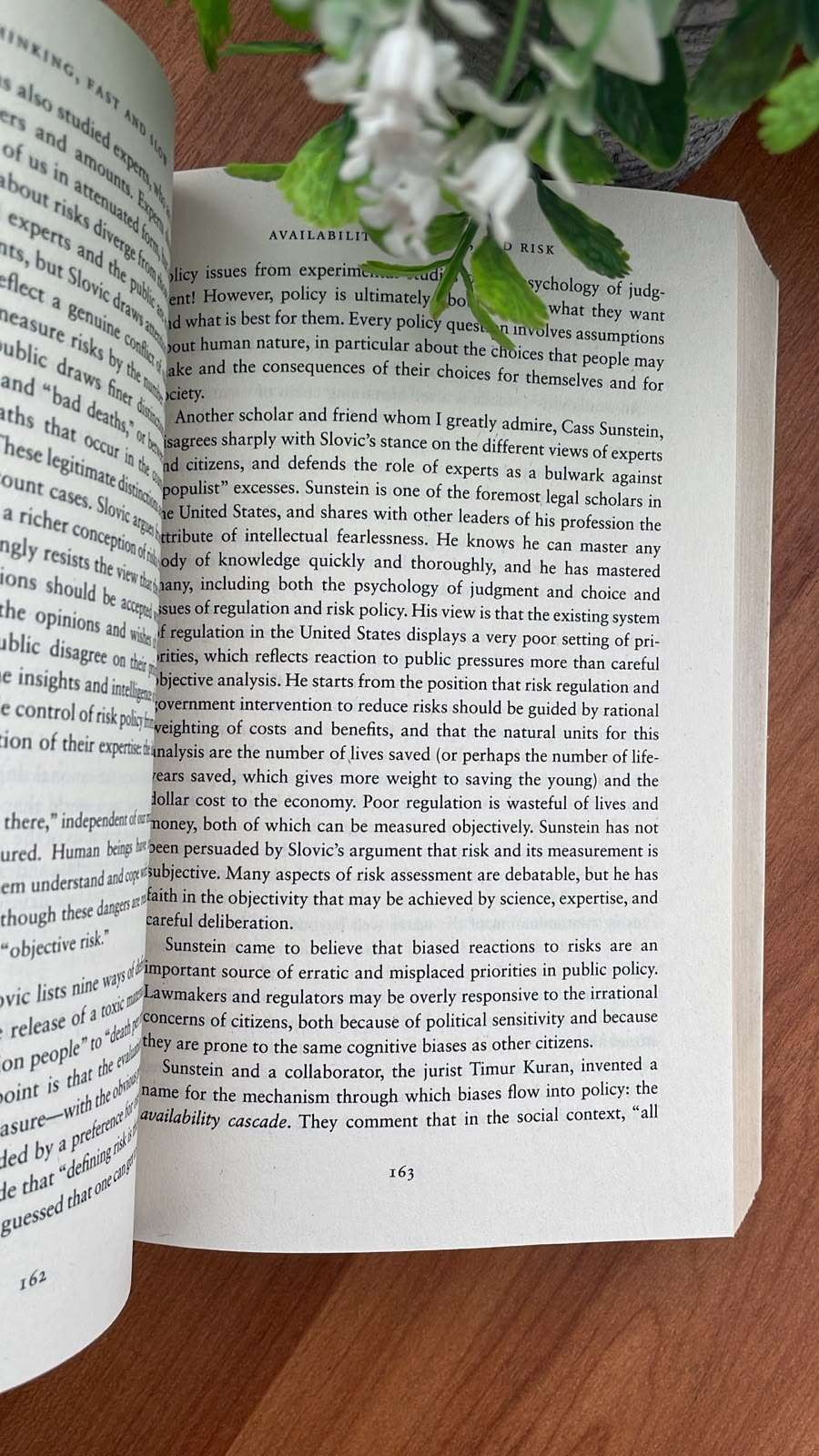
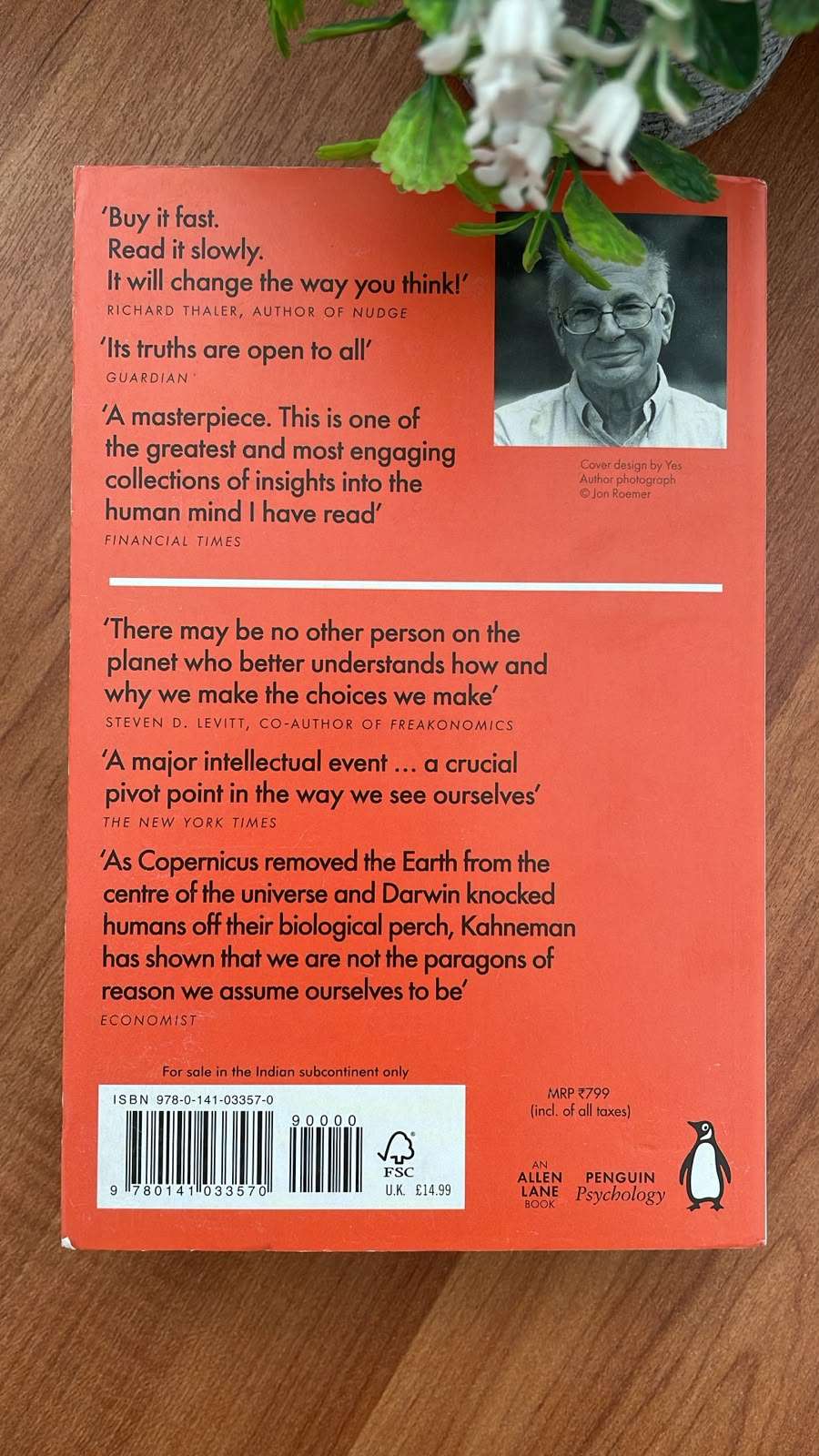
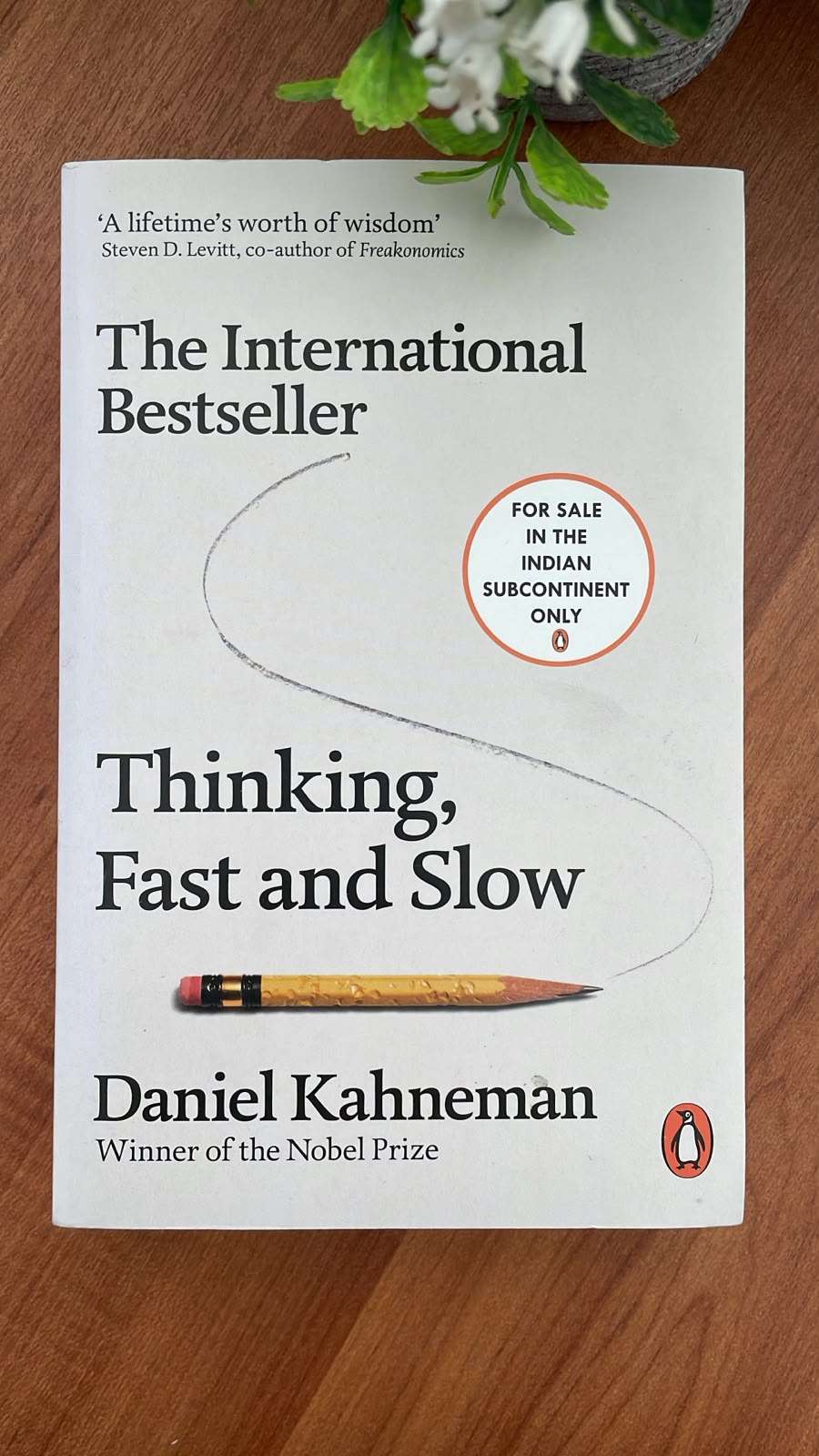
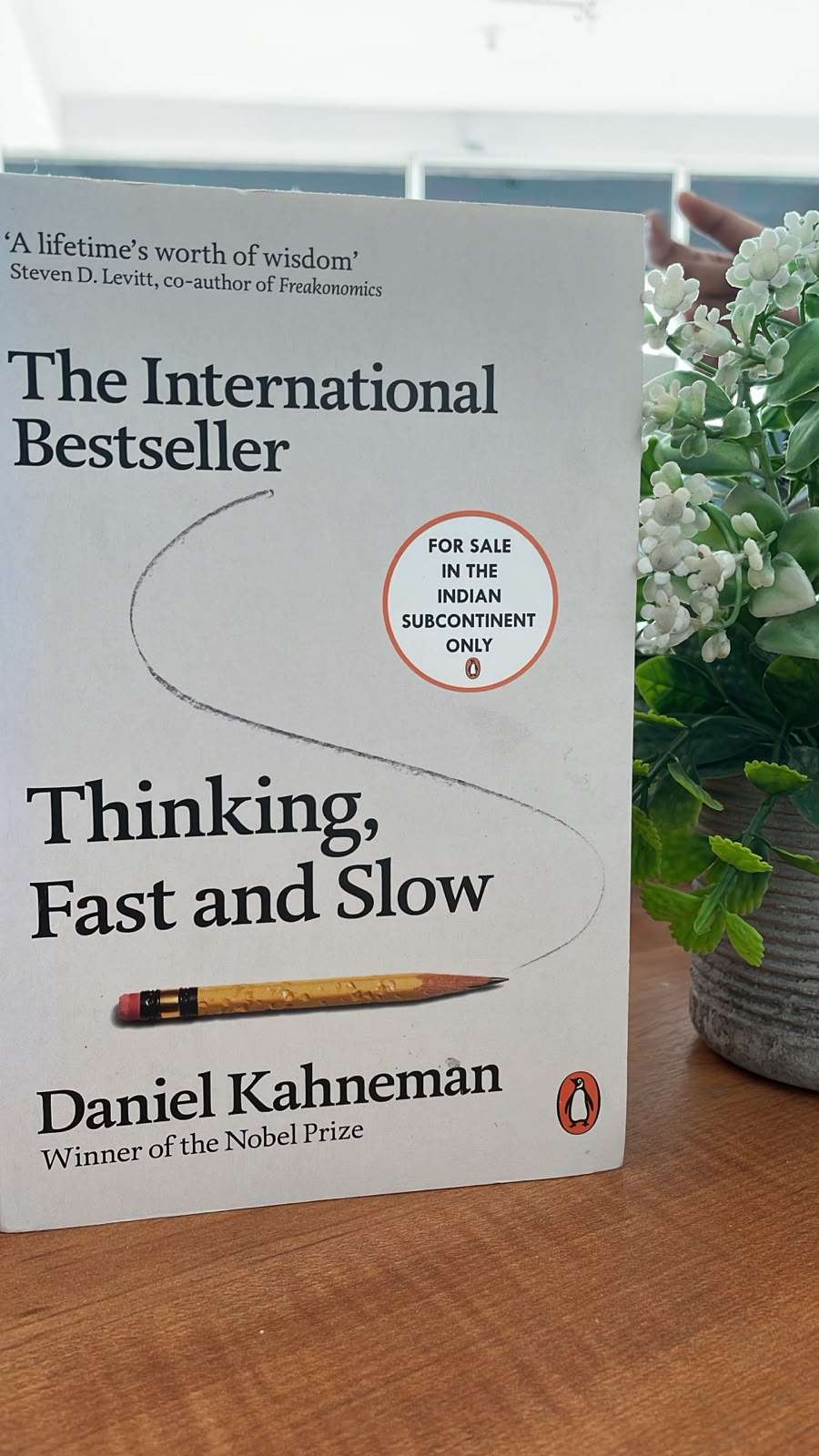
Thinking, Fast and Slow by Daniel Kahneman is an influential exploration of how people form judgments, evaluate risks and make decisions. Drawing on decades of psychological research, Kahneman explains why the human mind can perform remarkable mental tasks while also producing predictable errors.
At the centre of the book are two broad modes of thought. System 1 operates quickly, automatically and intuitively, while System 2 works more slowly and requires deliberate attention.
Both systems are necessary. Fast thinking allows people to recognise faces, detect danger, understand familiar language and respond efficiently to everyday situations. Slow thinking helps with complex calculations, careful comparisons and decisions requiring concentration.
Problems arise when fast thinking produces an immediate answer and the slower system accepts it without sufficient examination.
Kahneman explores how mental shortcuts, emotional reactions and incomplete information influence choices in business, finance, work, relationships and ordinary daily life.
What Is Thinking, Fast and Slow by Daniel Kahneman About?
Thinking, Fast and Slow by Daniel Kahneman explains how people can feel confident in a judgment even when that judgment has been shaped by bias, limited information or an unreliable first impression.
The book does not argue that intuition is always wrong. Fast thinking is efficient and essential. However, it can create errors when a situation requires statistical reasoning, careful comparison or recognition of uncertainty.
Slow thinking can examine evidence more carefully, but it requires energy and concentration. People therefore often rely on the easiest answer available rather than completing a demanding analysis.
By learning how these systems interact, readers can better understand why intelligent people sometimes make poor decisions and why confidence does not always indicate accuracy.
System 1: Fast and Intuitive Thinking
System 1 operates automatically and with little conscious effort.
It helps people recognise familiar objects, understand simple statements and respond quickly to emotional or physical signals.
When someone sees an angry expression or hears a sudden sound, System 1 produces an immediate interpretation before deliberate reasoning begins.
This speed is useful because daily life would become impossible if every small action required extensive analysis.
However, System 1 also searches for simple and coherent explanations. It may form a confident story from incomplete evidence or substitute an easier question for a difficult one.
A first impression can therefore feel convincing even when important information is missing.
System 2: Slow and Deliberate Thinking
System 2 becomes active when a task requires attention, calculation, self-control or careful reasoning.
It is used when solving a difficult mathematical problem, comparing complicated options or checking whether an intuitive answer is reliable.
Slow thinking can correct some mistakes produced by System 1, but it does not operate continuously.
Focused thought requires mental energy, and people may avoid it when they are tired, distracted or under time pressure.
One practical lesson from the book is to recognise decisions that deserve slower analysis. Important financial, professional or personal choices should not always be made from the first answer that feels correct.
Cognitive Biases and Mental Shortcuts
A cognitive bias is a systematic pattern that can influence judgment and move it away from careful or accurate reasoning.
Mental shortcuts are not automatically harmful. They allow people to make decisions efficiently when time and information are limited.
However, the same shortcuts can become unreliable in unfamiliar, complex or uncertain situations.
The book examines how people can be influenced by first impressions, memorable examples, emotional reactions and the way a question is presented.
Recognising these patterns does not remove every bias, but it can encourage more careful decisions and better discussion within organisations.
The Anchoring Effect
Anchoring occurs when an initial number or piece of information influences a later estimate.
Even an arbitrary starting point can affect what people consider reasonable.
This can influence negotiations, pricing, budgeting and estimates of time or cost.
For example, the first price presented during a discussion may shape later offers even when it does not accurately represent the item’s value.
Readers can reduce this influence by developing an independent estimate before examining another person’s suggested figure.
Availability and Memorable Information
People often judge the frequency or probability of an event according to how easily examples come to mind.
Dramatic, emotional and recently reported events are easier to remember than ordinary statistical information.
This can cause rare dangers to feel common and common dangers to receive less attention.
Availability can influence purchasing, investment, health and business decisions when memorable stories are treated as stronger evidence than reliable data.
A useful response is to ask whether the example is genuinely representative or simply easy to remember.
The Halo Effect and First Impressions
The halo effect occurs when one positive quality influences judgments about unrelated qualities.
A person who appears confident or attractive may also be judged as more intelligent, capable or trustworthy without enough supporting evidence.
The same process can work negatively. One disliked quality may influence the entire evaluation of a person, product or organisation.
Structured interviews, independent assessments and clearly defined criteria can help reduce the influence of broad first impressions.
Overconfidence and the Illusion of Understanding
People often create explanations that make past events appear more predictable than they actually were.
Once an outcome is known, it becomes easy to construct a story explaining why it had to happen.
This hindsight can produce excessive confidence in future predictions.
Business leaders, investors and professionals may underestimate chance while overestimating their ability to forecast complex events.
Kahneman encourages readers to recognise uncertainty, examine base rates and remain cautious about explanations created after an outcome becomes known.
Planning Fallacy
The planning fallacy is the tendency to underestimate the time, cost and difficulty required to complete a project.
People often concentrate on their preferred plan while ignoring the results of similar projects completed by others.
This can lead to missed deadlines, unexpected expenses and unrealistic expectations.
Using an outside view can improve planning. Instead of considering only the specific project, decision-makers can examine how long comparable projects normally take.
Past results from similar situations may provide a more realistic forecast than optimism about the current plan.
Loss Aversion
Loss aversion describes the tendency for losses to feel more significant than equivalent gains.
The possibility of losing something already possessed can therefore influence behaviour more strongly than the opportunity to receive an equal benefit.
This helps explain why people may reject reasonable changes, hold unsuitable investments or take unnecessary risks to avoid accepting a loss.
Loss aversion also affects negotiations and workplace decisions because different people may understand the same proposal as either a gain or a loss.
Prospect Theory and Decision-Making
Prospect theory, developed through the work of Daniel Kahneman and Amos Tversky, examines how people make choices involving risk and uncertainty.
The theory challenges the assumption that people always evaluate options according to perfectly consistent economic reasoning.
Choices can change according to whether outcomes are presented as gains or losses.
People may avoid risk when protecting a gain but become more willing to accept risk when attempting to prevent a loss.
This insight has influenced psychology, economics, behavioural finance, public policy and marketing.
Framing Effects
A framing effect occurs when different descriptions of the same situation produce different choices.
A medical treatment described through its survival rate may receive a different response from the same treatment described through its mortality rate.
The underlying information may be equivalent, but the emotional presentation changes how the choice feels.
Before making an important decision, readers can restate the options in different ways and examine whether the preferred answer changes.
Base Rates and Statistical Thinking
People frequently focus on a vivid personal description while giving insufficient attention to general statistical information.
A base rate describes how common an outcome is within a relevant group.
When evaluating predictions, readers should consider both the individual evidence and the wider frequency of similar outcomes.
This is particularly useful when assessing business success, professional performance, medical testing and financial risk.
Ignoring base rates can make unusual outcomes appear much more likely than they actually are.
The Experiencing Self and Remembering Self
The book distinguishes between the experiencing self and the remembering self.
The experiencing self lives through moments as they happen, while the remembering self creates a story about the experience afterwards.
Memories do not always represent every moment equally. Intense moments and the ending of an experience may strongly influence how the entire event is remembered.
This difference affects how people evaluate holidays, medical procedures, work experiences and personal happiness.
What feels pleasant while it is happening may not always create the strongest positive memory, and what is remembered positively may not represent the complete experience.
How Thinking, Fast and Slow Can Improve Decisions
The book does not offer a simple method for eliminating every mental error.
Biases are often easier to identify in another person’s judgment than in one’s own.
However, individuals and organisations can create procedures that reduce avoidable mistakes.
Important decisions can be delayed until sufficient information is available. Estimates can be compared with base rates, and teams can invite independent opinions before group discussion creates pressure to agree.
Decision-makers can also record their assumptions before knowing the outcome. This makes it easier to evaluate the quality of the original reasoning without allowing hindsight to rewrite the story.
Applications in Business and Leadership
Business leaders regularly make decisions involving incomplete information, forecasts and uncertain outcomes.
The concepts in this book can help with recruitment, budgeting, strategic planning, negotiation and performance evaluation.
Structured criteria can reduce the influence of first impressions during hiring. Historical data can improve project forecasts, while independent estimates may reduce anchoring.
Leaders can also create environments where uncertainty can be discussed honestly instead of rewarding only confident predictions.
Applications in Finance and Investing
Investors can be affected by loss aversion, overconfidence, recent news and the tendency to create explanations after market movements occur.
A rapidly rising asset may feel safer because its success is easy to remember, while a temporary decline may create pressure to make an emotional decision.
Kahneman’s ideas encourage investors to examine evidence, probabilities and long-term plans rather than reacting only to immediate feelings.
The book is not a personalised investment guide, and financial decisions should be based on suitable research and qualified advice.
Applications in Everyday Life
The book’s ideas can also be used outside professional settings.
Readers can pause before responding to emotionally charged information, examine whether a first impression is supported by evidence and compare difficult choices using consistent criteria.
They can also recognise when tiredness, time pressure or stress makes careful reasoning less likely.
Not every daily decision requires slow analysis. The goal is to reserve greater attention for choices whose consequences justify the effort.
Reading the Research Critically
Thinking, Fast and Slow summarises several decades of psychological research, but science continues to develop after a book is published.
Readers should distinguish the book’s broad framework from every individual study used as an example.
Some findings, particularly within areas of social priming, have received later scrutiny and replication debate.
The book remains valuable as an introduction to judgment, uncertainty and decision-making, while serious students may also examine more recent research and scholarly discussion.
Important Themes in Thinking, Fast and Slow
Fast and Slow Thinking
The mind combines automatic intuition with deliberate and effortful reasoning.
Cognitive Bias
Predictable mental patterns can influence judgment without conscious awareness.
Risk and Uncertainty
People do not always evaluate uncertain gains and losses consistently.
Overconfidence
Confidence can exceed the quality or quantity of available evidence.
Framing
Choices may change when equivalent information is presented differently.
Memory and Experience
The self that remembers an event may evaluate it differently from the self that experienced it.
Better Decision Processes
Structured procedures can help individuals and organisations reduce preventable judgment errors.
Who Should Read Thinking, Fast and Slow?
This book is an excellent choice for readers interested in:
- Psychology and human behaviour
- Decision-making and critical thinking
- Behavioural economics
- Cognitive biases and mental shortcuts
- Business strategy and leadership
- Finance, investing and risk
- Happiness and well-being research
- Improving professional judgment
The book presents detailed research and is best suited to adults, university students, professionals and readers comfortable with analytical nonfiction.
7 Powerful Ideas from Thinking, Fast and Slow
- Fast intuition is useful but can produce predictable mistakes.
- Slow thinking should be reserved for decisions that require careful attention.
- Confidence does not necessarily indicate that a judgment is accurate.
- Initial numbers and first impressions can influence later evaluations.
- Losses often affect decisions more strongly than equivalent gains.
- The way information is framed can change the choice people make.
- Better procedures can improve decisions even when individual bias cannot be completely removed.
About Daniel Kahneman
Daniel Kahneman was a psychologist whose research transformed the study of judgment, decision-making and behavioural economics.
His influential collaboration with Amos Tversky examined cognitive biases, judgment under uncertainty and prospect theory.
Kahneman received the 2002 Sveriges Riksbank Prize in Economic Sciences in Memory of Alfred Nobel for integrating insights from psychological research into economic science.
He was also a professor emeritus at Princeton University and later co-authored Noise: A Flaw in Human Judgment with Olivier Sibony and Cass R. Sunstein.
Daniel Kahneman died in 2024, leaving an enduring influence on psychology, economics, public policy and decision science.
Order Thinking, Fast and Slow in Sri Lanka
Thinking, Fast and Slow by Daniel Kahneman is an essential choice for readers interested in psychology, behavioural economics, business and clearer decision-making.
Through the concepts of System 1, System 2, cognitive bias, loss aversion and overconfidence, the book reveals why human judgment is both remarkably capable and predictably imperfect.
Order Thinking, Fast and Slow by Daniel Kahneman online in Sri Lanka and explore one of the most influential modern books about how the mind thinks and chooses.
Explore more psychology books available from Bargain Books.
Read the official synopsis and edition details on the Penguin publisher website.





Reviews
There are no reviews yet.