








Description
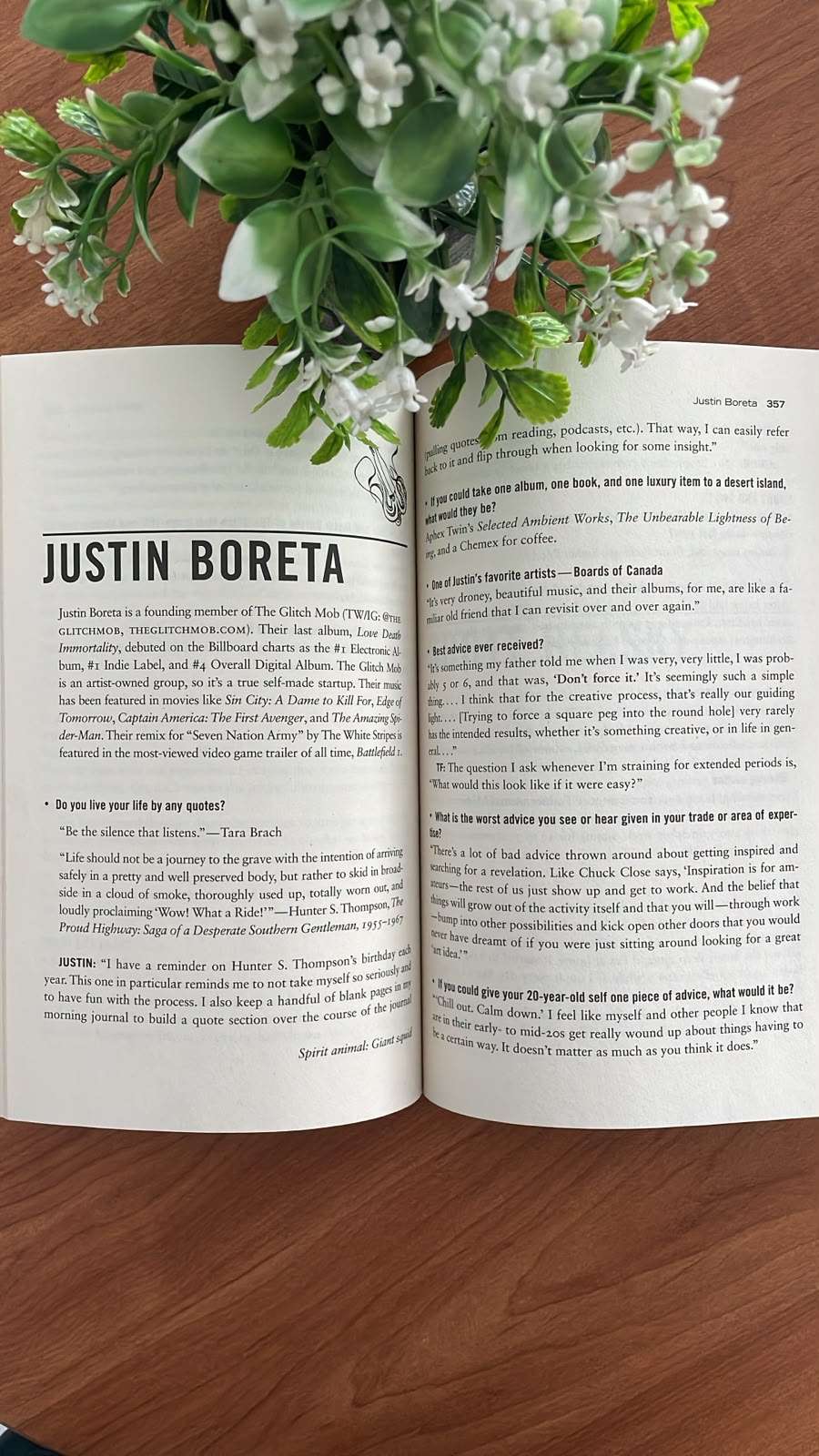
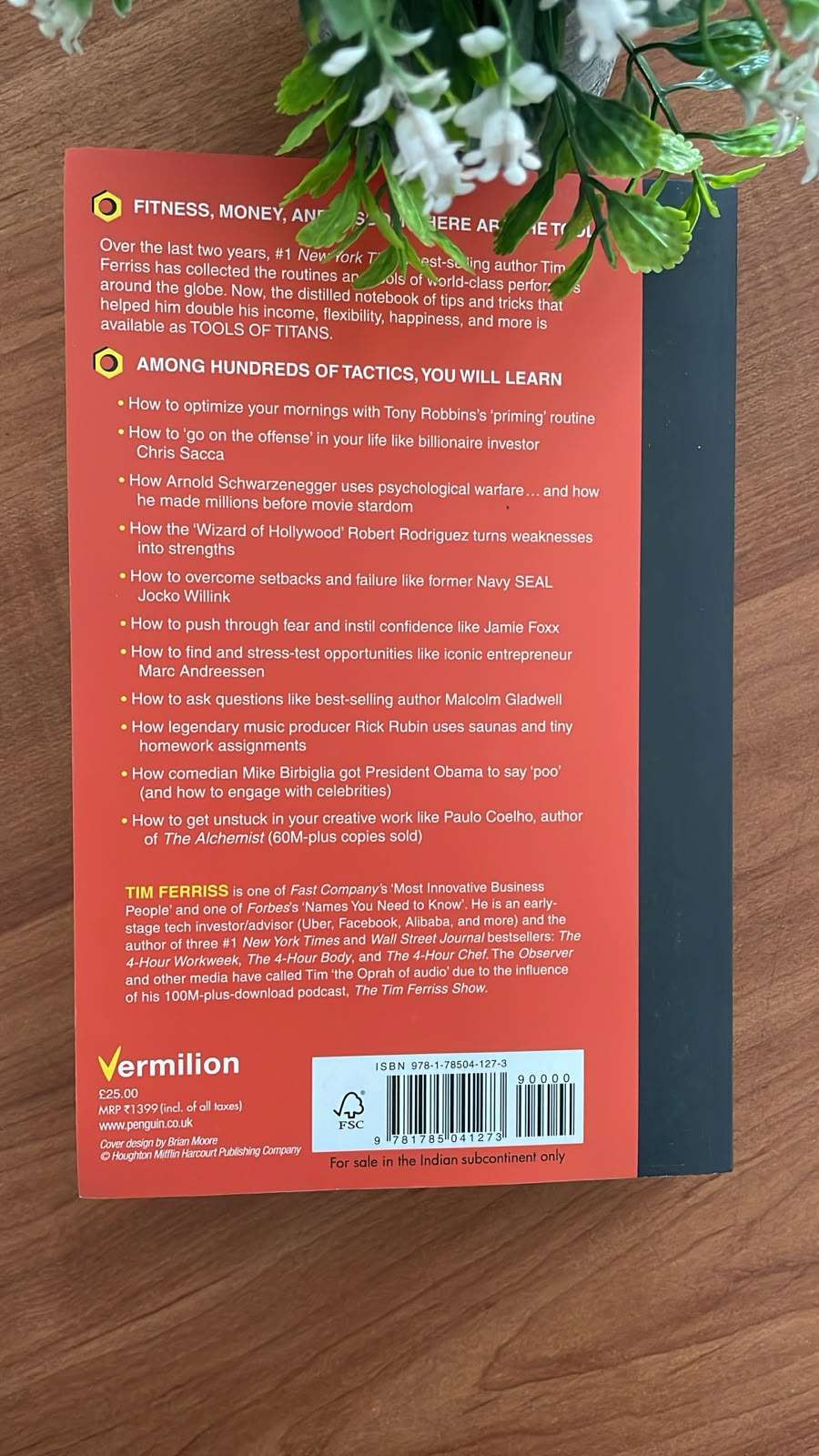
Tools of Titans by Tim Ferriss is an extensive collection of tactics, routines, habits and life lessons gathered from world-class entrepreneurs, investors, athletes, artists, writers and other high performers. Rather than presenting one rigid formula for success, Tim Ferriss introduces a wide range of ideas that readers can examine, adapt and test according to their own goals and circumstances.
The book developed from long-form conversations conducted for The Tim Ferriss Show. Ferriss studied how accomplished people structure their mornings, manage fear, protect their attention, make difficult decisions, recover from failure and continue improving their skills.
He also asked practical questions about exercise, books, investments, business mistakes, creative routines and the advice each guest would give to someone beginning a similar journey.
The result is not a conventional biography or a continuous argument that must be read from the first page to the last. It is closer to a large reference notebook filled with profiles, experiments, principles, quotations and practical questions.
Readers can move between sections, select the ideas most relevant to their lives and return to different profiles whenever they face a new professional or personal challenge.
What Is Tools of Titans by Tim Ferriss About?
Tools of Titans by Tim Ferriss explores the behaviours and thought processes used by people who have achieved unusually high levels of performance in different fields.
The featured individuals do not all share the same personality, routine or definition of success. Some focus on building companies, while others concentrate on sport, creativity, investing, leadership or personal well-being.
Ferriss looks for patterns while still recognising that different people succeed through different methods.
The book investigates questions such as:
- How do high performers begin their mornings?
- How do they respond to fear, criticism and uncertainty?
- Which books have influenced their decisions?
- How do they improve physical and mental performance?
- Which habits help them protect time and attention?
- What mistakes or wasted efforts would they warn beginners to avoid?
- How do they develop resilience after failure?
The purpose is not to copy every routine. It is to identify useful tools, test them responsibly and retain only the practices that create meaningful results.
Three Main Sections: Healthy, Wealthy and Wise
The book is divided into three major sections:
- Healthy – physical performance, exercise, recovery, nutrition, meditation and energy.
- Wealthy – entrepreneurship, investing, negotiation, career decisions and building valuable work.
- Wise – creativity, courage, emotional resilience, self-awareness and living with greater purpose.
These sections overlap because health, wealth and wisdom are not completely separate areas of life.
Ferriss also explains that wealth means more than money. It can include time, freedom, strong relationships and the ability to choose meaningful work.
Part One: Healthy
The Healthy section explores how different performers approach physical strength, recovery, mental preparation and sustainable energy.
The profiles include athletes, coaches, researchers and individuals who have tested unusual methods in demanding environments.
Readers encounter discussions involving exercise routines, mobility, sleep, meditation, breathing, recovery and nutrition.
The variety of approaches demonstrates that there is no single routine suitable for every body, age or lifestyle.
A method used by a professional athlete may be unsuitable for a beginner. A diet or supplement that one guest finds useful may interact differently with another person’s health, medication or daily responsibilities.
The strongest practical lesson is therefore experimentation supported by caution. Readers can identify one manageable practice, evaluate its effect and avoid changing several important habits simultaneously.
Morning Routines and Starting the Day
Many of the people featured in the book use a morning routine to create stability before responding to external demands.
The details differ, but common elements include movement, mindfulness, journaling, reading and identifying the day’s most important task.
A useful morning routine does not need to be long or complicated.
Its purpose is to reduce unnecessary decisions and help the reader begin the day intentionally rather than reacting immediately to messages, social media and other people’s priorities.
A practical routine might include drinking water, completing several minutes of movement, reviewing priorities and beginning one important task before entering a distracting environment.
Exercise, Recovery and Consistency
The book presents numerous approaches to exercise and physical performance.
Some profiles focus on strength, endurance or mobility, while others discuss recovery and maintaining physical ability over many years.
A repeated principle is that progress depends on consistent practice rather than occasional extreme effort.
A demanding routine completed once is usually less useful than a sustainable routine repeated regularly.
Recovery is also treated as part of training. Sleep, rest and appropriate workload can affect whether exercise supports performance or creates unnecessary injury and exhaustion.
Meditation and Mental Training
Meditation and mindfulness appear repeatedly across the book.
These practices are presented as tools for observing thoughts, reducing automatic reactions and returning attention to the current task.
Meditation does not require eliminating every thought. It involves noticing when attention has moved and practising the act of bringing it back.
This ability can support work, sport, creativity and difficult conversations because attention becomes easier to direct deliberately.
Readers can begin with a short daily practice rather than attempting a long and demanding session immediately.
Part Two: Wealthy
The Wealthy section examines entrepreneurship, investing, negotiation, risk and the creation of valuable work.
Ferriss includes people who built companies, developed investment strategies, managed creative careers and made unconventional professional decisions.
The profiles do not offer one guaranteed route to financial success.
Instead, they reveal different ways of thinking about opportunities, uncertainty, customers, competition and long-term value.
Readers are encouraged to examine how successful people reduce downside risk while preserving the possibility of a meaningful reward.
Build Skills Before Chasing Recognition
One important theme is the value of becoming useful before attempting to become widely known.
Attention can create opportunities, but it cannot permanently replace skill, reliability or valuable work.
Many successful people spent years practising, studying and completing work before receiving significant public recognition.
Readers can apply this lesson by identifying a skill that creates value and developing it through deliberate practice.
Progress becomes easier to measure when a large ambition is converted into specific projects, experiments and deadlines.
Experiment with Small, Reversible Decisions
Large goals can feel overwhelming when every decision appears permanent.
The book encourages experimentation: test an idea on a manageable scale, observe what happens and use the result to guide the next action.
An entrepreneur can test customer interest before investing heavily in a product. A creator can publish a small project before committing years to a larger one.
Small experiments reduce the cost of being wrong and provide information that private planning cannot always reveal.
Focus on High-Leverage Work
High-leverage work produces an effect larger than the time or effort directly invested.
Examples may include creating a reusable system, developing a valuable skill, improving a process or building a product that can serve many customers.
Being busy does not automatically mean that important work is being completed.
Readers can examine their tasks and ask which actions create the greatest long-term benefit.
Reducing low-value commitments can create more time for work that improves skills, relationships, customer experiences or financial stability.
Learning from Failure
Failure appears throughout the profiles as an experience that can provide information.
High performers are not protected from rejection, uncertainty or unsuccessful projects.
The difference often lies in how they interpret the result.
An unsuccessful attempt can reveal that a plan, timing, message or assumption needs to change. It does not always prove that the larger goal is impossible.
Readers are encouraged to separate personal identity from the result of one experiment.
A project can fail without proving that the person who created it is permanently incapable.
Part Three: Wise
The Wise section concentrates on emotional resilience, creativity, courage, awareness and meaningful living.
It contains perspectives from writers, artists, thinkers and individuals who have faced demanding personal or professional circumstances.
This section asks questions that cannot be answered only through productivity or financial achievement.
What makes work meaningful? How should people respond when a plan becomes impossible? Which relationships deserve time and attention? How can fear be recognised without allowing it to control every decision?
Fear-Setting and Difficult Decisions
People often avoid a meaningful action because they imagine an undefined and overwhelming danger.
Ferriss encourages a more structured examination of fear.
The reader can define the feared outcome, identify steps that may prevent it and consider how damage could be repaired if the outcome occurred.
They can also examine the cost of taking no action.
This process does not remove every risk, but it can transform an unclear fear into a collection of specific questions.
A decision becomes easier to evaluate when the reader understands both the risk of acting and the long-term cost of remaining unchanged.
Creativity Requires Production
Creative professionals in the book frequently emphasise the importance of producing work rather than waiting for perfect inspiration.
Ideas become clearer through writing, designing, recording, building or performing.
A creator cannot improve work that exists only as an intention.
Regular production also creates more opportunities to receive feedback, recognise patterns and discover an original voice.
Perfectionism can sometimes appear responsible while actually protecting a person from the possibility of criticism.
Completing a smaller project can provide more learning than endlessly planning an ideal project that is never released.
Choose Your Influences Carefully
The books people read, conversations they join and individuals they observe can influence their standards and decisions.
Tools of Titans frequently asks guests which books they recommend or give to other people.
This reveals not only useful reading material but also the ideas that shaped the guest’s worldview.
Readers can create their own group of indirect mentors through books, interviews and carefully selected educational material.
However, learning should eventually lead to practice. Collecting advice without testing it can become another form of procrastination.
Do Not Copy Every Titan
The people featured in the book often recommend different or conflicting approaches.
This is not a weakness. It demonstrates that successful lives can be built through different personalities, priorities and circumstances.
A routine should be evaluated according to the reader’s health, responsibilities, values and desired outcome.
The goal is not to assemble every habit into an exhausting daily schedule.
A better method is to select one idea, test it for a reasonable period and observe whether it improves a meaningful result.
Health and Safety Considerations
The book discusses exercise, diets, supplements, fasting, cold exposure and other health-related experiments.
These are personal experiences and should not be treated as individual medical instructions.
A method that works for one athlete, entrepreneur or podcast guest may be unsuitable for another person.
Readers with medical conditions, injuries, medication requirements or dietary restrictions should consult an appropriately qualified healthcare professional before attempting major health changes.
The book is best used as a source of questions and possible experiments rather than a replacement for professional medical advice.
How to Use Tools of Titans Practically
Because the book is large and contains many different profiles, readers do not need to memorise everything.
A practical reading method is to keep a notebook and record only ideas connected with a current goal.
For each useful idea, write:
- The problem it may help solve
- The smallest version that can be tested
- How long the experiment will run
- What result will indicate improvement
- Any risks or professional advice required
This turns reading into responsible experimentation.
Readers can return to the book when their priorities change. A profile that seems unimportant today may become valuable during a later career, health or creative challenge.
Important Themes in Tools of Titans
Habits and Routines
Repeated actions create structure and make important behaviour easier to continue.
Experimentation
Ideas should be tested in real life instead of accepted only because a successful person recommends them.
Physical and Mental Performance
Health, recovery, attention and emotional resilience can influence the quality of professional work.
Entrepreneurship and Investing
The book explores risk, decision-making, business strategy and the creation of long-term value.
Creativity
Writers, artists and other creators discuss practice, fear, criticism and completing meaningful work.
Failure and Resilience
Setbacks can become information when they are examined without turning one result into a permanent identity.
Mentorship and Learning
Readers can gain knowledge from experienced people through books, interviews and thoughtful observation.
Who Should Read Tools of Titans?
This book is an excellent choice for:
- Entrepreneurs and business owners
- Managers and team leaders
- Investors and startup professionals
- Athletes and fitness enthusiasts
- Writers, artists and content creators
- Students interested in successful habits
- Readers exploring productivity and personal development
- Fans of The Tim Ferriss Show
- People seeking practical ideas from experienced performers
9 Powerful Lessons from Tools of Titans
- Success does not depend on one universal daily routine.
- Small experiments can provide better information than endless planning.
- Consistency usually creates more progress than occasional extreme effort.
- Physical recovery and mental health affect professional performance.
- High-leverage work can produce results beyond the time directly invested.
- Fear becomes easier to evaluate when it is defined clearly.
- Failure can provide useful information without defining personal worth.
- Creative improvement requires producing and completing real work.
- The best tool is one that suits the reader’s goals and can be applied responsibly.
About Tim Ferriss
Timothy “Tim” Ferriss is an author, entrepreneur, investor and host of The Tim Ferriss Show.
His books include The 4-Hour Workweek, The 4-Hour Body, The 4-Hour Chef, Tools of Titans and Tribe of Mentors.
His interviews focus on the routines, decisions, books and experiments used by people working at high levels in different fields.
In Tools of Titans by Tim Ferriss, he organises insights from these conversations into a reference guide covering health, business, creativity and personal wisdom.
Order Tools of Titans by Tim Ferriss in Sri Lanka
Tools of Titans by Tim Ferriss is a valuable choice for readers interested in personal development, productivity, entrepreneurship, fitness and high-performance habits.
Its Healthy, Wealthy and Wise structure allows readers to explore practical ideas according to their current goals instead of following one rigid programme.
Order Tools of Titans by Tim Ferriss online in Sri Lanka and discover strategies, questions and experiments drawn from world-class performers.
Explore more personal-development books available from Bargain Books.
Read the official book introduction and structure on the Tools of Titans website.





Reviews
There are no reviews yet.