










Description
Welcome to Paradise by Twinkle Khanna is a thoughtful, witty and emotionally rich collection of five contemporary short stories about women navigating grief, family expectations, ageing, loneliness, marriage and personal reinvention.
The characters in these stories are not presented as perfect heroines or helpless victims. They are complicated people carrying memories, desires, disappointments and secrets while attempting to make sense of the relationships around them.
Twinkle Khanna approaches serious subjects with warmth and sharp observational humour. A funeral becomes the setting for an argument about religion and family history. An elderly woman’s determination to control the end of her life develops into a wider public debate. A troubled marriage takes an unexpected turn during a journey to Goa, while a grieving mother struggles to reconnect with life after an unbearable loss.
Together, the stories create an intimate portrait of modern Indian life in which sorrow and comedy frequently occupy the same room.
What Is Welcome to Paradise by Twinkle Khanna About?
Welcome to Paradise by Twinkle Khanna contains five stories connected by their interest in women’s inner lives and the complicated relationships between family, identity, love and freedom.
The stories move through homes, funerals, emails, hospitals, court petitions, beaches and memories. Their characters belong to different generations and communities, but each must confront a situation that disrupts the version of life she believed she understood.
Some characters are forced to reveal old family secrets. Others must decide whether honesty will repair a relationship or destroy it. Several face forms of loss that cannot be solved through simple advice or optimism.
Khanna’s humour prevents the collection from becoming entirely bleak. Her characters notice the absurdity surrounding pain, social convention and family drama even when their circumstances remain emotionally difficult.
The Five Stories in Welcome to Paradise
- The Man from the Garage
- Let’s Pretend
- Nearly Departed
- Welcome to Paradise
- Jelly Sweets
1. The Man from the Garage
The opening story begins after the death of Huma’s mother, known within the family as Amma.
Instead of producing a peaceful period of mourning, Amma’s death creates an immediate disagreement between different sides of her interfaith family.
Some relatives believe she should be buried, while others insist that she should be cremated. Funeral arrangements become a struggle over religion, marriage, inheritance, memory and who has the right to define Amma after her death.
As relatives argue, Huma reflects on the complicated family history surrounding her mother and the mysterious man connected with the garage.
The story moves between grief and dark humour, showing how death can expose conflicts that a family has avoided for years.
It also examines how children and grandchildren inherit stories that may be incomplete, altered or deliberately hidden.
Family, Religion and Belonging
Amma’s family cannot separate funeral rituals from questions of cultural identity.
Different relatives interpret her marriage and life through their own religious traditions. Their argument demonstrates how a person who lived between communities may be claimed by both sides while fully belonging to neither.
Behind the absurdity of the funeral debate lies a serious question: should a person’s final identity be determined by birth, marriage, personal belief or the relatives who remain alive?
2. Let’s Pretend
Let’s Pretend explores identity, loneliness and the stories people create when their real lives do not provide the connection they need.
Amita becomes involved in an unusual relationship linked to her lively Bua and a man named Sumit. Emails and assumed identities gradually create an emotional situation in which affection, deception and imagination become difficult to separate.
Amita must consider how much truth another person is entitled to receive and whether a relationship formed through pretending can still contain genuine feeling.
The story also examines ageing and the tendency of younger relatives to underestimate the emotional lives of older women.
Romance, loneliness, desire and curiosity do not disappear when a person reaches a certain age. Older people may continue searching for companionship while their families treat those needs as embarrassing or unimportant.
Appearance and Self-Confidence
Amita’s concerns about her body introduce another form of pretending.
People may alter their appearance or present a carefully controlled version of themselves because they believe love and acceptance depend on meeting particular physical expectations.
The story questions whether revealing one visible secret represents complete honesty when more emotionally important truths remain hidden.
3. Nearly Departed
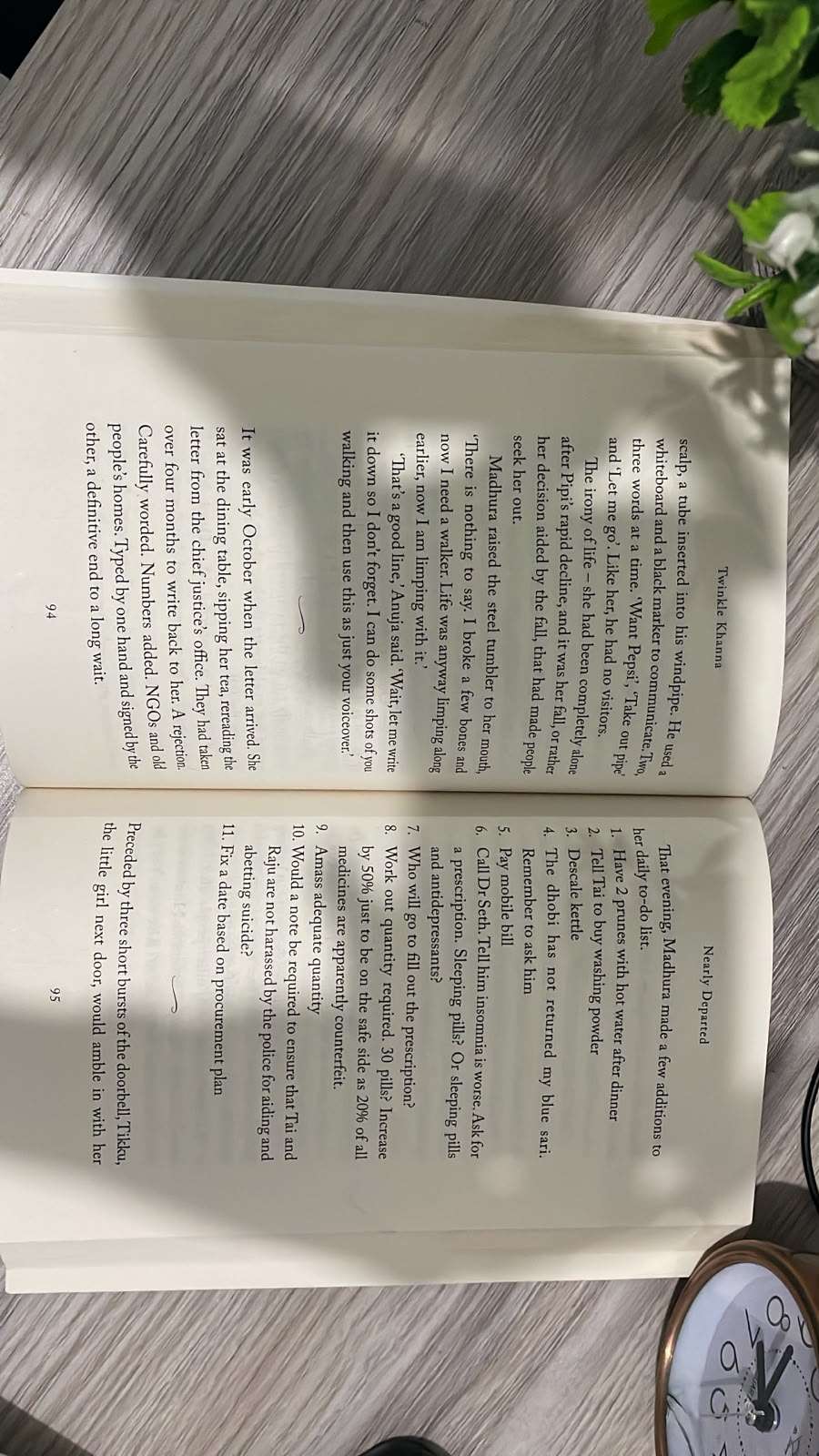
Nearly Departed follows eighty-six-year-old retired schoolteacher Madhura Desai.
After experiencing serious health problems, Madhura writes to India’s chief justice asking for legal permission to end her life through medically assisted death.
Her request is not presented as a quiet private decision. It attracts public attention, arguments, campaigns and reactions from people who believe they understand what an elderly woman should want.
Madhura’s position raises difficult questions about autonomy, illness, dignity, family responsibility and the fear of losing independence.
The story does not reduce euthanasia to an easy argument with one obvious answer. Instead, it explores the emotional and ethical tension between protecting life and respecting a mentally capable person’s understanding of her own future.
Ageing and Personal Autonomy
Older people are often discussed as though they are problems to manage rather than individuals capable of making decisions.
Madhura resists being treated as invisible, childish or incapable simply because of her age and physical condition.
Her determination creates discomfort because it challenges the assumption that relatives, doctors or institutions automatically understand what is best for her.
The story invites readers to consider how society can protect vulnerable people without erasing their independence.
Public Debate and Private Pain
Once Madhura’s request becomes public, her personal circumstances are transformed into a cause.
Campaigners and observers attach their own beliefs to her story. This reflects how public debates can overlook the individual whose life first created the issue.
Khanna uses humour to expose the performance and contradiction that can accompany activism, bureaucracy and moral certainty.
4. Welcome to Paradise
The title story follows Garima as she attempts to respond to serious problems within her marriage.
After discovering that her husband Neil has been unfaithful, she travels to Goa while struggling with depression, anger and uncertainty about their future.
There she encounters Anton Pais, an unconventional man whose way of living challenges familiar ideas about attachment, ownership and freedom.
The holiday does not provide an ordinary romantic escape or a simple solution. Instead, it creates a space where Garima can examine what she wants from marriage and whether intimacy can survive betrayal.
Marriage and Infidelity
Infidelity is often described through clear categories of innocence and guilt.
Garima’s experience is emotionally messier. She must decide whether an explanation represents accountability, excuse-making or another form of deception.
The story examines the pressure placed on women to forgive, preserve a marriage and manage the emotional consequences of another person’s choices.
It also recognises that relationships may continue through unexpected arrangements rather than following the path outsiders consider normal.
Freedom and Attachment
Goa becomes more than a holiday location. It represents distance from routines and identities that have started to feel restrictive.
Pais’s independent life encourages Garima to think about whether love must always involve possession and whether personal freedom can exist inside a committed relationship.
The title “paradise” is deliberately complicated. A beautiful place cannot remove grief, depression or betrayal, but it may give someone the distance needed to see those problems differently.
5. Jelly Sweets
Jelly Sweets is a deeply emotional story about Nusrat, motherhood and grief.
After losing her son, Nusrat also loses her willingness or ability to speak. Her silence becomes an expression of pain too large to explain through ordinary conversation.
The story draws on family memories connected with Satpati and uses food, domestic work and small acts of care to explore how a person may slowly return to life.
Jelly sweets become connected with memory, love and the possibility that comfort can appear through ordinary objects when formal words are inadequate.
Grief Beyond Words
People often expect grief to follow recognisable stages and eventually become easier to discuss.
Nusrat’s silence rejects that expectation.
Her loss cannot be repaired by encouragement or explained away through practical advice. The people around her must learn to offer support without demanding that she recover according to their preferred timetable.
The story treats silence not as emptiness but as a language shaped by trauma.
Quiet Courage
Courage in this collection is rarely dramatic.
It can involve attending to another person, preparing food, remembering a promise, telling an uncomfortable truth or finding a small reason to participate in life again.
Nusrat’s story suggests that survival does not always appear heroic from the outside. Sometimes it begins with one ordinary action performed after a period when action seemed impossible.
Women at Different Stages of Life
The collection includes women of different ages, family backgrounds and emotional circumstances.
Younger women struggle with appearance, marriage and inherited family history. Older women confront loneliness, illness, invisibility and the loss of personal control.
By placing these experiences together, the book demonstrates that questions about identity and freedom continue throughout life.
Women do not stop wanting love, dignity or independence when they become wives, mothers, widows or elderly relatives.
Grief and Mortality
Death and mortality connect several stories.
The collection opens with a funeral, examines a woman’s campaign for the right to die and ends with a mother grieving her child.
These subjects are serious, but the book does not treat death only through despair.
Family arguments, public performance, memory and humour continue around loss. Life remains untidy even during its most solemn moments.
Secrets and Deception
Characters hide information for many reasons.
Some want to protect their families. Others are ashamed, lonely or afraid that honesty will remove the limited happiness they possess.
The stories question whether deception is always selfish and whether a truth revealed without compassion can become another form of harm.
They also show that secrets rarely remain isolated. One hidden decision can shape several generations and relationships.
Humour Beside Heartbreak
Twinkle Khanna’s humour does not remove the emotional seriousness of the stories.
Instead, it reflects the way people frequently behave during difficult situations.
Relatives continue arguing about small details during a funeral. Public campaigns become theatrical. Awkward conversations occur while characters are experiencing genuine fear or sorrow.
This combination of humour and sadness makes the characters feel human rather than symbolic.
Modern Indian Life
The stories are shaped by Indian families, communities, religious customs, food, marriage expectations and generational differences.
They examine how tradition can provide belonging while also creating pressure.
Characters must navigate what families expect, what society approves and what they privately need.
The book is especially effective when showing that modernity and tradition are not simple opposites. People may adopt new technology or progressive language while continuing to carry old assumptions about women, ageing and relationships.
Important Themes in Welcome to Paradise
Grief and Recovery
Several characters must continue living after death, betrayal or emotional loss changes their understanding of the future.
Women’s Autonomy
The stories examine women’s right to make decisions about their bodies, relationships, identities and final years.
Family Secrets
Hidden histories influence funeral arrangements, romantic relationships and the way younger generations understand their families.
Ageing and Loneliness
Older women seek dignity, companionship and control in societies that may treat them as invisible.
Marriage and Desire
The collection explores infidelity, intimacy, forgiveness and the expectations placed on wives.
Religion and Identity
Different traditions shape family belonging and create conflict over how a person’s life should be remembered.
Humour and Resilience
Humour helps characters observe the absurdity around them without denying their pain.
Who Should Read Welcome to Paradise?
This collection is a strong choice for readers who enjoy:
- Contemporary Indian fiction
- Literary short-story collections
- Women-centred narratives
- Family dramas and hidden histories
- Stories about grief and emotional recovery
- Wry humour and social observation
- Complex marriages and relationships
- Multigenerational characters
- Books about ageing, mortality and personal freedom
- Character-driven fiction with Indian settings
Content Note
The collection discusses death, funerals, grief, child loss, addiction, family conflict, interfaith tensions, infidelity, depression, ageing, serious illness, euthanasia, assisted death, body-image concerns and cosmetic procedures.
It is best suited to adult and mature readers comfortable with emotionally serious contemporary fiction.
5 Moving Reasons to Read Welcome to Paradise
- Each story presents a memorable woman facing a different emotional or social conflict.
- Humour and heartbreak are combined without reducing the seriousness of grief.
- The collection explores modern Indian families across religions, generations and communities.
- Its stories raise important questions about marriage, ageing, autonomy and hidden truths.
- The short-story format offers five complete narratives within one accessible volume.
About Twinkle Khanna
Twinkle Khanna is an Indian author and columnist known for combining humour, social observation and stories about contemporary relationships.
Her books include Mrs Funnybones, The Legend of Lakshmi Prasad, Pyjamas Are Forgiving and Welcome to Paradise.
In Welcome to Paradise by Twinkle Khanna, she moves between dark humour and emotional tenderness while examining grief, loneliness, family and the complicated choices women make.
Order Welcome to Paradise in Sri Lanka
Welcome to Paradise by Twinkle Khanna is an engaging choice for readers who enjoy contemporary Indian fiction, women-centred stories and narratives that balance serious emotions with sharp humour.
Across five stories, characters confront funerals, loneliness, ageing, betrayal, grief and the possibility of beginning again.
Order Welcome to Paradise by Twinkle Khanna online in Sri Lanka and discover a moving collection about imperfect families, personal freedom and hope in unexpected forms.
Explore more contemporary fiction available from Bargain Books.
View the official edition information on the Juggernaut Books website.






Reviews
There are no reviews yet.