








Description
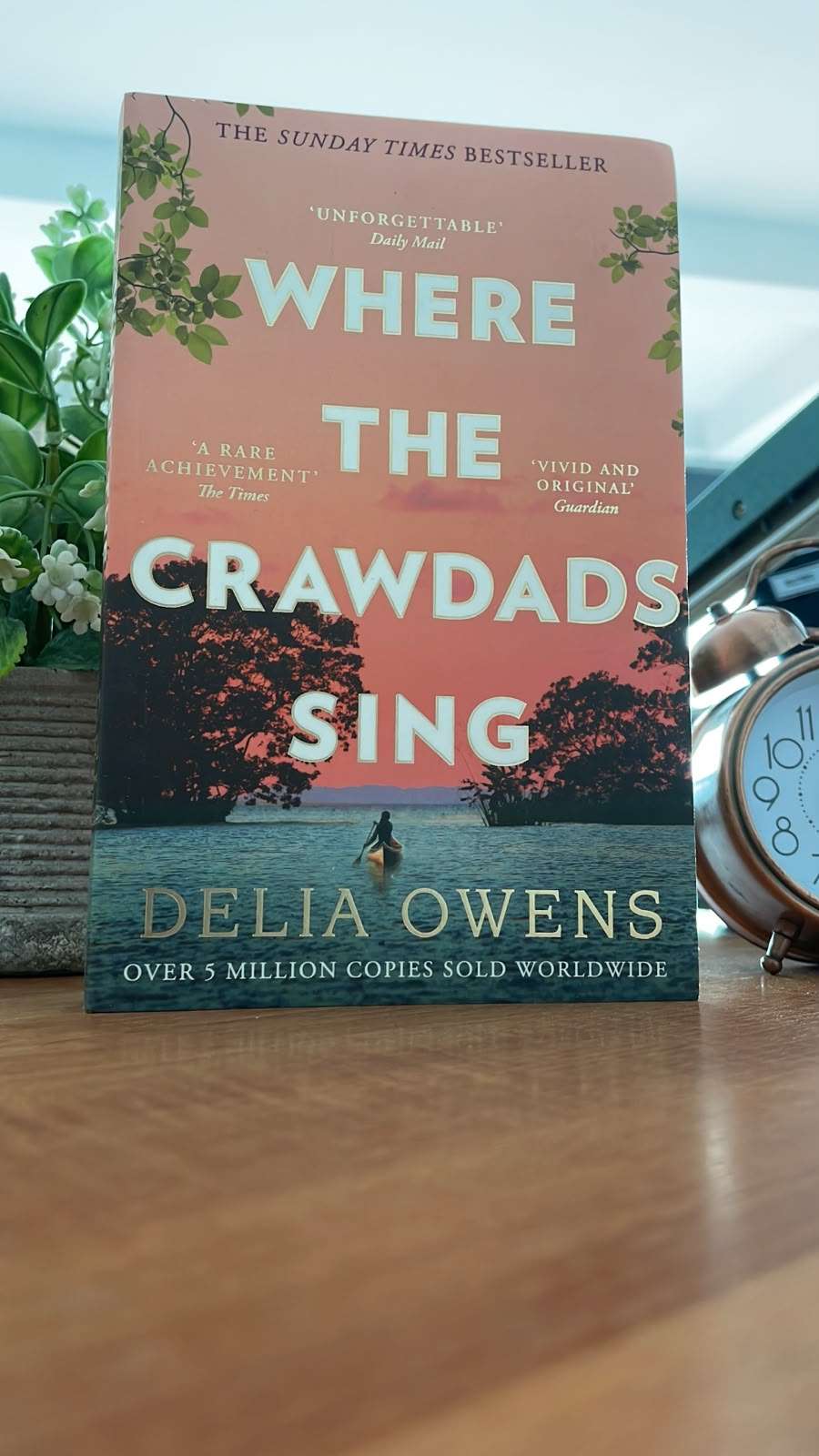
Where the Crawdads Sing by Delia Owens
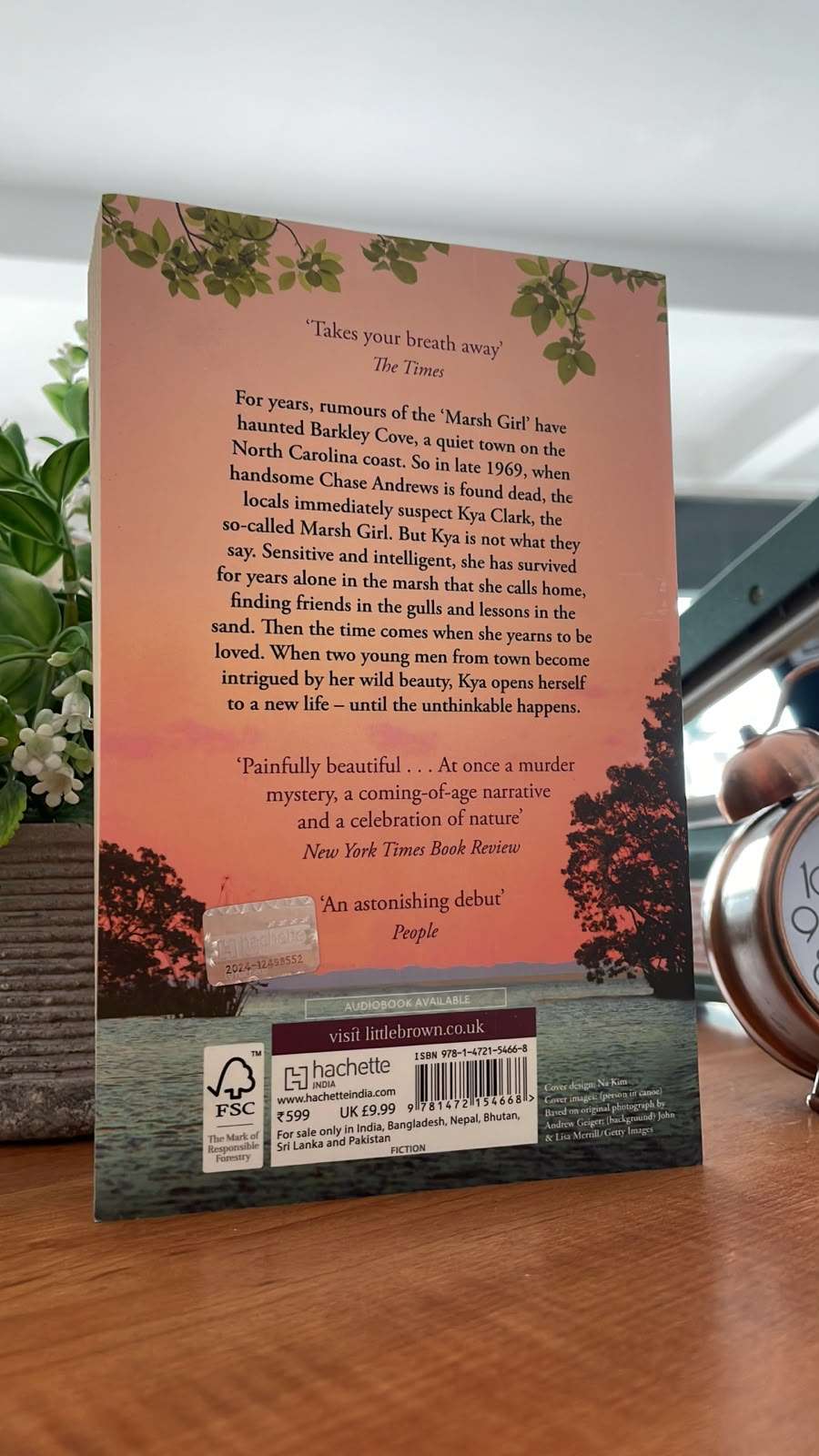
Where the Crawdads Sing by Delia Owens is an atmospheric novel that blends a coming-of-age story, an absorbing murder mystery, a tender romance, and a vivid celebration of the natural world. Set among the coastal marshes of North Carolina, the story follows Kya Clark, an intelligent and resilient young woman who grows up almost entirely alone.
Known by the people of nearby Barkley Cove as the “Marsh Girl,” Kya is treated with suspicion because she lives beyond the boundaries of conventional society. Abandoned by members of her family and rejected by the community, she learns to survive by understanding the rhythms of the marsh. Its birds, tides, shells, and hidden pathways become her teachers and companions.
When a popular young man from Barkley Cove is found dead, local prejudice quickly turns towards Kya. As the investigation develops, the novel’s different timelines gradually come together, revealing a story about loneliness, trust, survival, social exclusion, and the human need for connection.
Beautifully descriptive and emotionally compelling, Where the Crawdads Sing is ideal for readers who enjoy literary fiction with a powerful sense of place and a steadily unfolding mystery.
The Mystery of the Marsh Girl
For years, rumours about the mysterious Marsh Girl have circulated through Barkley Cove. Most townspeople know very little about Kya, but this does not prevent them from judging her.
She lives in a small shack deep within the marsh, travels by boat, and rarely enters town. Her isolation allows exaggerated stories to grow around her, turning a vulnerable young person into a figure of local suspicion.
Behind these rumours is a sensitive and observant girl who has learned to rely upon herself. Kya watches the wildlife around her, collects feathers and shells, and develops an extraordinary understanding of the ecosystem that has sheltered her.
Delia Owens gradually reveals the difference between the person Kya truly is and the identity the town has created for her. This contrast becomes especially important when prejudice begins influencing the investigation into a suspicious death.
A Powerful Coming-of-Age Story
At its heart, Where the Crawdads Sing is the story of a child growing into adulthood under extremely difficult circumstances.
As family members disappear from her life, Kya experiences repeated abandonment. She must find food, protect her home, earn money, and avoid authorities who might remove her from the only place she understands.
Her development does not follow the traditional path of school, friendships, and community support. Instead, the marsh provides her education. By observing animals, tides, weather, and seasonal change, she develops remarkable practical and intellectual abilities.
Kya’s journey is shaped by both independence and longing. Although she learns to survive alone, she continues to desire affection, companionship, and acceptance. The tension between protecting herself and trusting other people gives the novel much of its emotional power.
An Atmospheric Murder Mystery
The novel opens with the discovery of Chase Andrews’s body near an abandoned fire tower in 1969. Chase was a well-known young man from Barkley Cove, and his unexplained death immediately raises questions.
The narrative then moves between the investigation and Kya’s earlier life. As readers learn more about her childhood and relationships, the two timelines gradually approach one another.
Because Kya is already considered an outsider, many residents are ready to believe that she is connected to Chase’s death. The investigation therefore becomes more than a search for evidence. It also reveals how easily gossip, class divisions, and social prejudice can shape ideas about guilt.
Owens builds the mystery steadily while keeping Kya’s emotional development at the centre of the novel. The result is both a character-driven story and a page-turning investigation.
Nature as Home, Teacher, and Refuge
The North Carolina marsh is not merely the setting of Where the Crawdads Sing. It functions almost like another character.
Owens describes the wetlands through changing tides, bird calls, insects, grasses, lagoons, and patterns left in the sand. These details create an immersive environment in which beauty and danger exist side by side.
For Kya, the natural world offers a form of stability that human relationships frequently fail to provide. Animals follow recognisable patterns, seasons return, and the tides can be studied. Nature becomes a refuge from loneliness and rejection.
Kya’s observations of animal behaviour also influence how she understands people. Courtship, competition, deception, abandonment, and survival are not limited to human society. The novel draws subtle parallels between the behaviour of wildlife and the choices made by its characters.
Loneliness and the Need to Belong
Although Kya becomes highly self-sufficient, the novel never suggests that independence eliminates the need for human connection. She wants to be seen as a complete person rather than as an object of gossip or curiosity.
A small number of people show her kindness and recognise her intelligence. These relationships demonstrate how patience and respect can transform a life shaped by rejection.
Other characters are attracted to Kya’s difference without fully appreciating her vulnerability. This makes trust dangerous. Every new relationship carries the possibility of affection as well as another abandonment.
Through Kya’s experiences, the novel asks whether a person can learn to trust after repeatedly being left behind. It also explores how isolation can be both a source of strength and a wound that remains difficult to heal.
Love, Trust, and Emotional Risk
Romance plays an important role in Kya’s passage into adulthood. Two young men from Barkley Cove become interested in her, but they represent very different kinds of relationships and expectations.
Kya’s lack of experience with ordinary social life makes emotional intimacy especially complicated. She must decide when to trust, how much of herself to reveal, and whether another person’s affection is sincere.
The romantic elements are closely connected with the novel’s larger themes of abandonment and belonging. Love offers Kya the possibility of a life beyond isolation, but opening herself to another person also creates the risk of betrayal.
Owens develops these relationships gradually, allowing them to influence both Kya’s personal growth and the mystery surrounding Chase Andrews.
Prejudice and Social Exclusion
The residents of Barkley Cove often define Kya through labels rather than facts. Because she is poor, isolated, and different from them, many assume that she is uneducated, uncivilised, or dangerous.
This prejudice affects how she is treated in shops, at school, and within the justice system. Her experiences reveal how communities can create outsiders and then use their isolation as evidence that they do not belong.
The novel also portrays the racial and class divisions of the American South during the 1950s and 1960s. Some of the people who offer Kya genuine support are themselves familiar with discrimination and exclusion.
These social themes give the murder investigation additional significance. The question is not only whether Kya is guilty, but whether the community is capable of examining evidence without allowing prejudice to determine the answer.
An Unforgettable Sense of Place
Readers who enjoy richly described settings will find much to appreciate in Where the Crawdads Sing. Owens uses her experience as a wildlife scientist to create a landscape filled with precise natural detail.
The marsh can feel peaceful, mysterious, nurturing, and threatening—sometimes within the same scene. Its remoteness protects Kya while also separating her from the wider world.
This strong sense of place helps distinguish the novel from a conventional crime story. The mystery could not simply be transferred to another location without losing an essential part of its identity.
The natural imagery also gives the story a lyrical quality. Birds, shells, tides, feathers, and fireflies carry emotional meaning while remaining grounded in the physical environment Kya knows so well.
A Story That Crosses Several Genres
One reason for the novel’s broad popularity is its combination of different genres. It can be enjoyed as:
- A literary coming-of-age novel
- A murder mystery
- A courtroom drama
- A story of survival
- A romance
- A work of Southern fiction
- A nature-centred novel
- A study of loneliness and belonging
The mystery creates suspense, while the coming-of-age narrative develops a strong emotional connection with Kya. The romantic storyline adds hope and vulnerability, and the nature writing gives the novel its distinctive atmosphere.
This combination makes the book suitable for readers who might not usually choose conventional crime fiction or literary fiction alone.
From Bestselling Novel to Motion Picture
Where the Crawdads Sing became an international publishing phenomenon and a number-one bestseller. It was selected for Reese Witherspoon’s book club and won Pageturner of the Year at the 2021 British Book Awards.
The novel was later adapted into a major motion picture starring Daisy Edgar-Jones as Kya Clark. The film brought the marsh landscape, the murder investigation, and Kya’s emotional journey to a new audience.
Readers who have watched the film can discover greater detail in the novel, particularly in its descriptions of nature, Kya’s inner life, and the gradual development of her relationships.
About Delia Owens
Delia Owens is an American author and wildlife scientist. Before writing Where the Crawdads Sing, she co-authored nonfiction books about her experiences studying wildlife in Africa, including Cry of the Kalahari, The Eye of the Elephant, and Secrets of the Savanna.
Her background in zoology and animal behaviour strongly influences the novel. Kya’s close observation of wildlife, her understanding of ecosystems, and the book’s detailed marsh environment reflect Owens’s long-standing interest in nature.
Where the Crawdads Sing is Delia Owens’s debut novel. Its combination of mystery, romance, environmental observation, and emotional storytelling made it one of the most widely read novels of recent years.
Who Should Read Where the Crawdads Sing?
This book is suitable for:
- Readers who enjoy emotional literary fiction
- Fans of coming-of-age stories
- Mystery and suspense readers
- Readers interested in nature and wildlife
- Fans of atmospheric Southern fiction
- Readers who enjoy slow-building romance
- Book clubs looking for a discussion-rich novel
- Viewers who enjoyed the film adaptation
- Fans of Barbara Kingsolver, Kristin Hannah, and Celeste Ng
Book Links
Find Where the Crawdads Sing by Delia Owens at Book Lounge Sri Lanka:
Where the Crawdads Sing – Book Lounge
View the official publication information:
Where the Crawdads Sing – Hachette UK
A Haunting Story of Survival and Belonging
Where the Crawdads Sing is a moving exploration of what happens when a child must create a life without the security of family or community. Through Kya Clark’s connection with the marsh, Delia Owens presents a heroine whose sensitivity, intelligence, and resilience challenge everything the people of Barkley Cove believe about her.
Blending lyrical nature writing with romance, courtroom drama, and an absorbing murder mystery, the novel offers both emotional depth and page-turning suspense. It is an unforgettable story about loneliness, prejudice, survival, and the courage required to trust another person.






Reviews
There are no reviews yet.