








Description
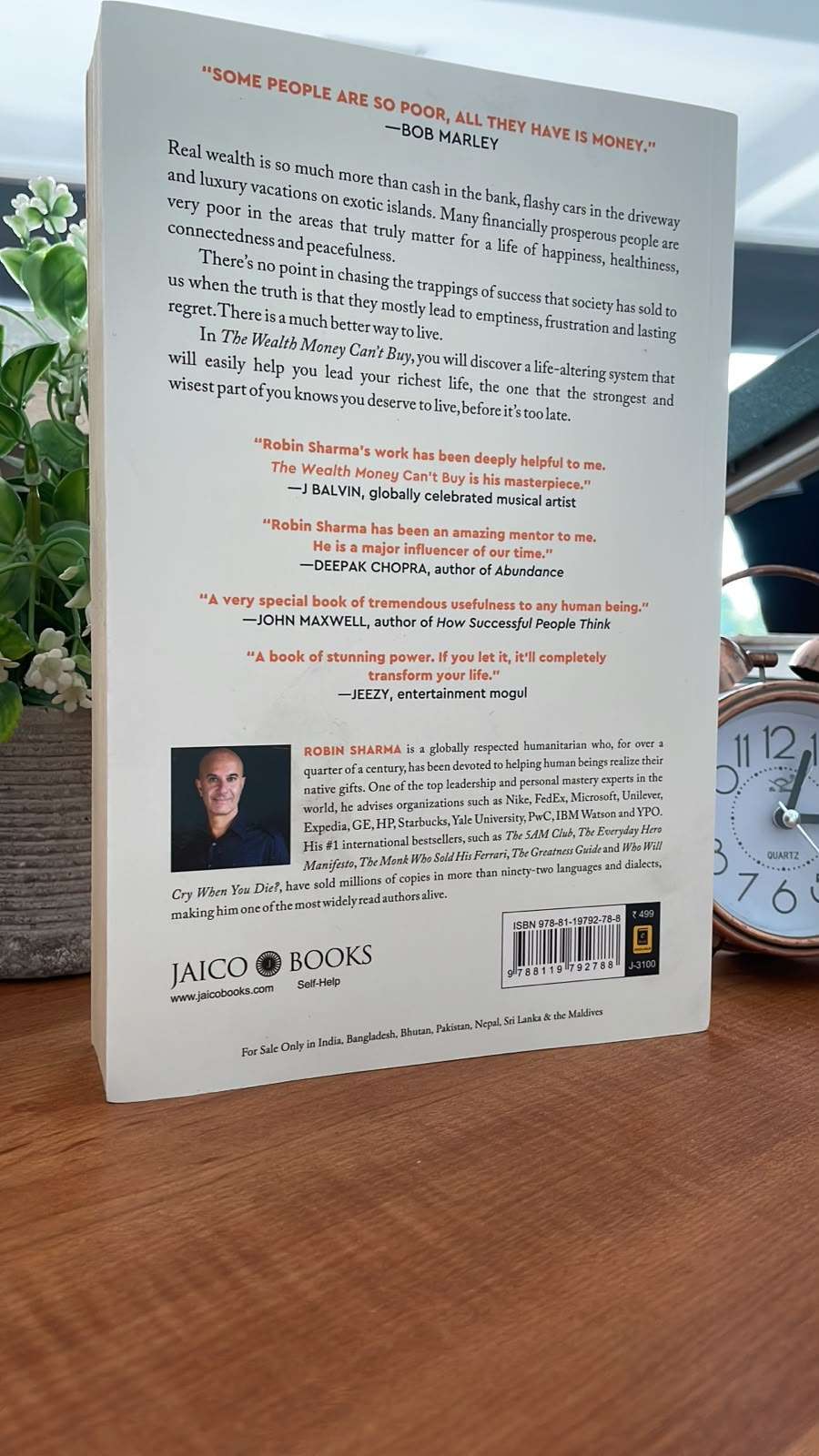
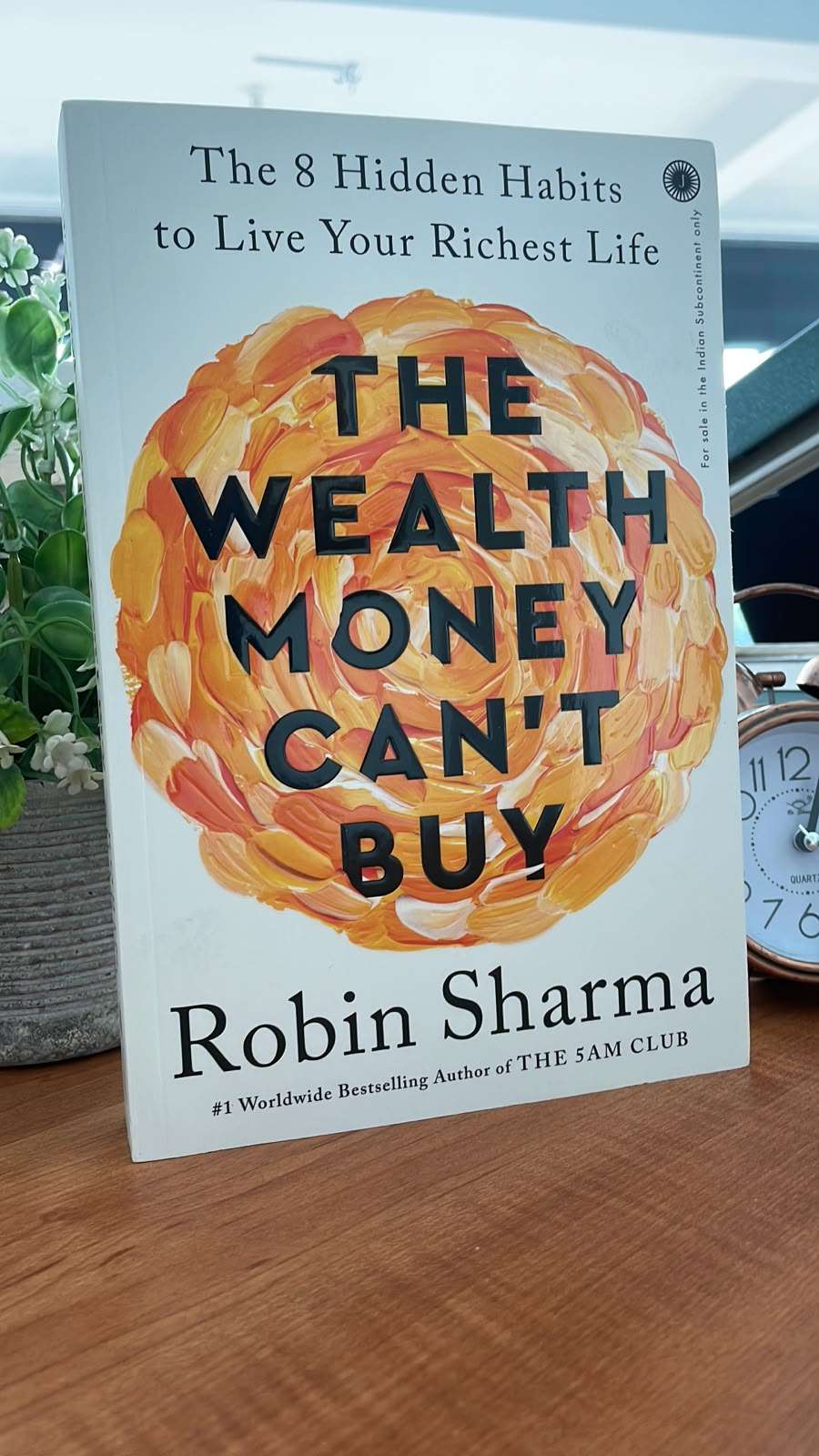
The Wealth Money Can’t Buy by Robin Sharma is an inspiring and practical personal-development guide that challenges the traditional definition of success. Instead of measuring a rich life only through income, possessions, professional status or public recognition, Robin Sharma introduces a broader model based on eight essential forms of wealth.
The complete title, The Wealth Money Can’t Buy: The 8 Hidden Habits to Live Your Richest Life, reflects the book’s central message: financial prosperity is valuable, but it represents only one part of a genuinely successful life.
A person may possess an impressive career, a large home and considerable financial resources while lacking physical energy, meaningful relationships, inner peace or time to enjoy life.
Sharma therefore encourages readers to examine the complete structure of their lives. Are they developing their potential? Are they protecting their health? Are they present for the people they love? Does their work feel meaningful? Are they contributing something valuable to others?
Through short lessons, memorable ideas and practical exercises, the book offers a framework for building achievement without sacrificing the experiences that make achievement worthwhile.
What Is The Wealth Money Can’t Buy by Robin Sharma About?
The Wealth Money Can’t Buy by Robin Sharma is built around a framework called the 8 Forms of Wealth.
These eight forms are:
- Growth
- Wellness
- Family
- Craft
- Money
- Community
- Adventure
- Service
Each area represents an important part of a balanced life.
The model does not suggest that money is unimportant. Financial stability can provide security, choices and opportunities. However, money becomes less meaningful when it is gained at the cost of health, relationships, personal integrity or freedom.
The book encourages readers to strengthen all eight areas instead of allowing one form of success to dominate every decision.
1. Growth: The Wealth of Personal Development
The first form of wealth is growth.
Growth involves developing greater self-awareness, strengthening character, learning new skills and becoming more capable than the person you were yesterday.
A person may experience financial or professional success while remaining emotionally immature, intellectually inactive or controlled by old fears.
Sharma encourages continuous learning through reading, reflection, disciplined practice and exposure to new ideas.
Personal growth also involves recognising weaknesses without allowing them to become permanent limitations.
Mistakes can provide information. Difficult experiences can reveal qualities that require development. Criticism can help when it is evaluated thoughtfully rather than accepted or rejected automatically.
The goal is not perfection. It is continued progress towards greater courage, wisdom, discipline and authenticity.
Learning as a Lifelong Practice
Education should not end when formal schooling finishes.
Industries change, relationships develop and new challenges require abilities that earlier experiences may not have provided.
Readers can continue learning through books, mentors, conversations, observation and deliberate experimentation.
A strong learning habit helps people remain adaptable instead of depending completely on knowledge that once produced success.
2. Wellness: The Wealth of Health and Energy
Wellness includes physical health, mental clarity, emotional stability and the energy required to participate fully in life.
Professional success becomes difficult to enjoy when a person is permanently exhausted, stressed or physically unwell.
The book encourages readers to treat health as a form of wealth rather than something to repair only after a serious problem appears.
Exercise, rest, nutritious food, time in nature and periods of solitude can support clearer thinking and more sustainable performance.
Sharma also emphasises protecting the mind from constant distraction and negativity.
Wellness is not simply about appearance. It is about possessing the strength and vitality required to work, love, learn and experience life.
Protecting Mental and Emotional Health
A productive life requires more than physical energy.
Constant notifications, comparison, criticism and information overload can reduce concentration and inner calm.
Readers are encouraged to create boundaries around their attention and make room for reflection.
Time away from noise can help people understand their priorities rather than reacting automatically to every demand.
3. Family: The Wealth of Loving Relationships
Family wealth refers to the quality of a person’s closest relationships.
People may pursue professional goals because they want to provide a better life for those they love. However, the pursuit can become contradictory when it removes the time, attention and emotional presence those relationships need.
The book encourages readers to create memories, communicate honestly and remain present during ordinary moments.
Strong relationships are not built only through major celebrations or expensive gifts.
They develop through shared meals, thoughtful conversations, reliability, affection and continued attention.
Family may include relatives, partners or people who have become family through commitment and care.
Presence Is More Valuable Than Appearance
Being physically present does not always mean giving another person genuine attention.
A conversation can lose its meaning when one person is continually checking a phone, thinking about work or waiting for an opportunity to speak.
Relationship wealth grows when people listen carefully and allow those closest to them to feel understood.
4. Craft: The Wealth of Meaningful Work
Craft refers to the quality, purpose and mastery people bring to their work.
A job can provide income, but meaningful work also offers opportunities to contribute, improve and express personal ability.
Sharma encourages readers to take pride in the details of their work, even when no one is watching.
Mastery develops through repetition, patience, feedback and a willingness to improve standards continuously.
Craft wealth does not require a famous career or impressive title.
It can be developed by anyone who treats their responsibilities with care and seeks to provide genuine value.
Success Through Service and Quality
The most sustainable professional success often comes from becoming exceptionally useful.
Businesses grow when they solve meaningful customer problems. Employees become valuable when they improve results, strengthen teams and perform dependable work.
Rather than asking only how to receive more recognition, readers can ask how to contribute more value.
5. Money: The Wealth of Financial Stability
Money is included as one of the eight forms of wealth.
The book does not reject financial ambition or suggest that financial responsibility is unnecessary.
Money can provide safety, independence, education, healthcare, travel and the ability to support other people.
The problem appears when financial accumulation becomes the only measurement of success.
A person can continually increase their desired income without reaching a point where they feel secure or satisfied.
Financial wealth should therefore support a meaningful life rather than replacing one.
Money as a Tool Rather Than an Identity
Income and possessions can influence comfort, but they do not automatically determine character, purpose or personal worth.
Readers are encouraged to use money responsibly while avoiding the belief that possessions will permanently solve every emotional or spiritual need.
Healthy financial behaviour includes earning ethically, spending thoughtfully, avoiding unnecessary comparison and directing resources towards genuine priorities.
Not a Conventional Personal-Finance Book
The Wealth Money Can’t Buy is not primarily an investment, budgeting or stock-market guide.
It does not focus on selecting financial products or creating a detailed financial portfolio.
Its purpose is to place financial success within a larger philosophy of personal fulfilment.
Readers seeking investment instructions should use a dedicated personal-finance resource alongside this book.
6. Community: The Wealth of Human Connection
Community wealth involves friendship, belonging and relationships beyond the immediate family.
Modern life can appear highly connected through technology while still leaving people isolated.
Strong communities require participation, generosity and genuine interest in other people.
Friendships grow when individuals make time for conversation, offer support and remain present during both successful and difficult periods.
Community may be found through neighbourhoods, workplaces, professional groups, volunteer organisations, spiritual communities or shared interests.
Choosing Relationships Carefully
The people surrounding an individual can influence their habits, standards and sense of possibility.
Supportive relationships encourage growth without requiring perfection.
Unhealthy relationships may repeatedly create negativity, conflict or pressure to abandon personal values.
Building community wealth therefore involves both developing new relationships and protecting appropriate boundaries.
7. Adventure: The Wealth of New Experiences
Adventure represents curiosity, exploration and the willingness to experience life beyond familiar routines.
It does not always require expensive international travel or physically dangerous activities.
Adventure can include learning a new skill, visiting an unfamiliar place, beginning a creative project or having a conversation with someone from a different background.
New experiences can strengthen confidence and prevent life from becoming a repetitive movement between responsibilities.
The book encourages readers to become creators of memorable moments rather than postponing enjoyment indefinitely.
Avoiding the Trap of “Someday”
People frequently delay meaningful experiences until they earn more money, receive a promotion, complete a project or reach another future milestone.
Planning responsibly is important, but constant postponement can allow years to disappear.
Adventure wealth grows when people intentionally include discovery and enjoyment within their present lives.
8. Service: The Wealth of Contribution
Service involves helping other people and contributing to something larger than personal achievement.
Professional success can feel empty when it benefits only the person pursuing it.
Service creates meaning by directing ability, time and resources towards improving another person’s life.
This contribution may involve charitable work, mentoring, supporting colleagues, helping customers or sharing knowledge.
Acts of service do not need to be public or dramatic. Small, consistent actions can influence families, workplaces and communities.
Legacy and the Value You Leave Behind
The book encourages readers to consider how they want to be remembered.
Professional titles and possessions may eventually disappear from public memory.
The way a person treated others, the courage they encouraged and the opportunities they created can continue influencing people long after a particular achievement is forgotten.
Legacy is built through daily choices rather than one final action.
Redefining Success
Society frequently presents success as a visible competition.
People compare salaries, homes, businesses, job titles and online attention.
These comparisons can create dissatisfaction because someone else will almost always appear to possess more.
The Wealth Money Can’t Buy by Robin Sharma offers another measurement.
A rich life may include energy, meaningful work, loving relationships, personal freedom, memorable experiences and the knowledge that one’s life has helped others.
This broader definition allows financial achievement to remain important without allowing it to control every decision.
The Cost of Unbalanced Achievement
Ambition can produce valuable work, innovation and personal development.
However, ambition becomes destructive when it repeatedly requires the sacrifice of health, integrity, family and inner peace.
The book encourages readers to examine the hidden cost of their goals.
An achievement is less valuable when obtaining it destroys the person’s ability to enjoy the result.
Practical Ideas from the Book
Robin Sharma supports his philosophy with memorable practices and questions designed to encourage action.
These include creating meaningful moments, examining the quality of personal relationships, developing periods of intense focus and considering life from the perspective of limited time.
Readers are encouraged to apply the ideas rather than treating the book as temporary motivation.
Reflection, written goals and regular personal reviews can help transform general inspiration into measurable behaviour.
Reading the Book Critically
This book is based on Robin Sharma’s coaching philosophy, personal observations and experience advising high-performing individuals.
It is not an academic study, medical guide or substitute for professional financial, psychological or healthcare advice.
Some readers may find particular examples more relevant than others depending on their responsibilities, resources and stage of life.
The strongest approach is to identify the principles that match current needs, test them responsibly and adapt them to personal circumstances.
Who Should Read The Wealth Money Can’t Buy?
This book is a strong choice for:
- Readers interested in personal growth and self-improvement
- Professionals seeking better work-life balance
- Entrepreneurs and business leaders
- People questioning traditional definitions of success
- Readers feeling exhausted by constant productivity pressure
- Anyone wanting stronger relationships and greater purpose
- Fans of The 5 AM Club
- Readers of motivational and inspirational nonfiction
- People seeking practical habits for a more balanced life
8 Powerful Lessons from The Wealth Money Can’t Buy
- Personal development is a form of wealth that strengthens every other area of life.
- Good health and daily energy are more valuable than achievement without well-being.
- Relationships require time, attention and emotional presence.
- Meaningful work grows through mastery, usefulness and service.
- Money should support life rather than become the only purpose of life.
- Friendship and community protect people from isolation.
- Adventure and new experiences prevent life from becoming permanently postponed.
- Service creates meaning by connecting personal success with the well-being of others.
About Robin Sharma
Robin Sharma is an author and leadership and personal-mastery teacher known for books about productivity, purpose, habits and professional excellence.
His popular works include The Monk Who Sold His Ferrari, The 5 AM Club, The Leader Who Had No Title, The Everyday Hero Manifesto, Who Will Cry When You Die? and The Greatness Guide.
In The Wealth Money Can’t Buy by Robin Sharma, he combines personal growth, leadership and purposeful living into one eight-part model of genuine wealth.
Order The Wealth Money Can’t Buy in Sri Lanka
The Wealth Money Can’t Buy by Robin Sharma is an inspiring choice for readers who want success without sacrificing health, relationships, freedom or peace of mind.
Its eight-part framework helps readers evaluate their lives through growth, wellness, family, craft, money, community, adventure and service.
Order The Wealth Money Can’t Buy by Robin Sharma online in Sri Lanka and begin building a richer, more meaningful and better-balanced life.
Explore more personal-development books available from Bargain Books.
Read more about the book on the official Robin Sharma website.





Reviews
There are no reviews yet.