




Description
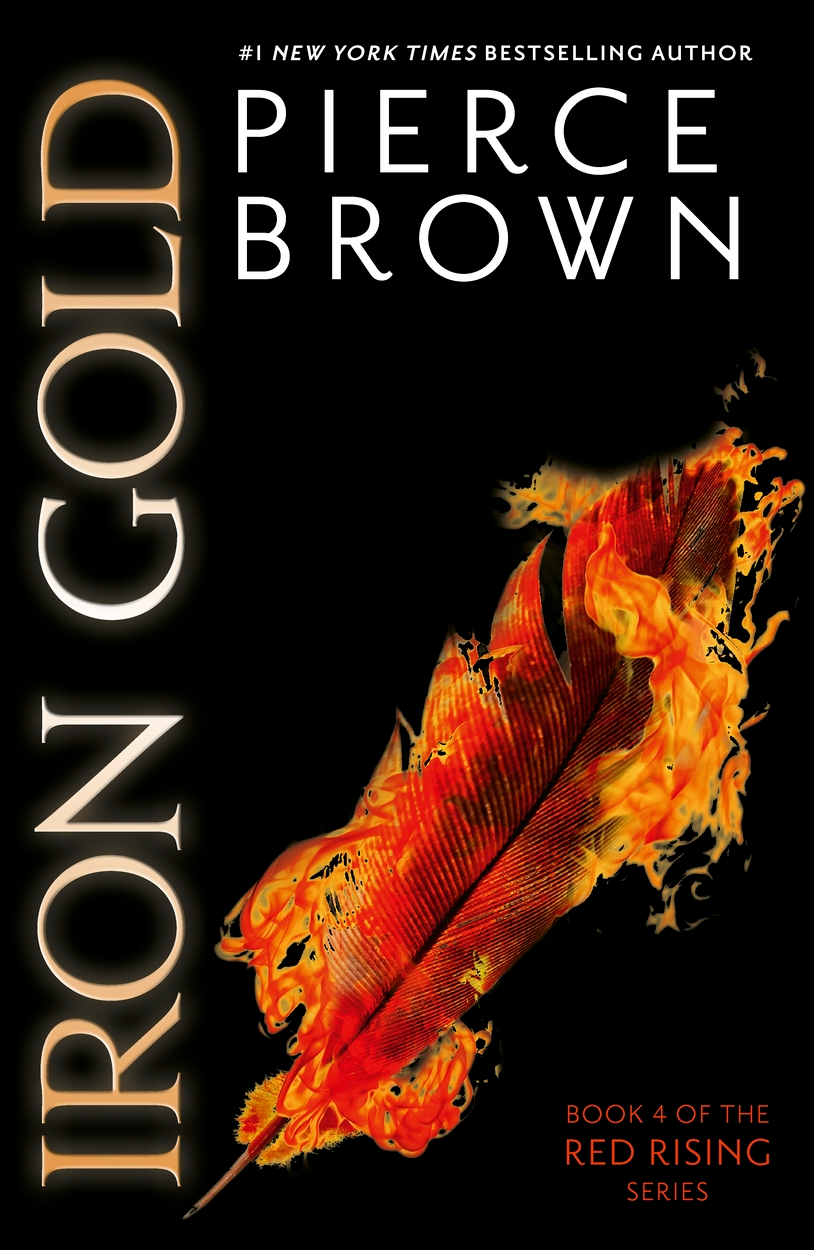
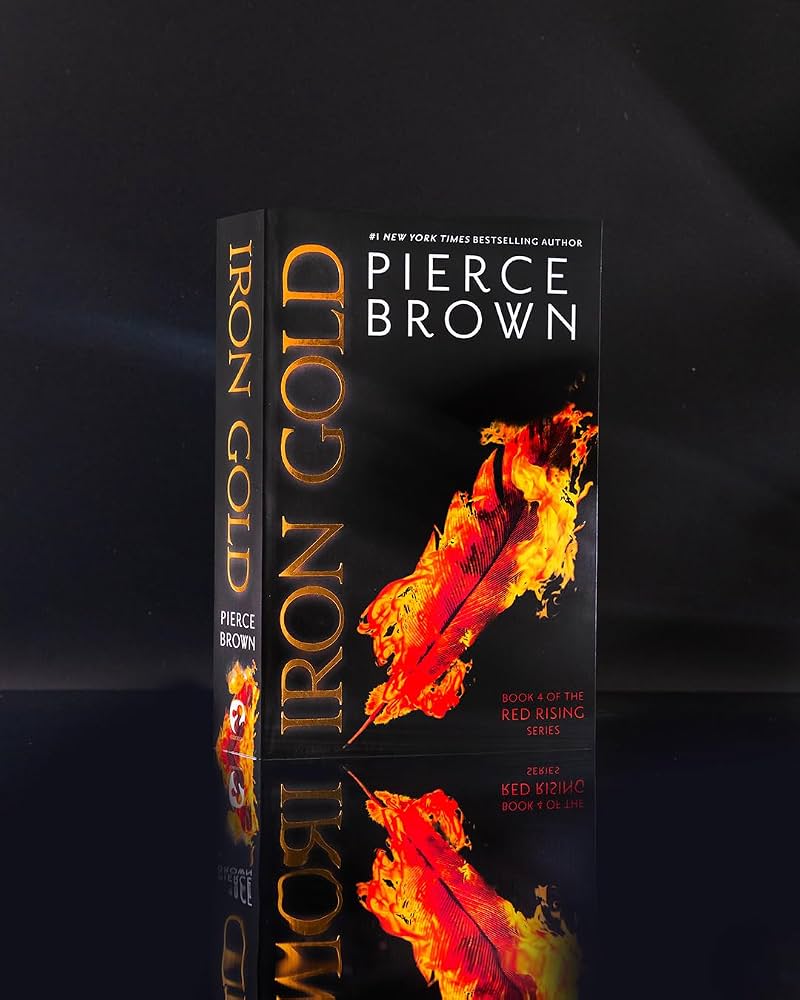
Iron Gold by Pierce Brown
Set ten years after the revolution that transformed the Society, the novel returns to the extraordinary world of Darrow, the legendary warrior once known as the Reaper.
Darrow fought to overthrow a brutal system that divided humanity into a rigid hierarchy of genetically engineered Colors.
His rebellion was intended to establish a more equal society where individuals could determine their futures without being controlled by the ruling Gold elite.
However, the destruction of an oppressive political system has not produced the peaceful future he imagined.
A decade of conflict has left entire worlds devastated, while the newly established Republic struggles to maintain unity.
Former enemies remain powerful, political divisions threaten the fragile government and countless people continue suffering from the consequences of war.
Darrow has become one of the most famous figures in the solar system.
To some, he is a liberator and symbol of hope.
To others, he is a dangerous military leader whose actions threaten the stability of the new political order.
As the Republic faces mounting pressure, Darrow must decide how far he is willing to go to protect the revolution he helped create.
Meanwhile, other individuals across the solar system struggle with the consequences of the political transformation.
Their experiences reveal that freedom can carry unexpected costs and that the collapse of an old order does not guarantee justice.
Iron Gold by Pierce Brown delivers a powerful combination of action, suspense, political drama and emotional storytelling while examining the consequences of revolution and the difficult process of building a new society.
PenguinRandomHouse.com: Books
+1
The Red Rising Universe – A Divided Solar System
The Red Rising series takes place in a futuristic civilisation where humanity has colonised planets and moons throughout the solar system.
Society was historically organised according to a strict hierarchy known as the Color system.
Each Color was associated with a particular social function.
Golds occupied the highest positions of political and military power, while other Colors performed specialised roles within the civilisation.
Reds formed part of the oppressed labouring population, working under harsh conditions while being denied many basic freedoms.
The system maintained order through genetic engineering, social conditioning and military force.
In the earlier novels, Darrow became a central figure in the rebellion against this oppressive structure.
By the beginning of Iron Gold, the revolutionary movement has achieved significant political victories.
However, the solar system remains divided.
The Republic must confront the remaining military strength of the old Society while establishing political institutions capable of governing millions of people.
This complicated setting creates the foundation for a story about power, responsibility and the unfinished consequences of political change.
Darrow – The Reaper Faces the Consequences of Revolution
Darrow remains one of the central figures in Iron Gold.
Born into the lowest levels of the Color hierarchy, he rose to become a legendary revolutionary leader.
His extraordinary determination, intelligence and military abilities helped transform the political structure of the solar system.
However, his victories have come at a tremendous cost.
Years of warfare have forced him to make difficult decisions that continue influencing his relationships and reputation.
In Iron Gold, Darrow is no longer simply a young revolutionary fighting against an established enemy.
He is an experienced military commander whose actions carry consequences for entire planets.
Although he remains committed to the ideals of freedom and equality, he must confront the possibility that his methods are creating new problems.
His determination to complete the revolution places him in conflict with political leaders who prefer negotiation and stability.
The novel explores whether someone who has spent years fighting can adapt to the demands of peace.
Darrow’s character becomes a powerful examination of leadership, sacrifice and the danger of believing that noble intentions justify every action.
Ten Years After the Rising
One of the most important developments in Iron Gold is its time jump.
The novel takes place approximately a decade after the major revolutionary events of the original trilogy.
This allows Pierce Brown to examine what happens after a seemingly victorious rebellion.
The Republic has introduced new political institutions and challenged the authority of the former ruling class.
However, the consequences of centuries of inequality cannot disappear immediately.
Entire communities continue struggling with poverty, displacement and political uncertainty.
Some citizens believe that the revolution has failed to deliver the freedom they were promised.
Others fear that the new government is repeating the mistakes of the Society.
The passage of time also allows familiar characters to develop into different roles.
Former rebels have become political leaders, military commanders and influential figures whose decisions affect the future of humanity.
The novel explores how revolutionary ideals change when individuals must govern rather than simply resist.
Virginia au Augustus – Politics and the Republic
Virginia au Augustus, also known as Mustang, plays an important role in the new political order.
As Sovereign of the Republic, she faces the complicated responsibility of maintaining a government created through revolution.
Her position requires political intelligence, diplomacy and the ability to manage competing interests.
Unlike Darrow, whose experiences have been shaped by military campaigns, Virginia must consider the long-term stability of the Republic.
The political challenges surrounding her position demonstrate that victory on the battlefield does not automatically create effective government.
She must navigate disagreements among representatives, social divisions and concerns about the continuing war.
Her relationship with Darrow adds emotional complexity to the political conflict.
Although they share important values, their responsibilities sometimes lead them toward different decisions.
Through Virginia’s situation, the novel examines the difficult relationship between military necessity and democratic authority.
Lysander au Lune – The Heir of a Fallen Empire
Lysander au Lune introduces an important perspective on the aftermath of the revolution.
As the grandson of the former Sovereign, he possesses a personal connection to the ruling order that Darrow helped overthrow.
Following the collapse of that system, Lysander has lived in exile with Cassius au Bellona.
Their experiences have taken them away from the centres of political power and into the wider solar system.
Lysander has grown up observing the consequences of the revolution from a very different perspective than Darrow.
His understanding of the Society is shaped by family history, education and his experiences during exile.
Throughout the novel, he must consider the legacy of the Gold hierarchy and his own potential place in the future.
His storyline raises questions about inherited privilege, political identity and whether individuals can separate themselves from the systems that shaped their upbringing.
Lysander’s perspective adds moral complexity to the broader political conflict.
Cassius au Bellona – Honour and Exile
Cassius au Bellona is another significant character whose story continues in Iron Gold.
Once associated with the Gold elite, Cassius has experienced profound changes in his loyalties and understanding of honour.
His relationship with Lysander reflects his attempt to build a different future after the collapse of the old Society.
Together, they travel through the solar system while living outside the political structures that previously defined their lives.
Cassius must confront questions about personal responsibility and the consequences of past decisions.
His experiences also highlight the difficulty of maintaining an individual code of honour within a world shaped by conflict and political uncertainty.
The relationship between Cassius and Lysander creates an important contrast with Darrow’s experiences.
Their storyline offers readers a different perspective on the revolutionary transformation of the solar system.
Lyria – The Forgotten Victims of Revolution
Lyria is one of the new viewpoint characters introduced in Iron Gold.
A young Red woman, she represents individuals whose lives have been deeply affected by the revolution but who possess little influence over political decisions.
While powerful leaders debate the future of the Republic, ordinary people continue confronting poverty, displacement and violence.
Lyria’s experiences reveal the difference between promises of freedom and the daily realities faced by vulnerable communities.
Her perspective gives the novel a more personal examination of social inequality.
Rather than focusing entirely on military commanders and political leaders, Pierce Brown allows readers to experience the consequences of revolution through someone living with its immediate effects.
Lyria’s story raises important questions about justice, opportunity and whether a new political order can truly transform the lives of those who suffered most under the old system.
Her journey adds emotional depth and a different social perspective to the novel.
Ephraim ti Horn – A Life Shaped by War
Ephraim ti Horn is another important new character whose experiences expand the scope of the series.
A former soldier and skilled thief, Ephraim has been deeply affected by years of warfare.
His experiences have left him struggling with grief, disillusionment and the consequences of personal loss.
Unlike characters motivated primarily by political ideals, Ephraim often approaches situations through the practical need to survive.
His skills allow him to operate within dangerous criminal environments.
However, his decisions eventually become connected to events with consequences far beyond his immediate circumstances.
Ephraim’s storyline explores the psychological effects of war and the difficulty of rebuilding an ordinary life after traumatic experiences.
His perspective adds elements of crime fiction, espionage and suspense to the larger science fiction narrative.
Multiple Perspectives and a Larger Story
One of the most significant changes in Iron Gold is the use of multiple narrative perspectives.
The original Red Rising trilogy primarily follows Darrow’s experiences.
In this fourth novel, Pierce Brown expands the narrative through four viewpoint characters:
- Darrow
- Lysander au Lune
- Lyria
- Ephraim ti Horn
Each character occupies a different position within the transformed solar system.
Their contrasting experiences allow readers to examine the revolution from several perspectives.
Darrow represents the difficult responsibilities of revolutionary leadership.
Lysander explores the legacy of the fallen ruling class.
Lyria reveals the struggles of people who have not benefited equally from political change.
Ephraim reflects the emotional damage and disillusionment caused by prolonged conflict.
The structure creates a more complicated understanding of the world and challenges the assumption that every character will interpret historical events in the same way.
Interplanetary Warfare and Space Battles
Action remains a major element of Iron Gold.
The novel features military campaigns, dangerous missions, advanced technology and conflicts involving powerful fleets.
The struggle between the Republic and the remaining forces of the old Society continues to shape the political future of the solar system.
Darrow’s military responsibilities place him at the centre of this conflict.
However, warfare is not presented as a simple contest between heroic rebels and oppressive enemies.
The characters must confront the human cost of military decisions.
Victories may involve devastating losses, while strategies designed to protect one population can endanger another.
Pierce Brown combines large-scale science fiction action with questions about responsibility and moral compromise.
Readers who enjoy military science fiction, tactical conflict and cinematic space battles will find these elements particularly compelling.
Freedom, Democracy and the Cost of Power
Political freedom is one of the novel’s central themes.
The revolution promised to destroy an oppressive hierarchy and create opportunities for people who had been denied basic rights.
However, the new Republic faces challenges that cannot be solved through military victory alone.
Democracy requires compromise, accountability and institutions capable of managing disagreements.
Darrow’s determination to defeat the remaining enemies of the revolution sometimes conflicts with the government’s responsibility to protect its citizens.
The novel raises difficult questions about whether extraordinary military power can coexist with democratic principles.
It also explores how easily leaders can become convinced that their own decisions are necessary regardless of opposition.
These themes give Iron Gold a political depth that extends beyond conventional space adventure.
The Emotional Consequences of War
War has affected nearly every major character in the novel.
Darrow carries the burden of military leadership and personal sacrifice.
Lysander struggles with the destruction of the world that shaped his childhood.
Lyria experiences the consequences of political upheaval from the perspective of an ordinary citizen.
Ephraim attempts to survive while dealing with grief and disillusionment.
Their experiences demonstrate that the consequences of war continue long after individual battles have ended.
The story examines emotional exhaustion, loss, guilt and the difficulty of rebuilding relationships.
The personal struggles of these characters give the larger science fiction conflict emotional significance.
Loyalty, Betrayal and Personal Identity
Loyalty is another recurring theme throughout Iron Gold.
Characters must decide whether their primary responsibilities belong to political ideals, family members, personal relationships or their own survival.
These loyalties do not always align.
Darrow’s commitment to the revolution can place pressure on his personal relationships.
Lysander must reconsider the influence of his family history.
Lyria and Ephraim face decisions shaped by their experiences of injustice and loss.
The novel explores how loyalty can become complicated when individuals question the institutions they once trusted.
It also examines the possibility that personal identity changes when the political world surrounding someone is transformed.
A Mature and Complex Science Fiction Adventure
Iron Gold represents an important expansion of the Red Rising series.
Its broader narrative structure allows the author to examine political events through characters with very different experiences.
The tone is often darker and more reflective than that of the opening novel.
The story continues to feature intense action, but it also explores the lasting consequences of political violence.
Its themes include warfare, trauma, inequality, political corruption and personal sacrifice.
The novel contains graphic violence and mature subject matter, making it particularly suitable for adult readers and older fans of dystopian science fiction.
Readers who enjoy intricate political conflicts and morally complicated characters will appreciate the story’s ambitious scope.
Red Rising Series Reading Order
Iron Gold is the fourth book in the Red Rising saga.
The main series reading order is:
- Red Rising – Book 1
- Golden Son – Book 2
- Morning Star – Book 3
- Iron Gold – Book 4
- Dark Age – Book 5
- Light Bringer – Book 6
- Red God – Planned Book 7
Reading the books in order is strongly recommended because Iron Gold continues the events and political developments of the original trilogy.
The first three books establish Darrow’s revolutionary journey, while Iron Gold begins a new phase focused on the consequences of that revolution.
Why Read Iron Gold?
Iron Gold offers a thought-provoking combination of dystopian science fiction, space warfare, political intrigue and character-driven storytelling.
Its multiple perspectives provide a more comprehensive understanding of the fictional society and the consequences of revolution.
The expanded scope allows readers to explore the experiences of powerful leaders, exiled aristocrats, ordinary citizens and individuals living outside the law.
Its themes of freedom, responsibility and political compromise create a narrative with relevance beyond its futuristic setting.
Readers who enjoy large-scale science fiction adventures involving morally complicated characters and detailed world-building will find this novel particularly rewarding.
Who Should Read This Book?
Iron Gold is recommended for:
- Fans of Pierce Brown and the Red Rising series
- Readers who enjoyed Red Rising, Golden Son and Morning Star
- Fans of dystopian science fiction
- Readers who enjoy epic space opera
- Fans of interplanetary warfare and futuristic battles
- Readers interested in political intrigue
- Fans of military science fiction
- Readers who enjoy morally complex protagonists
- Fans of Dune by Frank Herbert
- Readers who enjoyed The Hunger Games
- Fans of stories involving rebellion and revolution
- Readers interested in power, freedom and social inequality
- Readers who enjoy multiple-perspective science fiction novels
About the Author – Pierce Brown
Pierce Brown is an internationally bestselling American author known for his Red Rising science fiction series.
His debut novel, Red Rising, introduced readers to a futuristic society divided by genetically engineered social classes.
The series combines dystopian themes, political intrigue, military conflict and emotionally complex characters.
Brown’s subsequent novels include Golden Son, Morning Star, Iron Gold, Dark Age and Light Bringer.
His work has attracted a large international readership through its ambitious world-building, dramatic action and exploration of power and social inequality.
In Iron Gold, Brown expands the scope of the series to examine the consequences of revolution and the challenges of creating a new political order.



Reviews
There are no reviews yet.