

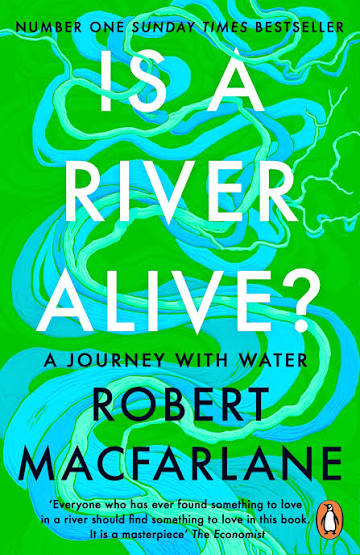





Description
Is a River Alive? by Robert Macfarlane
Is a River Alive? by Robert Macfarlane is a lyrical, urgent and perspective-changing exploration of rivers as living presences rather than resources that exist solely for human use. Blending nature writing, travel, reportage, environmental history and personal reflection, Macfarlane asks readers to reconsider what a river is—and what responsibilities might follow if we recognise it as a being with a life, voice and rights of its own.
Rivers have shaped landscapes, nourished communities and carried human stories for thousands of years. Yet many are now being damaged by pollution, mining, drought, industry and large-scale engineering. Macfarlane approaches this environmental crisis through one transformative idea: rivers should be understood not as passive channels of water but as dynamic communities of life whose existence is inseparable from our own.
Is a River Alive? by Robert Macfarlane: three remarkable journeys
The book moves across continents through three major journeys, each revealing a different relationship between people and flowing water. The first takes Macfarlane into the cloud forests of northern Ecuador, where rivers run through an astonishingly rich ecosystem threatened by gold mining. Here, questions about conservation are inseparable from questions of law, livelihood, extraction and the value assigned to non-human life.
From Ecuador, the narrative travels to southern India. Macfarlane encounters wounded rivers, creeks and lagoons suffering under the pressures of pollution and industrial development. These waterways may have been obscured, confined or treated as disposable, but they remain deeply connected to the health, history and future of the communities around them.
The final major journey leads to north-eastern Quebec and the spectacular Mutehekau, also known as the Magpie River. This wild river faces the threat of damming while Indigenous leaders, environmental campaigners and local communities work to defend it. Their campaign demonstrates how ancient relationships with the natural world can inform innovative legal and political action.
Braided through these global journeys is the more intimate story of a small chalk stream near Macfarlane’s home. Its presence brings the book’s vast questions close to everyday life. A river does not need to cross an entire continent to shape memory, family, identity and belonging. Even the smallest waterway can become a companion through time.
Rivers, law and the rights of nature
At the centre of the book is the growing Rights of Nature movement. Around the world, campaigners, lawyers, artists, lawmakers and Indigenous communities are challenging legal systems that protect corporations as persons while treating rivers, forests and mountains as property. Granting legal recognition to a river can give communities new ways to defend it from pollution, destruction or unsustainable development.
Macfarlane does not treat this movement as a simple legal solution. Instead, he explores the deeper transformation it demands. Recognising a river’s rights requires a change in language and imagination as well as law. It means replacing ideas of ownership and control with relationship, reciprocity and care.
Indigenous knowledge is particularly important to this inquiry. Many Indigenous cultures have never accepted a strict division between humanity and the rest of the living world. Rivers may be relatives, ancestors, teachers or powerful presences with whom people share responsibilities. Macfarlane listens closely to these perspectives while examining how they are finding renewed expression in contemporary environmental campaigns.
Nature writing filled with urgency and wonder
Readers familiar with Underland, The Old Ways and Landmarks will recognise Macfarlane’s ability to connect place, language, science, history and human experience. His writing moves between moments of beauty, danger, grief and hope. A river may appear as an ecosystem, a legal subject, a geographical force, a keeper of memory or a presence capable of changing those who enter its waters.
The book’s form reflects its subject. Ideas branch, merge and return like tributaries, while individual encounters build into a wider argument about how humans inhabit the Earth. Scientific observations sit beside poetry, environmental reporting and the testimony of people working directly to protect threatened waterways.
This combination makes the book intellectually substantial without turning it into a conventional academic study. Macfarlane’s journeys give the environmental questions a physical and emotional immediacy. Readers meet the people involved, enter the landscapes being defended and experience both the vulnerability and extraordinary resilience of river systems.
Who should read Is a River Alive?
Is a River Alive? is an excellent choice for readers interested in nature writing, ecology, conservation, environmental justice, travel, Indigenous knowledge and innovative responses to the climate crisis. It will particularly appeal to readers of Robin Wall Kimmerer, Nan Shepherd, Amitav Ghosh, Rebecca Solnit and Merlin Sheldrake.
It is also a rewarding selection for book clubs and environmental studies courses. Its central question encourages discussion about legal personhood, human responsibility and whether changing how we describe nature can change how we behave towards it.
Robert Macfarlane is one of the most influential contemporary writers on landscape, language and the more-than-human world. In this deeply personal and openly political work, he invites readers to see rivers as active participants in the world’s future rather than scenery flowing past human lives.
This 384-page Penguin paperback edition is a thoughtful addition to any collection of environmental literature. Discover Is a River Alive? and more remarkable nature writing from BookLounge Sri Lanka.
Beautiful, challenging and ultimately hopeful, Is a River Alive? asks readers to recognise that the future of rivers cannot be separated from our own. Its answer to the question in the title is not merely philosophical: it is an invitation to pay attention, enter into relationship and act.



Reviews
There are no reviews yet.