









Description
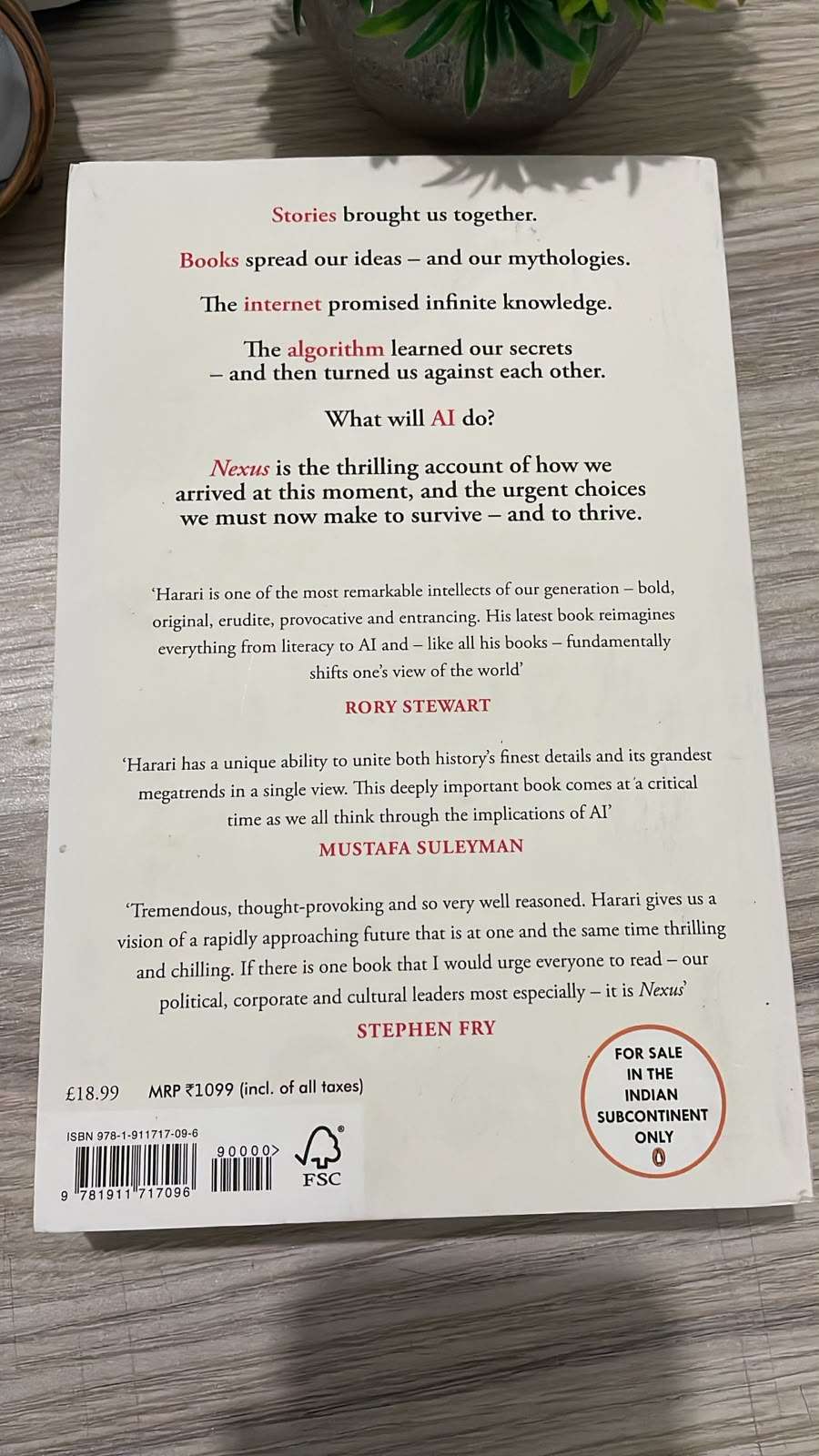
Nexus: A Brief History of Information Networks from the Stone Age to AI by Yuval Noah Harari
Nexus is a sweeping non‑fiction book that explores how information networks — from early oral storytelling to modern digital systems and artificial intelligence — have shaped human societies, power structures, and our understanding of truth and reality. Instead of treating history and technology as separate topics, Harari examines how the flow of information has made, and unmade, civilizations across time
The central idea of Nexus is that information is not just data — it is the force that enables human cooperation, authority, culture, and identity, but also creates deep risks in the digital age.
Why Information Matters
One of the earliest lessons in Nexus is that the ability to share, store, and interpret information has always been at the core of human success. From spoken language and handmade symbols to written texts and now AI‑driven networks, how people communicate has fundamentally shaped:
- political organization
- cultural myths and religions
- bureaucratic systems
- economic structures
- collective beliefs about reality
Harari shows that information networks have enabled large‑scale cooperation — but they’ve also generated distortion, misinformation, and conflict.
Information in History
The book follows a long historical arc, tracing information networks from:
- oral traditions of early humans, which spread shared stories and norms
- canonization of sacred texts, which unified vast empires
- printing and mass media, which shaped public opinion and power
- bureaucracy and propaganda in the modern era, including totalitarian regimes
- digital networks and AI, where new forms of information creation and distribution dominate
Each chapter illustrates how new information technologies and practices reshape the way humans relate to truth, authority, and each other.
The Double‑Edged Nature of Information
A major strength of Nexus is its exploration of how information can both liberate and constrain societies. Harari argues that:
- Information has enabled shared understanding, social cohesion, and innovation
- But raw information is not the same as truth or wisdom
- Misinformation, bias, and system structure can distort perception and manipulate people
- In the digital age, non‑human intelligence (AI) introduces both opportunities and existential risks
This nuanced view helps readers see that we cannot assume technological progress automatically leads to better outcomes — the way information travels, is governed, and is interpreted matters just as much.
Communication, Power, and Society
Throughout Nexus, Harari highlights how the structures for sharing and storing information — whether religious hierarchies, empires, or digital platforms — shape political and social power. Leaders and institutions have historically used information to:
- unify populations
- justify authority
- exert control
- shape cultural norms
But the book also suggests that technology alone doesn’t produce wisdom; societies need ethical frameworks and critical thinking to use information responsibly
AI and the Future of Information
One of the most urgent themes in Nexus is the rise of artificial intelligence. Harari explores how AI systems, unlike earlier forms of communication, can generate, manipulate, and scale information independently of humans. This shifts the balance between:
- information flow and human decision‑making
- institutional power and individual autonomy
- truth and manufactured narratives
He warns that without careful ethical and civic frameworks, AI could reshape societies in unpredictable and potentially dangerous ways.
Who Should Read This Book
Nexus is ideal for readers interested in:
- the history of ideas and communication
- how information shapes power and culture
- the impact of AI and information technologies
- understanding the deep roots of modern social and political systems
Because the book combines historical depth with contemporary relevance, it appeals to both scholars and general readers curious about where human societies are heading.
Lasting Impact
After reading Nexus, many readers gain a broader perspective on how deeply information underlies human progress and conflict. Instead of seeing technology or history in isolation, the book reveals that:
- information networks are central to human cooperation and organization
- truths are created, shared, and contested through complex systems
- the challenges of the digital age — misinformation, polarization, AI risks — are rooted in long‑standing tensions about information itself
Ultimately, Nexus teaches that understanding the history of information is essential to navigate the present and future responsibly.





Reviews
There are no reviews yet.