


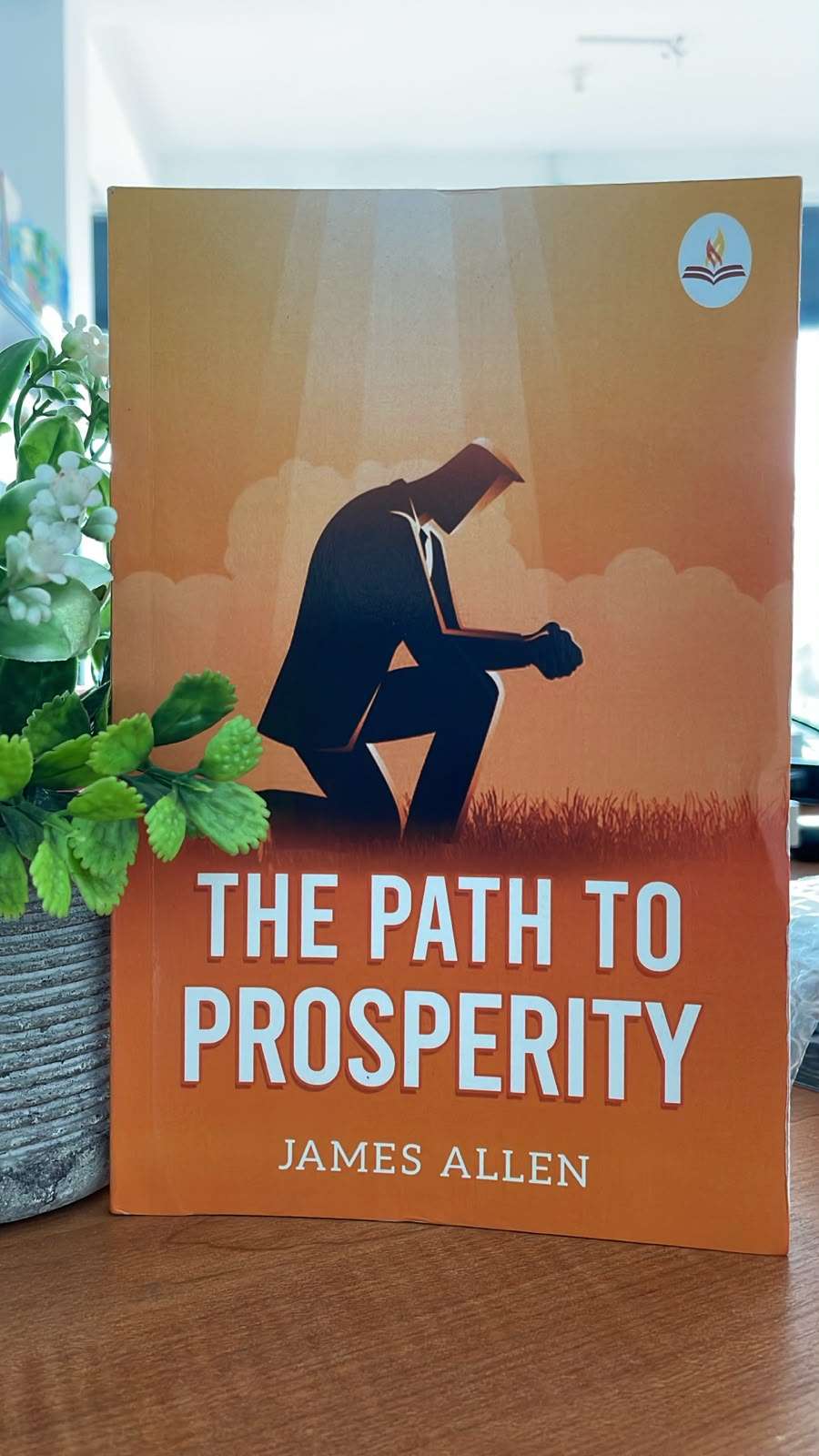
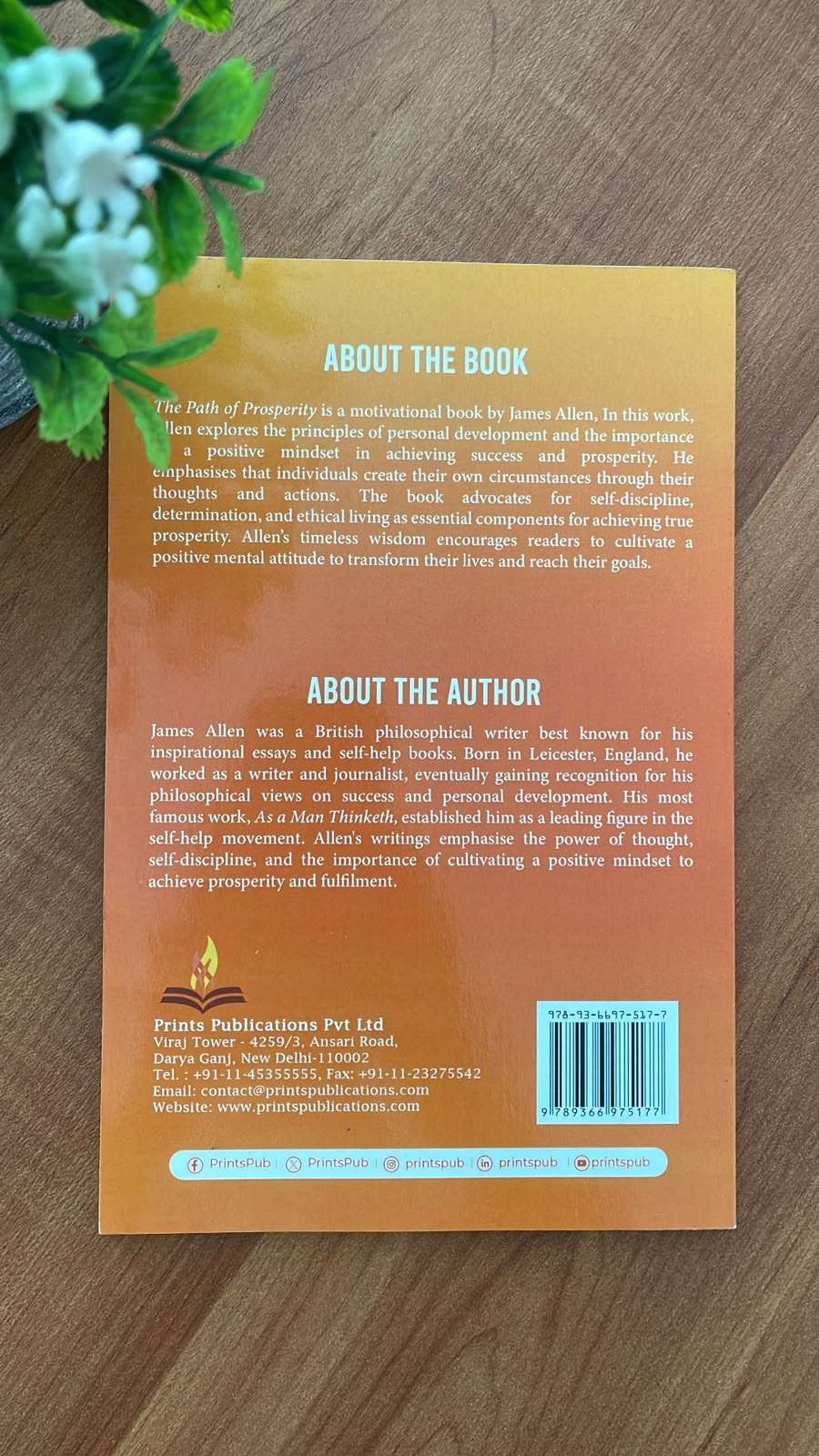





Description
A Practical Guide to Lasting Prosperity and Peace
The Path to Prosperity presents prosperity not as a matter of external wealth or luck but as the result of disciplined thought, character, and inner harmony. James Allen — a pioneer of early self‑help and positive‑thinking philosophy — argues that true prosperity begins within the mind and flows outward into life circumstances.
Rather than chasing quick fixes or material success, readers learn how to reshape their inner world — beliefs, reactions, and habitual thoughts — so that peace, abundance, and fulfillment follow naturally.
Where Prosperity Begins
The book opens with a profound insight: life circumstances — good or bad — are reflections of the thoughts and character we cultivate. Success and happiness aren’t external targets; they are internal states that manifest outwardly when the mind is disciplined, positive, and aligned with higher principles.
Allen teaches that before we can create prosperity in our careers, relationships, or material life, we must first understand ourselves — our patterns, assumptions, and inner conflicts.
Core Principles Explained
The Path to Prosperity is organized into clear stages that explain how inner transformation leads to an outwardly prosperous life
1. The Lesson of Adversity
Allen reframes adversity and suffering not as punishments, but as teachers. Setbacks and pain reveal unexamined thoughts and weaknesses. By understanding their causes, we develop self‑knowledge — the essential first step toward lasting prosperity. (Newt)
2. The Mind Reflects Reality
The world we experience is a mirror of our mental state: thoughts shape emotions, patterns, and decisions. Prosperity begins by mastering the mind — replacing negativity with purpose, clarity, and optimism. (Tom Butler-Bowdon)
3. Transforming Conditions Through Inner Change
Instead of blaming external forces, the book teaches that prosperity emerges when we take responsibility for our thoughts and actions. Changing how we respond to challenges reconfigures our personal environment. (Newt)
4. The Power of Thought
Thought isn’t private or trivial — it has creative force. Allen argues that focused, disciplined thought directs life energy toward health, success, and peace. Cultivated thoughts become habits, and habits become destiny. (Tom Butler-Bowdon)
5. Beyond Material Wealth
Prosperity is holistic. True success includes mental calmness, ethical integrity, inner peace, and emotional balance — not just bank balances. Without inner wealth, material gains can feel hollow. (Goodreads)
6. Abundance Through Virtue
Generosity, integrity, love, and contentment aren’t just moral ideals — they are practical pathways to prosperity. Allen explains that giving and service attract greater opportunities, support, and fulfillment than selfish pursuit. (Wikisource)
7. Lasting Prosperity
Prosperity isn’t a moment; it’s a state of being. When thoughts are calm, intentions aligned with inner truth, and actions rooted in character rather than ego, prosperity becomes stable and enduring. (Newt)
Communication and Inner Guidance
A key message throughout the book is that peace and prosperity aren’t found by following external formulas but by listening to one’s own deeper wisdom and aligning with higher principles. Thoughtful reflection, meditation, and self‑discipline are essential tools for lasting growth.
Handling Setbacks and Adversity
Allen reframes difficulty as feedback, not failure. Rather than reacting with fear or blame, readers are invited to adopt a measured, thoughtful response rooted in patience and self‑awareness — turning obstacles into stepping stones to success.
Prosperity in the Modern World
Although written over a century ago, the book’s emphasis on mental mastery, responsibility, and inner calm remains highly relevant today. In a world driven by distraction, comparison, and external validation, Allen’s teachings remind readers that real prosperity starts with understanding and controlling the life within
Who Should Read This Book
This book is ideal for:
- Individuals seeking lasting success and happiness
- Readers interested in self‑esteem, mindset, and personal responsibility
- Anyone wanting to understand the connection between thought and reality
- People hoping to cultivate inner peace alongside external achievement
Allen’s writing applies to career, relationships, health, and personal purpose — offering a unified framework for meaningful growth.
Lasting Impact
After reading The Path to Prosperity, many readers feel:
- More in control of their responses and decisions
- Less reactive to external pressures
- Better equipped to align thoughts with outcomes
- Clearer about how inner virtue and outer success interrelate
Ultimately, the book teaches that prosperity isn’t an external goal to chase — it’s an inner state to cultivate through conscious thought, disciplined habits, and a generous outlook.
Here are the links you requested for The Path to Prosperity by James Allen:
BookLounge.lk Link
The Path to Prosperity — Buy on BookLounge.lk — A product page listing The Path to Prosperity in the non‑fiction section of Book Lounge (Sri Lanka), with details and pricing. (The Book Lounge)
Wikipedia Link (Author Page)
There isn’t a standalone English Wikipedia page for The Path to Prosperity itself, but the author’s page includes his bibliography:
James Allen (author) — Wikipedia article — This article lists The Path to Prosperity as part of Allen’s works. (Wikipedia)
Non‑Fiction Link
The Path to Prosperity is classified as non‑fiction / self‑help / personal development and appears under non‑fiction listings on book retailers like BookLounge.lk. The BookLounge.lk link above is in the Non‑Fiction category. (The Book Lounge)





Reviews
There are no reviews yet.