







Description
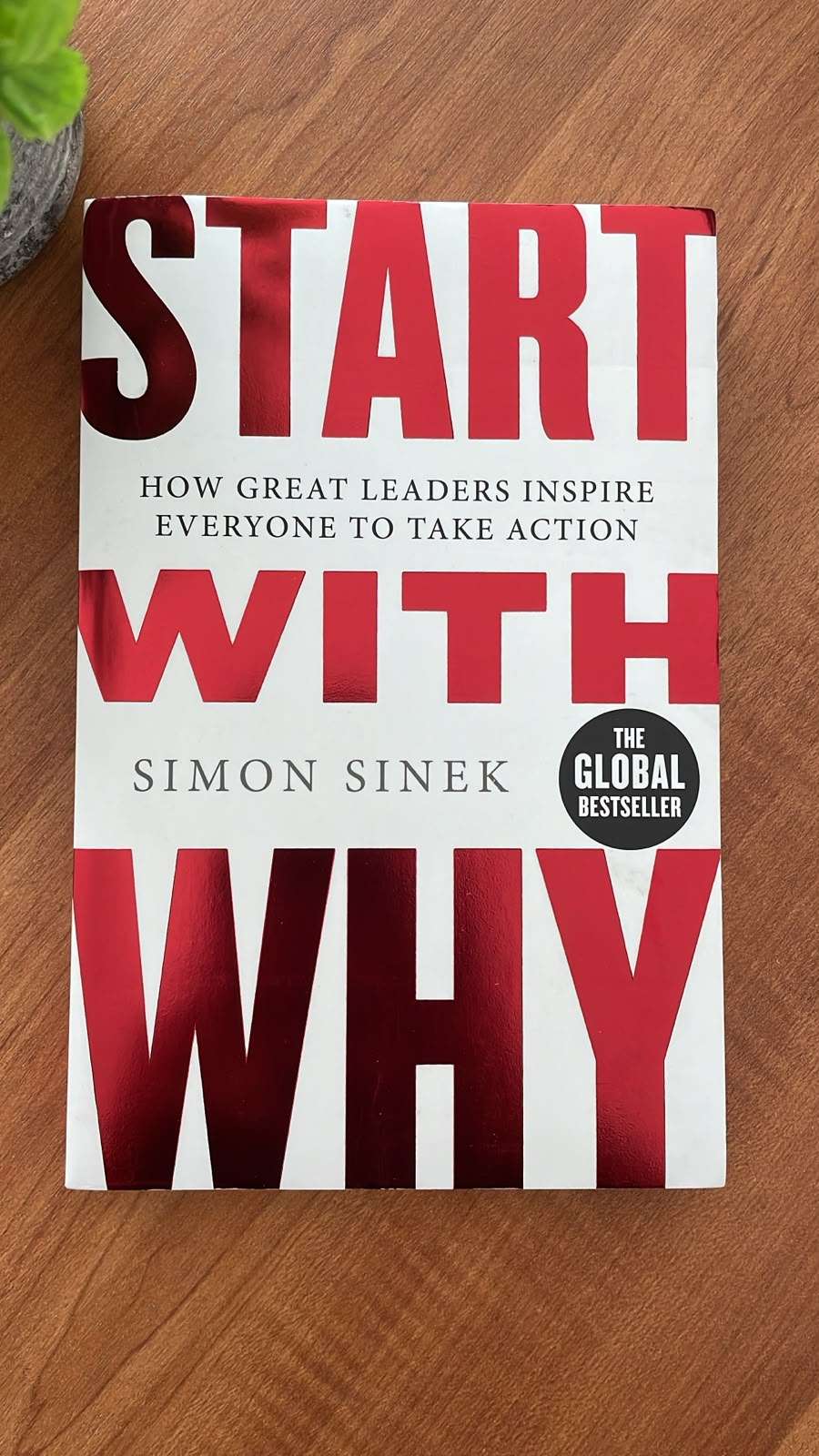
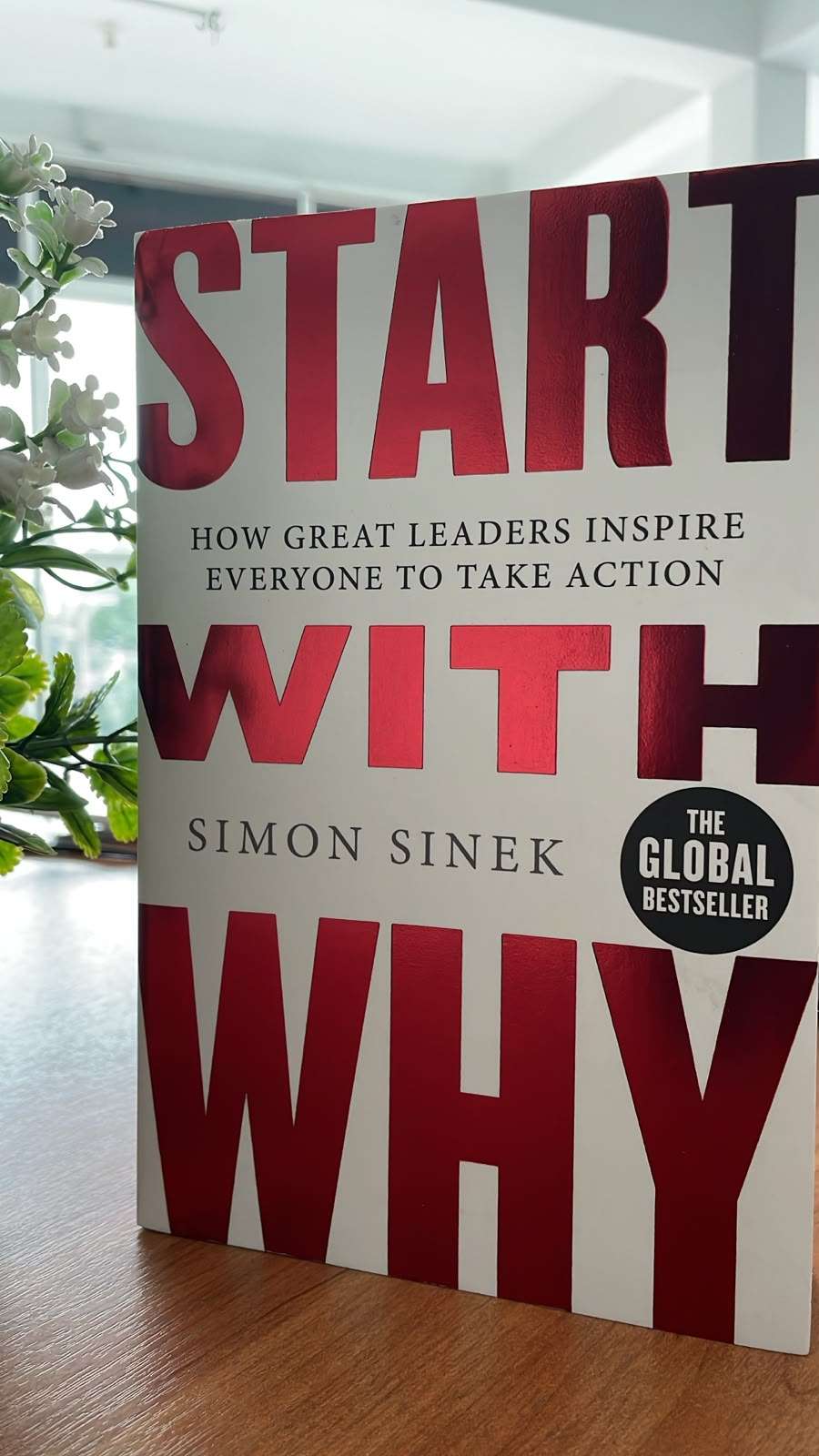
Start with Why by Simon Sinek is an inspiring leadership and business book that explains why some individuals and organisations create extraordinary loyalty while others struggle to motivate people. Simon Sinek argues that influential leaders do not begin by describing what they sell or how their products work. They begin by communicating why their organisation exists.
This central purpose gives employees, customers and supporters a meaningful reason to believe in the organisation. When people understand and connect with that purpose, they are more likely to trust the leader, support the mission and take action.
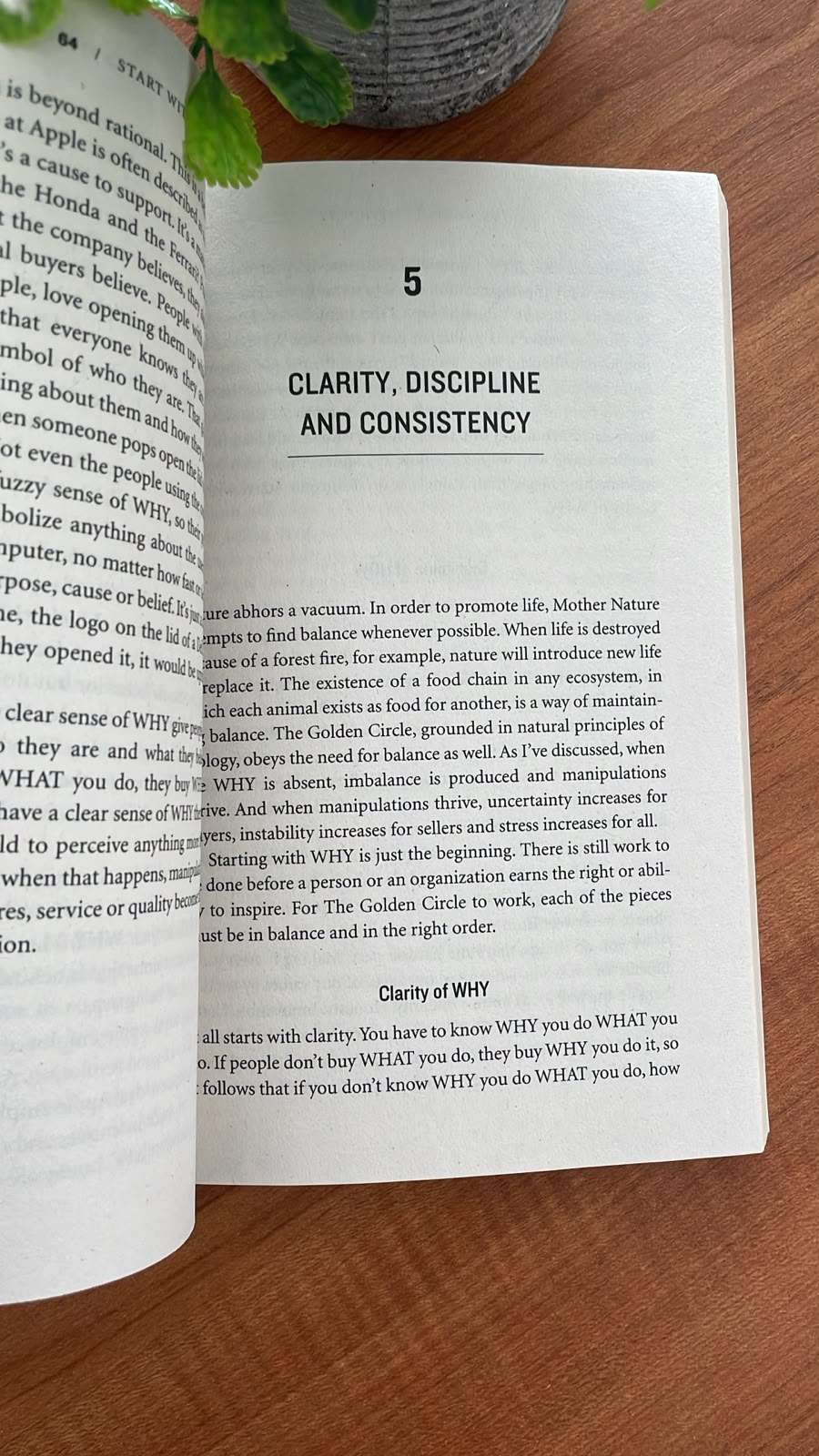
Sinek presents this idea through a simple framework called the Golden Circle. The framework contains three levels: WHY, HOW and WHAT.
Every organisation knows what it does. Some organisations understand how they do it differently or better. However, fewer organisations can clearly explain why they exist beyond earning money.
Start with Why by Simon Sinek encourages leaders, entrepreneurs and professionals to place purpose at the centre of communication, decision-making and organisational culture.
What Is Start with Why by Simon Sinek About?
Start with Why by Simon Sinek explores why certain leaders, companies and movements are able to inspire stronger trust and loyalty than others.
Many businesses communicate from the outside of the Golden Circle. They begin by explaining what they offer, describe how it is different and then ask customers to make a purchase.
Inspiring organisations communicate in the opposite direction. They begin with their purpose, belief or cause. They then explain how they bring that belief to life and what products, services or actions result from it.
Sinek argues that this difference affects how people respond. Facts, features and prices may help customers compare choices, but a clear purpose can create a deeper emotional connection.
The book uses examples from business, innovation, social movements and leadership to demonstrate how starting with WHY can influence employees, customers and wider communities.
Understanding the Golden Circle
The Golden Circle is the central framework presented in the book. It helps individuals and organisations organise their thinking and communication around three important questions.
WHY
WHY represents the purpose, cause or belief behind an organisation. It answers questions such as: Why does this organisation exist? Why should anyone care? What meaningful contribution does it want to make?
Profit is a result rather than a complete WHY. A strong WHY expresses the value or change the organisation wants to create through its work.
HOW
HOW represents the principles, processes and behaviours used to bring the purpose to life. It may include a distinctive approach, organisational values, customer service standards or methods of innovation.
WHAT
WHAT represents the products, services, responsibilities or activities produced by the organisation. It is usually the easiest part to explain because it describes visible results.
Sinek encourages readers to communicate from the inside out: begin with WHY, explain HOW and then present WHAT.
Why Purpose Matters in Leadership
Leadership is not limited to authority, job titles or senior management positions. A leader is someone capable of inspiring others to participate willingly in a shared direction.
A clear purpose helps people understand why their effort matters. Employees who connect with a meaningful mission may view their work as more than a collection of daily tasks.
Purpose can also guide difficult decisions. When leaders understand what their organisation stands for, they can evaluate whether new opportunities, partnerships and strategies support or weaken that identity.
Without a clear WHY, organisations may make decisions based mainly on short-term pressure, competition or financial results.
Start with Why by Simon Sinek demonstrates how purpose can create consistency between leadership, workplace culture, communication and customer experience.
Inspiration Versus Manipulation
The book distinguishes between inspiring people and manipulating them into taking action.
Businesses frequently use discounts, promotions, fear, social pressure and limited-time offers to encourage customers to purchase. These methods can create short-term results, but they do not always build lasting loyalty.
A customer attracted only by a lower price may quickly move to another company offering a better discount.
Inspiration creates a different type of relationship. People support the organisation because they identify with its beliefs and want to become part of what it represents.
This connection can create loyalty that remains stronger during competitive pressure or temporary difficulties.
The same principle applies inside organisations. Employees may complete tasks because they receive salaries, but inspired employees contribute because they believe their work supports something meaningful.
Building Customer Trust and Loyalty
Customers have many choices, particularly when several businesses offer similar products at comparable prices.
A clear WHY can help an organisation stand apart without depending entirely on product features or discounts. It gives customers a reason to identify emotionally with the brand.
However, purpose must be supported by consistent action. A company cannot claim to believe in customer care while delivering poor service or ignoring complaints.
The HOW and WHAT must provide evidence that the organisation genuinely follows its WHY.
Trust develops when communication, decisions and behaviour remain consistent. Customers begin to understand what they can expect from the organisation.
This reliability can transform occasional buyers into loyal supporters who recommend the business to others.
Creating an Inspired Workplace
The ideas in Start with Why are also relevant to employee motivation and organisational culture.
Employees need to understand more than the tasks listed in their job descriptions. They benefit from knowing how their work contributes to a larger purpose.
A strong WHY can help different departments work towards a common goal. Marketing, sales, operations, customer service and management can make more consistent decisions when they share the same purpose.
Purpose does not remove the need for fair salaries, good working conditions or effective management. Instead, it adds meaning and direction to those practical requirements.
Leaders must also demonstrate the organisation’s values through their behaviour. Employees are unlikely to trust a purpose statement that senior leaders repeatedly ignore.
Innovation and Clear Direction
Innovation becomes more focused when an organisation understands why it exists.
Without a clear purpose, businesses may copy competitors or introduce new products simply because they appear popular. This can create confusion and weaken the organisation’s identity.
A clear WHY helps teams decide which opportunities are relevant. It provides a stable direction even when products, technologies and market conditions change.
The WHAT may develop over time, but the underlying purpose can remain consistent.
This allows organisations to adapt without losing the beliefs that initially earned the trust of employees and customers.
Finding Your Personal Why
The principles in the book can also be applied to individual careers and personal leadership.
A personal WHY expresses the contribution someone wants to make and the positive effect they hope to have on others.
Understanding this purpose can help a person choose opportunities, communicate their goals and build a career that feels more meaningful.
It does not mean that every daily responsibility will be exciting. Instead, it provides a larger reason for completing difficult or repetitive work.
A personal WHY may also improve decision-making. When several opportunities are available, individuals can consider which choice is more closely connected with their values and desired contribution.
How to Apply Start with Why
Readers can begin applying the book’s ideas by examining the reasons behind their current work or organisation.
Consider why the organisation was created, what problem it wants to solve and what positive change it hopes to produce.
Next, examine the HOW. Identify the values, principles and methods that distinguish the organisation’s approach.
Finally, review the WHAT. Products and services should provide visible evidence of the purpose and values being communicated.
The organisation’s website, advertising, employee training and customer service should communicate a consistent message.
Starting with WHY is not simply a marketing technique. It requires leaders to align their decisions and behaviour with the purpose they ask others to believe.
Important Themes in Start with Why
Purpose-Driven Leadership
Influential leaders communicate a clear purpose that gives people a meaningful reason to participate.
The Golden Circle
The WHY, HOW and WHAT framework helps organisations communicate from their deepest purpose towards their visible products and actions.
Trust and Loyalty
Consistent purpose and behaviour can create stronger relationships with employees, customers and supporters.
Inspiration and Motivation
People are more likely to give their best effort when they understand and believe in the reason behind the work.
Authentic Communication
A purpose becomes meaningful only when it is supported by genuine decisions and consistent behaviour.
Organisational Culture
A shared WHY can help teams make aligned decisions and build a stronger sense of belonging.
Long-Term Success
Purpose can provide direction that remains useful even when products, competitors and market conditions change.
Who Should Read Start with Why?
This book is an excellent choice for readers interested in:
- Leadership and management
- Business strategy and organisational development
- Entrepreneurship and brand building
- Employee motivation and workplace culture
- Marketing and customer loyalty
- Personal purpose and career development
- Communication and public speaking
- Building purpose-driven teams and organisations
It is suitable for entrepreneurs, managers, business owners, team leaders, students, marketers and anyone who wants to inspire others more effectively.
7 Inspiring Lessons from Start with Why
- People connect more strongly with why you act than with what you sell.
- A clear purpose can guide leadership, communication and decision-making.
- Trust develops when an organisation’s actions consistently support its stated beliefs.
- Inspiration creates stronger long-term loyalty than discounts or pressure alone.
- Employees perform more meaningfully when they understand the purpose behind their work.
- The Golden Circle helps leaders communicate from WHY to HOW and WHAT.
- Purpose must be demonstrated through action rather than displayed only in a slogan.
About Simon Sinek
Simon Sinek is a bestselling author and speaker known for his work on leadership, purpose, trust and organisational culture.
His other books include Leaders Eat Last, The Infinite Game, Together Is Better and Find Your Why.
In Start with Why, Sinek presents the Golden Circle as a practical framework for understanding how influential people and organisations inspire others.
His work encourages leaders to create environments where people feel inspired, trusted and connected to a meaningful purpose.
Order Start with Why by Simon Sinek in Sri Lanka
Start with Why by Simon Sinek is an excellent choice for anyone who wants to become a more inspiring leader, build a trusted organisation or communicate a meaningful purpose.
The Golden Circle offers a clear framework for understanding how WHY, HOW and WHAT can work together to influence leadership, workplace culture and customer loyalty.
Order Start with Why by Simon Sinek online in Sri Lanka and discover how beginning with purpose can inspire people to take action.
Explore more leadership books available from Bargain Books.
Learn more about the book on the official Simon Sinek website.





Reviews
There are no reviews yet.