









Description
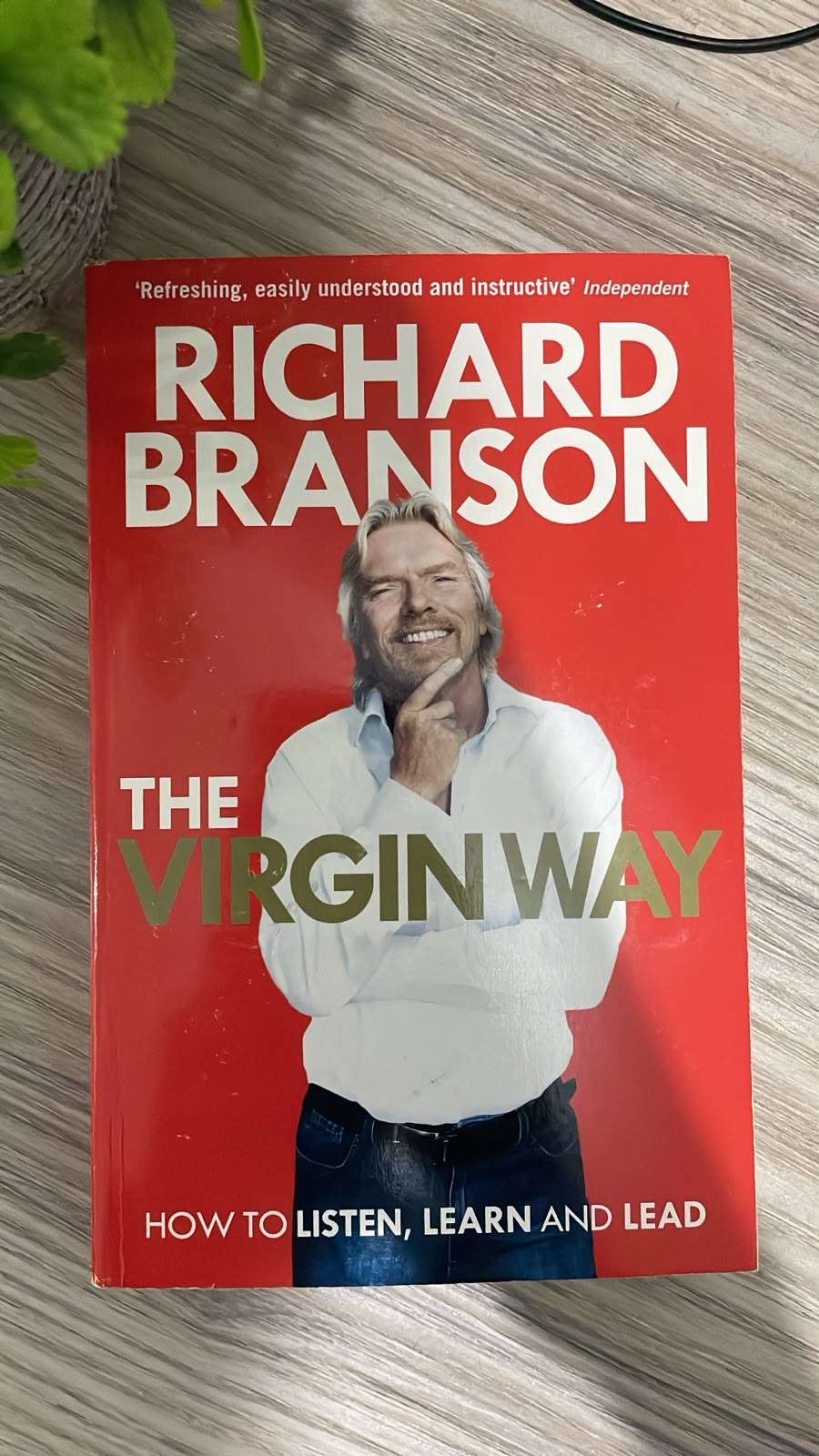
The Virgin Way by Richard Branson is an energetic and practical guide to leadership, entrepreneurship and building organisations where people feel trusted, valued and motivated. Drawing on Richard Branson’s experiences developing the Virgin brand, the book explains why successful leadership depends on listening, learning, maintaining a sense of humour and enabling other people to perform at their best.
The complete title, The Virgin Way: How to Listen, Learn, Laugh and Lead, captures the principles at the centre of Branson’s approach.
Instead of presenting a rigid collection of management formulas, Branson shares personal stories, business successes, failed experiments and lessons gathered from people who influenced him.
His leadership philosophy places people before hierarchy. A leader should not simply issue instructions, protect authority or take credit for every success. A leader should create the conditions in which employees can contribute ideas, solve problems, serve customers and develop into leaders themselves.
The result is an accessible business book for entrepreneurs, managers, team leaders, students and professionals who want to develop a more human and adaptable approach to leadership.
What Is The Virgin Way by Richard Branson About?
The Virgin Way by Richard Branson examines the habits, attitudes and cultural principles that shaped the author’s approach to business.
Branson challenges the traditional image of a leader as the most powerful or outspoken person in the room.
He argues that effective leadership begins with curiosity and attention. Leaders must listen to employees, understand customers, recognise useful ideas and remain willing to learn from people at every level of an organisation.
The book also explores the importance of workplace culture. Branson believes people produce better work when they feel respected, trusted and connected with a meaningful purpose.
Fun and humour are not presented as distractions from serious work. They can help build relationships, encourage creativity and create an environment where people want to contribute.
The book’s lessons are supported by stories involving business launches, competition, customer service, branding, hiring, delegation, risk and failure.
Listen Before You Lead
Listening is one of the most important principles in the book.
Leaders often feel pressure to speak first, provide every answer and prove that they are the most knowledgeable person in the room.
Branson presents a different approach. A leader who dominates every conversation may overlook the people closest to a problem.
Employees working directly with customers may understand complaints and changing needs earlier than senior managers. Team members responsible for daily operations may recognise inefficiencies that are invisible from an executive office.
Listening therefore becomes a practical business skill rather than a passive social habit.
It allows leaders to collect information, recognise talent and understand how decisions affect the people responsible for carrying them out.
The Difference Between Hearing and Listening
Hearing another person speak does not necessarily mean listening to them.
True listening requires attention, patience and a willingness to consider that another person may possess information the leader does not have.
A manager may invite feedback while already planning to reject every suggestion. This creates the appearance of communication without the benefits of genuine dialogue.
Employees quickly recognise when their opinions are being requested only as a formality.
Leaders who listen carefully should acknowledge ideas, ask useful questions and explain what action will follow.
Not every suggestion must be accepted, but people deserve to know that their contribution was considered seriously.
Learn from Everyone
Learning should not stop when someone gains a senior title.
Markets change, customer expectations develop and new technologies create opportunities that did not previously exist.
A leader who assumes earlier success proves permanent expertise may become disconnected from the organisation’s current challenges.
Branson’s approach encourages leaders to remain curious and willing to enter unfamiliar industries.
They do not need to know every technical detail personally. They need to ask good questions, identify talented people and remain open to evidence that challenges their assumptions.
Learning from Mistakes
The book does not present business success as a series of perfect decisions.
Experiments can fail, products can disappoint customers and strategies can produce results very different from those originally expected.
A failure becomes especially expensive when the organisation refuses to learn from it.
Leaders should examine what happened, identify which assumptions were incorrect and decide whether the idea should be improved, changed or abandoned.
Blaming employees for every mistake can create a fearful culture in which people hide problems until they become more serious.
A learning culture encourages people to report issues early and discuss solutions honestly.
Laugh and Create a Positive Culture
Work can involve pressure, deadlines and difficult decisions, but seriousness does not require a workplace without enjoyment.
Branson treats humour and fun as important parts of organisational culture.
Teams that enjoy working together may communicate more openly and recover more effectively from stressful periods.
Celebrating achievements also helps people recognise that their effort has value.
This does not mean forcing employees to participate in entertainment or using superficial activities to hide poor working conditions.
A genuinely positive culture depends on respect, fairness, trust and the freedom to contribute ideas.
Lead Rather Than Simply Manage
Management frequently focuses on schedules, processes, budgets and performance targets.
These responsibilities are necessary, but leadership requires something more.
A leader gives people a clear sense of direction, explains why the work matters and creates confidence that the team can achieve its goals.
Branson contrasts a leader with a boss who depends mainly on authority.
A boss may demand obedience because of a job title. A leader earns commitment by listening, communicating and helping other people succeed.
Become a Chief Enabling Officer
The book presents the playful idea of a leader acting as a Chief Enabling Officer.
The purpose of leadership is not to prove that the person at the top can perform everyone else’s job.
It is to remove unnecessary obstacles and give capable people the tools, information and authority needed to perform effectively.
This approach changes the leader’s role from controller to enabler.
Employees should understand the organisation’s goals and possess enough freedom to make responsible decisions without seeking approval for every small action.
Put People First
Organisations frequently claim that customers come first.
Branson’s wider leadership philosophy places strong emphasis on caring for employees because motivated and respected employees are better positioned to care for customers.
People who feel ignored, overcontrolled or disposable may complete only the minimum work required.
People who feel trusted and connected with the organisation are more likely to identify problems, suggest improvements and protect the customer experience.
Putting people first does not mean avoiding accountability. It means combining clear expectations with respect, support and opportunities for development.
Hire for Attitude and Potential
Technical skill is important, but qualifications alone do not guarantee that someone will strengthen a team.
Leaders should also consider curiosity, communication, integrity, adaptability and willingness to learn.
A candidate may possess impressive experience while damaging collaboration through arrogance or poor treatment of colleagues.
Another candidate may require additional training but bring energy, judgement and a strong commitment to customers.
Effective hiring involves considering how a person’s values and behaviour will influence the wider culture.
Delegate and Trust Your Team
A growing organisation cannot depend on one person making every meaningful decision.
Leaders who refuse to delegate eventually become obstacles to the teams they created.
Delegation involves more than assigning tasks while retaining complete control over how they are performed.
Employees need clarity about the desired result, the authority to act and access to support when difficulties arise.
Trust does not eliminate measurement or accountability. It allows people to take ownership instead of waiting for constant instructions.
Recognise and Develop Future Leaders
Strong leadership should create more leaders rather than more followers.
Managers can develop employees by giving them responsibility, encouraging independent judgement and allowing them to learn through real decisions.
Keeping talented people dependent may protect a manager’s short-term authority but weaken the organisation’s future.
Employees are more likely to remain engaged when they can see opportunities to learn, contribute and progress.
Customer Experience Matters
A brand is shaped by every interaction a customer has with the organisation.
Advertising may create an expectation, but employees, websites, delivery processes and customer support determine whether that promise is fulfilled.
Leaders should pay attention to complaints because they reveal where the customer experience is failing.
A complaint can be treated as an inconvenience or as information that helps improve the business.
Responding quickly and respectfully can sometimes turn a disappointed customer into a loyal supporter.
Small Details Build Strong Brands
Customers may not see the strategy documents or internal meetings behind a company.
They experience the small details.
A clear message, helpful employee, easy checkout process or thoughtful response to a problem can shape how the entire brand is remembered.
Leaders should therefore encourage employees to notice practical details and correct problems before they become normal.
Encourage Innovation
Innovation becomes difficult when employees believe that only senior executives are allowed to introduce ideas.
Useful improvements can come from any part of an organisation.
Leaders can encourage innovation by making it safe to question outdated processes and test manageable alternatives.
Not every idea will succeed. The objective is to create a system where promising ideas can be evaluated without unnecessary delay or fear.
Challenge Established Industries
Entrepreneurial opportunities often appear where customers are dissatisfied with established options.
Instead of asking only whether an industry already contains powerful competitors, entrepreneurs can ask what those competitors are failing to provide.
A smaller organisation may not possess the same resources, but it may move faster, communicate more personally and design a more enjoyable customer experience.
Competing successfully does not always require becoming identical to the largest company. It may require offering something meaningfully different.
Take Calculated Risks
Branson is widely associated with bold business decisions, but effective risk-taking is different from acting without thought.
Leaders should consider the possible downside, identify ways to limit damage and determine whether the potential benefit justifies the exposure.
Waiting for complete certainty can prevent action because business decisions rarely arrive with perfect information.
The objective is not to remove all risk. It is to understand the risk well enough to make a responsible decision.
Know When to Protect the Downside
Optimism can help entrepreneurs recognise possibilities that other people overlook.
However, optimism should be supported by practical planning.
Before committing major resources, leaders can ask what happens if sales are lower than expected, costs increase or the launch is delayed.
Protecting the downside makes experimentation more sustainable and helps an organisation survive unsuccessful attempts.
Communicate Clearly
Employees cannot support a vision they do not understand.
Leaders should explain goals in clear language and connect daily responsibilities with the organisation’s wider purpose.
Complicated language can create the appearance of expertise while leaving employees uncertain about what they are expected to do.
Clear communication also involves repeating important messages. One announcement is rarely enough to create lasting understanding across an organisation.
Build Culture Through Behaviour
Workplace culture is not created only through mission statements.
It develops through repeated behaviour, including what leaders reward, tolerate and demonstrate personally.
A company may claim to value innovation while punishing every failed experiment. It may claim to value employees while ignoring overwork or disrespectful management.
People judge culture by what actually happens.
Leaders must therefore model the standards they expect from others.
Passion and Purpose
Passion can provide energy during difficult periods, but it must be connected with useful work and responsible execution.
People are more motivated when they understand how their work helps customers, colleagues or communities.
A clear purpose gives employees a reason to care about quality beyond receiving a salary.
Purpose should not become a marketing slogan disconnected from business decisions. It should influence priorities, products and the way people are treated.
Business Should Be Human
The Virgin Way repeatedly returns to the human side of business.
Companies are not only structures, logos and financial statements. They are groups of people serving other people.
Leadership decisions affect employees’ confidence, development and daily lives.
Customer decisions are also shaped by emotion, trust and personal experience.
Recognising this human element can help leaders build stronger relationships and more resilient organisations.
Leadership During Difficult Times
A leader’s behaviour becomes especially visible when the organisation faces failure, criticism or uncertainty.
Teams look for honesty, direction and emotional steadiness.
Pretending that every problem is under control can damage trust when employees can clearly see otherwise.
Leaders should acknowledge the situation, explain what is known and communicate the next practical steps.
They should also listen to employees who may understand different parts of the challenge.
Reading The Virgin Way Critically
The Virgin Way by Richard Branson is based largely on personal experience, business anecdotes and the author’s interpretation of leadership.
It is not a controlled scientific study or a complete management system that will produce identical results in every organisation.
Virgin’s culture, brand, industries and access to resources may differ considerably from those of a small local business, public institution or highly regulated company.
Readers should therefore treat the book as a source of principles, examples and questions.
The strongest ideas can be adapted and tested according to the organisation’s size, culture, responsibilities and customers.
Important Themes in The Virgin Way
Listening
Leaders gain valuable information when they listen carefully to employees and customers.
Continuous Learning
Success does not remove the need for curiosity, experimentation and improvement.
Employee Empowerment
People perform more effectively when they receive trust, authority and responsibility.
Workplace Culture
Culture develops through everyday leadership behaviour rather than slogans alone.
Customer Experience
Small interactions and thoughtful details shape how customers understand a brand.
Innovation and Risk
Organisations must test ideas, learn from mistakes and protect themselves from avoidable downside.
Purpose and Enjoyment
Meaningful work, passion and humour can help create stronger and more committed teams.
Who Should Read The Virgin Way?
This book is an excellent choice for:
- Entrepreneurs and startup founders
- Business owners and company directors
- Managers and team leaders
- Students studying leadership or business
- Professionals preparing for management roles
- People responsible for workplace culture
- Customer-service and brand managers
- Readers interested in Richard Branson and the Virgin Group
- Anyone seeking an accessible, story-driven leadership book
7 Powerful Lessons from The Virgin Way
- Listen carefully before making important leadership decisions.
- Continue learning even after achieving professional success.
- Create an environment where employees can enjoy contributing meaningful work.
- Lead by enabling people rather than controlling every detail.
- Use customer complaints as information for improvement.
- Accept that responsible experimentation sometimes includes failure.
- Build culture through consistent actions, trust and respect.
About Richard Branson
Richard Branson is a British entrepreneur, author and founder of the Virgin Group.
His books include Losing My Virginity, Finding My Virginity, Like a Virgin, Business Stripped Bare, Screw Business as Usual and The Virgin Way.
His writing draws on business experience and frequently explores entrepreneurship, leadership, branding, risk, workplace culture and using business to create positive change.
Order The Virgin Way in Sri Lanka
The Virgin Way by Richard Branson is an engaging choice for readers interested in leadership, entrepreneurship, employee development and customer-centred business.
Its lessons on listening, learning, workplace culture and enabling others provide a practical alternative to leadership based only on hierarchy and control.
Order The Virgin Way by Richard Branson online in Sri Lanka and discover a more human, energetic and adaptable approach to leading people.
Explore more leadership books available from Bargain Books.
Read the official synopsis and book information on the official Virgin website.





Reviews
There are no reviews yet.