

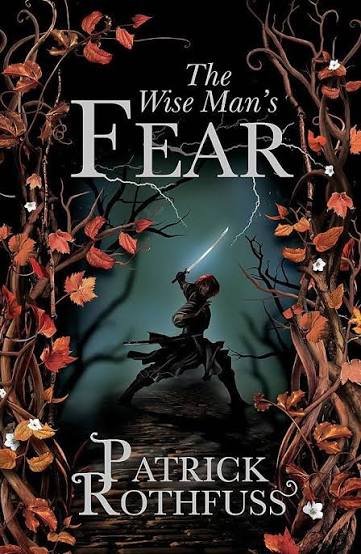





Description
Wise Man’s Fear: The Kingkiller Chronicle, Book 2 by Patrick Rothfuss
Following the events of The Name of the Wind, Kvothe continues his journey as a student at the University, where his remarkable intelligence and unusual magical abilities have already earned him both admiration and dangerous enemies.
However, life at the University is becoming increasingly difficult.
Financial problems, complicated relationships and conflicts with influential individuals threaten his education and future.
As Kvothe struggles to establish himself, circumstances eventually lead him away from the familiar surroundings of the University and into a much larger world.
His travels introduce him to powerful nobles, dangerous political intrigues, ancient traditions and mysterious individuals whose knowledge may help him understand the secrets of his past.
Meanwhile, Kvothe remains determined to uncover the truth about the Chandrian, a legendary group associated with the murder of his family.
His search for answers takes him through unfamiliar lands and situations that challenge his intelligence, courage and understanding of the world.
The Wise Man’s Fear by Patrick Rothfuss delivers a deeply immersive fantasy adventure filled with memorable storytelling, complex relationships, magical discoveries and the continuing transformation of an extraordinary young man into a legendary figure.
The Continuing Legend of Kvothe
Kvothe is one of the most distinctive protagonists in modern fantasy fiction.
Gifted with exceptional intelligence, a talent for music and an extraordinary capacity for learning, he possesses abilities that frequently distinguish him from those around him.
However, his remarkable talents are accompanied by significant personal weaknesses.
Kvothe can be proud, impulsive and unwilling to accept defeat.
His determination to prove himself often creates problems that could have been avoided through patience or diplomacy.
In The Wise Man’s Fear, these contrasting characteristics become increasingly important.
As Kvothe moves beyond the protected environment of the University, he discovers that intelligence and magical skill cannot solve every problem.
He must learn to navigate unfamiliar social customs, political conflicts and dangerous situations where a single mistake can have serious consequences.
His journey explores the difference between possessing extraordinary abilities and understanding how to use them wisely.
Throughout the story, Kvothe continues searching for information about the mysterious Chandrian while developing the experiences that will eventually contribute to his legendary reputation.
The University – A Centre of Knowledge and Magic
The University remains an essential setting in The Kingkiller Chronicle.
It is a prestigious institution where students study subjects ranging from medicine and mathematics to ancient languages and magical disciplines.
For Kvothe, the University represents an opportunity to acquire knowledge that might help him understand the mysterious events of his childhood.
However, maintaining his position there is far from easy.
The cost of tuition and the difficulty of earning money frequently threaten his studies.
Kvothe must also navigate the complicated relationships between students, teachers and influential university officials.
His rivalry with Ambrose Jakis remains a source of tension.
Ambrose’s wealth, social position and hostility create additional obstacles for Kvothe.
The University provides an engaging combination of academic ambition, magical experimentation and personal competition.
Readers who enjoy fantasy stories involving magical education, intellectual discovery and complex student relationships will find these elements especially appealing.
A Unique System of Magic
One of the most celebrated features of Patrick Rothfuss’s fantasy world is its carefully developed approach to magic.
Rather than presenting magic as an unlimited supernatural force, the story introduces different disciplines governed by distinct principles.
Sympathy is an important magical practice that involves creating connections between objects and manipulating energy according to established rules.
Its use requires knowledge, concentration and an understanding of physical consequences.
Another important discipline involves naming.
Naming is associated with a deeper understanding of the true nature of things.
Individuals who possess the appropriate knowledge may gain extraordinary influence over natural forces.
Kvothe’s experiences with these magical traditions continue throughout The Wise Man’s Fear.
The novel explores how intellectual understanding, practical experience and instinct can influence a person’s relationship with magic.
The contrast between structured magical study and mysterious supernatural knowledge gives the series a distinctive identity.
A Journey Beyond the University
While the University plays an important role in the story, The Wise Man’s Fear significantly expands the geographical scope of the series.
Kvothe travels beyond the places he knows, encountering different cultures, political systems and unfamiliar traditions.
His journey takes him into the sophisticated court of a powerful nobleman, where appearances, reputation and social expectations strongly influence relationships.
In this environment, Kvothe must learn that cleverness alone is not always enough to succeed.
He encounters individuals whose influence depends upon wealth, political connections and carefully maintained public identities.
The challenges he faces introduce new perspectives on the relationship between power and personal ambition.
As his travels continue, Kvothe experiences situations that test his abilities in ways the University never could.
The wider world becomes an important part of his education.
Political Intrigue and Noble Society
Political relationships play a significant role in the novel.
When Kvothe becomes involved with a powerful noble household, he enters an unfamiliar world of alliances, rivalries and carefully controlled appearances.
The rules of aristocratic society differ greatly from the environment in which he has spent much of his life.
Kvothe must adapt to customs that place considerable importance on status, reputation and diplomacy.
His intelligence allows him to recognise patterns in people’s behaviour, but his pride sometimes makes subtle political situations difficult to manage.
The novel explores how influence operates among individuals who possess wealth and social authority.
Conversations, personal relationships and seemingly minor decisions can have important consequences.
Through these experiences, Kvothe learns that political power can be as complicated and dangerous as supernatural magic.
The Mystery of the Chandrian
The Chandrian remain one of the greatest mysteries in The Kingkiller Chronicle.
Associated with frightening legends and unusual supernatural events, this mysterious group has a deeply personal connection to Kvothe’s past.
Their involvement in the destruction of his family continues to motivate his search for knowledge.
However, reliable information about the Chandrian is extremely difficult to obtain.
Different cultures preserve conflicting stories, and many people dismiss the group as nothing more than a collection of frightening myths.
Kvothe must determine which accounts contain useful information.
His investigation involves ancient stories, unusual historical references and conversations with individuals who possess specialised knowledge.
The mystery creates a continuing thread that connects his personal experiences to the larger fantasy world.
Readers are encouraged to consider how legends evolve and whether familiar stories can conceal important truths.
Denna – Love, Mystery and Emotional Conflict
Denna remains an important figure in Kvothe’s life.
Intelligent, independent and difficult to understand, she shares a complicated emotional relationship with him.
Their connection is influenced by affection, uncertainty and the difficulty of communicating openly.
Both characters possess personal ambitions and secrets.
As a result, their interactions frequently involve misunderstandings and unspoken expectations.
Kvothe’s feelings for Denna introduce emotional vulnerability into a life already filled with danger and uncertainty.
Their relationship explores the difference between romantic idealisation and genuine understanding.
It also examines how pride, insecurity and personal circumstances can prevent individuals from expressing what they truly feel.
The romantic storyline provides an emotional contrast to the novel’s magical adventures and political conflicts.
Music and the Power of Storytelling
Music is an essential part of Kvothe’s identity.
Long before he became a student at the University, he developed a remarkable talent for performing and understanding music.
His ability to play the lute allows him to express emotions that he sometimes struggles to communicate through ordinary conversation.
Music also provides a practical means of earning money and developing relationships.
Throughout the novel, Kvothe’s musical abilities influence how others perceive him.
His performances can attract admiration, create opportunities and strengthen his growing reputation.
Patrick Rothfuss uses music to explore the relationship between artistic expression and personal identity.
Storytelling is equally important.
Kvothe’s life is presented through a larger narrative in which an older version of himself recounts the events that shaped his reputation.
This structure encourages readers to question the difference between historical truth and legendary exaggeration.
The Fae and Ancient Supernatural Powers
The Wise Man’s Fear explores magical traditions and supernatural forces that extend beyond ordinary human understanding.
The Fae world introduces readers to a different kind of existence, governed by unfamiliar customs and mysterious powers.
Its inhabitants do not necessarily follow the moral expectations or practical limitations of the human world.
Kvothe’s encounters with supernatural individuals challenge his assumptions about magic and personal experience.
These events contribute to the mythological atmosphere of the series.
They also raise questions about the relationship between ancient legends and the world that ordinary people believe they understand.
The presence of the Fae expands the scope of Rothfuss’s fantasy universe and introduces new layers of mystery.
The Adem – Discipline, Combat and Cultural Understanding
Another important part of Kvothe’s journey involves the Adem, a people known for their distinctive traditions and approach to martial discipline.
Their society possesses customs and values that differ significantly from those familiar to Kvothe.
Learning to understand these traditions requires patience, observation and a willingness to question his previous assumptions.
The Adem’s approach to combat emphasises discipline, physical control and extensive training.
However, their culture involves far more than fighting techniques.
Their philosophies, methods of communication and social expectations challenge Kvothe to reconsider his understanding of behaviour and personal relationships.
These experiences contribute to his development beyond academic learning.
Kvothe discovers that understanding a culture requires more than simply memorising its rules.
It demands respect for unfamiliar perspectives.
Adventure, Danger and Personal Growth
Throughout The Wise Man’s Fear, Kvothe encounters situations that require courage and quick thinking.
His travels introduce him to dangerous environments, unfamiliar communities and individuals whose intentions may be difficult to interpret.
Although he possesses remarkable abilities, he cannot rely on magic to escape every challenge.
The novel explores how experiences outside formal education contribute to personal growth.
Kvothe learns from success, failure and the consequences of his decisions.
His adventures gradually transform him from an exceptionally talented student into a figure whose accomplishments become the subject of legend.
However, the story also suggests that greatness does not guarantee happiness or wisdom.
Kvothe’s strengths sometimes contribute to his greatest difficulties.
This complexity makes his development compelling.
Friendship, Loyalty and Rivalry
Relationships play an important role in the story.
Kvothe’s friendships with fellow students such as Simmon and Wilem provide companionship and emotional support.
Their loyalty becomes particularly valuable when financial difficulties, university politics and personal conflicts threaten his position.
Other relationships are more complicated.
His rivalry with Ambrose demonstrates how resentment and pride can create lasting hostility.
Meanwhile, Kvothe’s encounters with powerful nobles introduce questions about whether loyalty can survive when personal interests conflict.
The novel examines friendship as a source of strength while recognising that personal ambition can place relationships under pressure.
These interactions help balance the larger fantasy adventure with moments of humour, warmth and emotional tension.
Knowledge, Ambition and the Cost of Pride
One of the novel’s central themes is the relationship between knowledge and wisdom.
Kvothe possesses extraordinary intelligence and a powerful desire to learn.
However, understanding complex subjects does not always mean understanding people or anticipating the consequences of personal choices.
His ambition encourages him to pursue opportunities that others might consider impossible.
At the same time, his pride can cause unnecessary conflict.
The novel explores how determination becomes both a strength and a weakness.
Kvothe’s experiences reveal that acquiring power and knowledge may be easier than learning how to use them responsibly.
This theme is reflected in the title, which suggests the importance of recognising danger before it becomes unavoidable.
An Immersive Epic Fantasy Experience
The Wise Man’s Fear is an expansive novel that rewards readers who enjoy detailed world-building and character-driven storytelling.
Rather than focusing on a single central conflict, the narrative follows Kvothe through a variety of experiences that gradually build his reputation.
The story combines magical study, political intrigue, romance, adventure and encounters with ancient supernatural forces.
Its length allows Patrick Rothfuss to explore different cultures and traditions in considerable detail.
Readers familiar with The Name of the Wind will recognise the series’ emphasis on language, music and the power of stories.
The novel continues to examine how extraordinary events become legends and how personal memories influence the way those legends are told.
The Kingkiller Chronicle Reading Order
The Wise Man’s Fear is the second main novel in The Kingkiller Chronicle.
The primary reading order is:
- The Name of the Wind – Book 1
- The Wise Man’s Fear – Book 2
- The Doors of Stone – Planned Book 3, not published as of October 2026
The series also includes companion works:
- The Slow Regard of Silent Things – A novella featuring Auri
- The Narrow Road Between Desires – A novella featuring Bast
Reading The Name of the Wind before The Wise Man’s Fear is strongly recommended because the second book directly continues Kvothe’s story.
The additional novellas expand the world through the perspectives of supporting characters.
Why Read The Wise Man’s Fear?
The novel offers a richly detailed fantasy experience filled with memorable characters, magical mysteries and emotionally engaging storytelling.
Its distinctive narrative structure allows readers to follow the development of a legendary character through his own account of the past.
The combination of academic magic, political conflict and supernatural mythology creates a world that feels expansive and carefully imagined.
Kvothe’s personal struggles add emotional complexity to the adventure.
His intelligence and talent make him extraordinary, but his flaws prevent him from becoming a conventional fantasy hero.
Readers who appreciate detailed fantasy worlds, intricate prose and gradual character development will find much to enjoy.
Who Should Read This Book?
The Wise Man’s Fear is recommended for:
- Fans of Patrick Rothfuss
- Readers who enjoyed The Name of the Wind
- Fans of epic fantasy and high fantasy
- Readers interested in magical universities
- Fans of detailed magic systems
- Readers who enjoy adventure and political intrigue
- Fans of mythical creatures and ancient legends
- Readers who enjoy character-driven fantasy
- Fans of George R. R. Martin and Brandon Sanderson
- Readers interested in music and storytelling
- Fans of complex fantasy protagonists
- Readers who enjoy immersive, long-form novels
About the Author – Patrick Rothfuss
Patrick Rothfuss is an internationally bestselling American fantasy author best known for The Kingkiller Chronicle.
His debut novel, The Name of the Wind, introduced readers to Kvothe and the richly imagined world of Temerant.
The novel received considerable critical attention and established Rothfuss as an important voice in contemporary fantasy fiction.
Its sequel, The Wise Man’s Fear, debuted at number one on The New York Times bestseller list and won the David Gemmell Legend Award.
Rothfuss is recognised for his lyrical prose, detailed world-building and distinctive approach to storytelling.
His novels explore the relationship between knowledge, personal identity, music, legend and the consequences of ambition.
In The Wise Man’s Fear by Patrick Rothfuss, he expands the world introduced in his debut novel while exploring the experiences that contribute to Kvothe’s extraordinary reputation.






Reviews
There are no reviews yet.