







Description
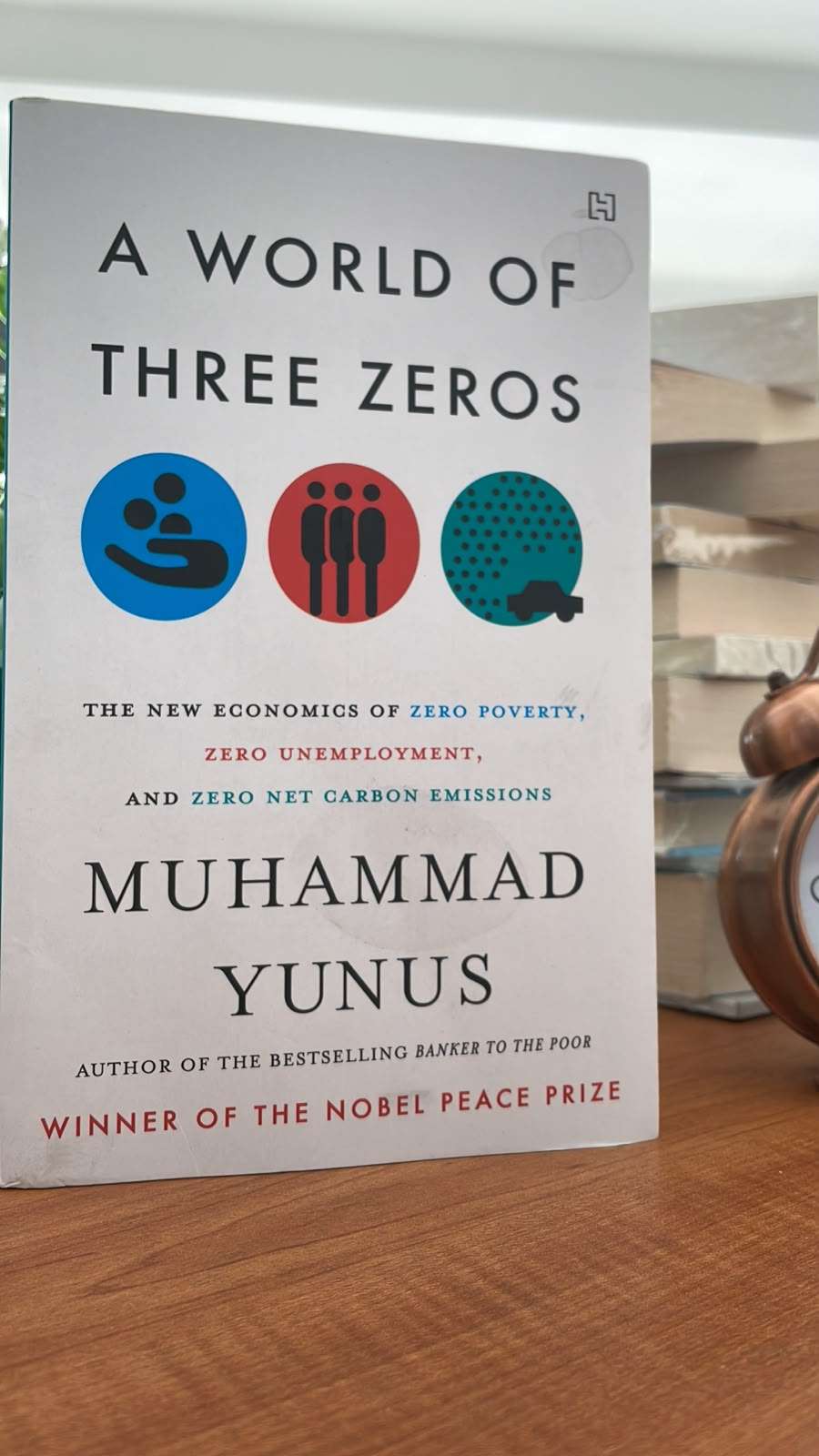
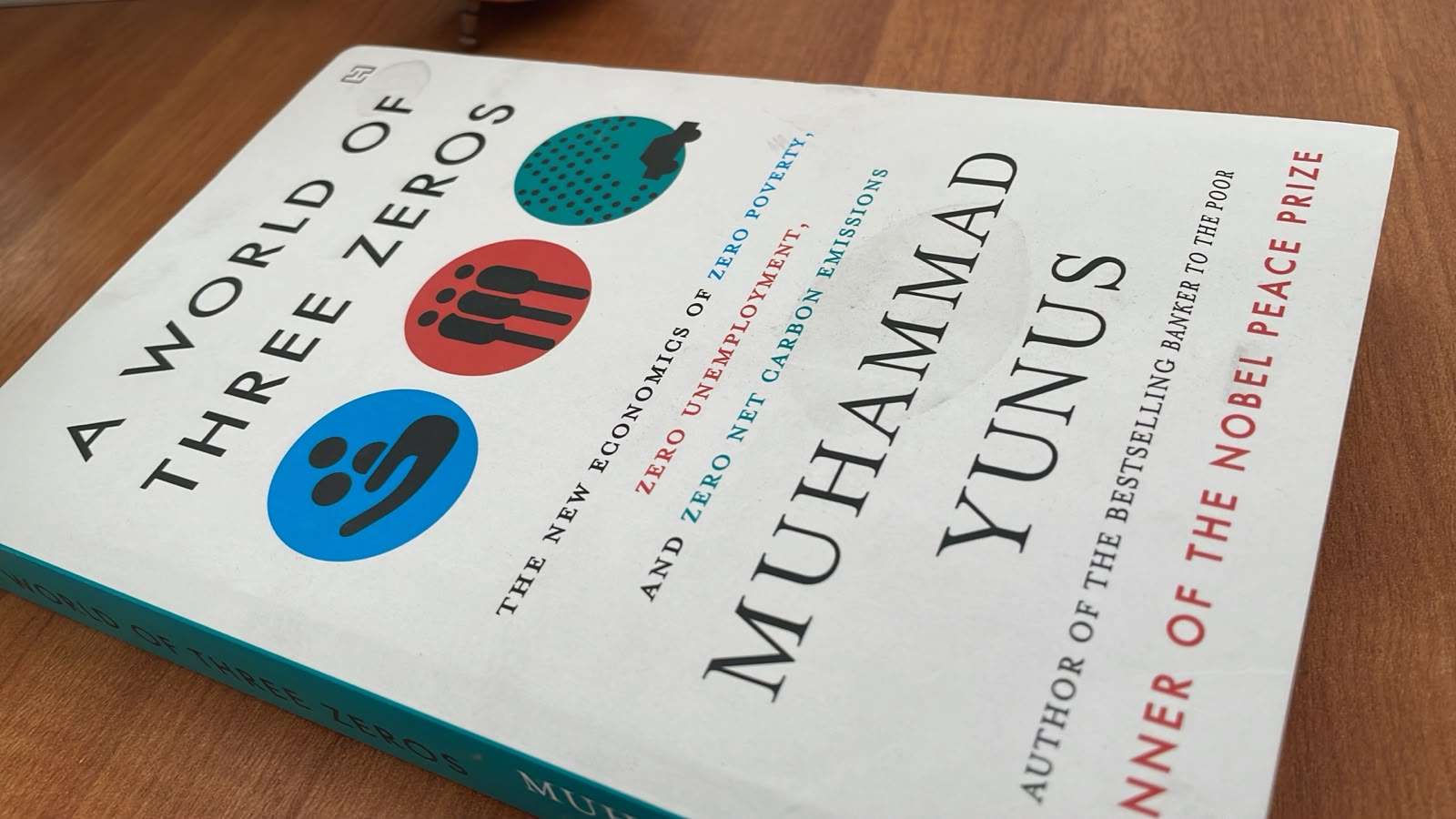
A World of Three Zeros by Muhammad Yunus
A World of Three Zeros by Muhammad Yunus presents an ambitious vision for a new economic system capable of creating zero poverty, zero unemployment, and zero net carbon emissions. Drawing on decades of experience with microcredit, Grameen Bank, and social business, Nobel Peace Prize winner Muhammad Yunus argues that the modern economy can be redesigned to serve people and protect the planet.
Yunus challenges the idea that human beings are motivated only by personal profit. He believes people also possess a powerful desire to solve problems, help others, and contribute to society. If this creative and selfless side of human nature is given an appropriate economic structure, businesses can address social needs without depending permanently on charity.
The book combines economic criticism, international examples, practical proposals, and an optimistic invitation to entrepreneurs, governments, companies, students, and ordinary citizens.
The Meaning of the Three Zeros
The title represents three major goals that Yunus believes humanity should pursue.
Zero Poverty
Poverty should not be treated as an unavoidable feature of society. Yunus argues that people remain poor largely because economic and financial systems deny them the opportunities available to wealthier groups.
Traditional banks often refuse to lend to people without property, collateral, formal employment, or a credit history. This prevents capable individuals from starting businesses and improving their circumstances.
Through his work with microcredit and Grameen Bank, Yunus demonstrates that people with limited income can become successful entrepreneurs when they receive fair access to finance.
Zero Unemployment
Yunus questions the assumption that everyone must search for a conventional salaried job. He encourages people—particularly young people—to see themselves as potential job creators rather than only job seekers.
In his view, human beings are naturally creative and capable of solving problems. Unemployment often results from systems that fail to provide access to investment, education, technology, and entrepreneurial support.
A more inclusive economy would help people launch small enterprises, develop useful services, and create employment for themselves and others.
Zero Net Carbon Emissions
Economic progress cannot continue at the cost of environmental destruction. Yunus argues that businesses must accept responsibility for climate change, pollution, resource depletion, and damage to vulnerable communities.
The third zero calls for an economy that reduces harmful emissions, supports renewable energy, and designs products and services around environmental sustainability.
Profit should no longer be used to justify activities that threaten the long-term survival of people and the planet.
A Critique of Modern Capitalism
A World of Three Zeros does not reject markets, entrepreneurship, or private enterprise. Instead, Yunus criticises a narrow version of capitalism built almost entirely around maximising personal profit.
Traditional economic theory often treats people as individuals primarily interested in gaining more money. Yunus considers this understanding of human nature incomplete.
People can certainly be selfish, but they can also be compassionate, cooperative, generous, and motivated by a desire to solve problems. An economic system that recognises only self-interest ignores much of what makes people human.
Yunus argues that this narrow system contributes to:
- Extreme wealth inequality
- Persistent poverty
- Unemployment
- Concentration of economic power
- Environmental destruction
- Limited access to finance
- Dependence on charity
- Social and political instability
His proposed alternative expands the role of business rather than eliminating it.
What Is a Social Business?
Social business is the central concept in Yunus’s proposed economic system. It is a business created to solve a social or environmental problem rather than maximise personal profit for its owners.
Like a conventional company, a social business sells products or services, generates revenue, pays its costs, and aims to become financially sustainable. Unlike a traditional profit-maximising company, its primary measurement of success is the positive impact it creates.
Investors may recover their original investment, but profits are generally reinvested in the organisation to expand its mission, improve its services, or reach more people.
A social business may work to:
- Provide affordable health care
- Improve access to nutritious food
- Deliver clean drinking water
- Finance small entrepreneurs
- Support renewable energy
- Create employment for disadvantaged communities
- Offer affordable housing
- Improve education
- Reduce pollution
- Support women-owned enterprises
This structure combines the practical discipline of business with the purpose of a charitable or social organisation.
Social Business Is Not Traditional Charity
Charitable giving can provide essential help during emergencies and support people facing immediate hardship. However, a donation is normally spent once.
A successful social business attempts to create a sustainable cycle. Revenue from customers covers operating costs, allowing the organisation to continue solving the problem without requiring a new donation for every activity.
Yunus does not suggest that all charities should disappear. Instead, he argues that certain problems can be addressed more sustainably when social goals are supported by a self-financing business model.
This approach may also attract people who want to use entrepreneurship, management, finance, and technology for public benefit.
Lessons from Microcredit and Grameen Bank
Muhammad Yunus developed the foundations of microcredit while teaching economics in Bangladesh. He observed that people living in poverty were often trapped by very small debts and excluded from conventional banking.
He began lending modest amounts to borrowers who lacked collateral. This work eventually led to the establishment of Grameen Bank, which became known internationally for providing small loans, particularly to women.
The experience challenged several traditional assumptions:
- Poor people can be reliable borrowers.
- Lack of collateral does not mean lack of ability.
- Very small investments can create meaningful opportunities.
- Women’s economic participation can benefit entire families.
- Financial services can be designed around excluded communities.
- Entrepreneurship is not limited to wealthy or formally educated people.
Yunus uses these lessons to show that institutions can be redesigned when existing rules fail to serve society.
Examples from Around the World
The book describes social-business projects and partnerships operating in different countries. These examples demonstrate that the model is not limited to Bangladesh or to small local organisations.
Yunus discusses collaborations involving international companies such as Danone, Renault, Essilor, and McCain. Projects have addressed nutrition, health care, mobility, agriculture, renewable energy, entrepreneurship, and other social needs.
The examples show how a company’s skills, technology, supply chains, and management experience can be redirected towards solving a problem.
Rather than depending only on corporate donations, organisations can create independent businesses specifically designed around measurable social goals.
Turning Unemployed People into Entrepreneurs
Yunus places particular importance on young people. Around the world, many educated and capable individuals struggle to find secure employment.
He argues that society should not teach them to think only as job applicants. With access to capital, mentoring, networks, and technology, they can create businesses and become employers.
This requires changes in financial institutions. Banks and investment systems must become more willing to support people who have ideas but lack personal wealth.
Yunus also discusses equity-based financing as an alternative to debt. Investors can provide capital to a young entrepreneur without imposing repayment terms that make a new business impossible to sustain.
The Role of Technology
Technology can increase inequality when it concentrates wealth and eliminates jobs without creating new opportunities. However, it can also make education, finance, health care, communication, and renewable energy more accessible.
Yunus encourages innovators to ask not only what technology can do but whom it will benefit.
New inventions and digital systems should be designed to:
- Reach underserved communities
- Lower the cost of essential services
- Support small entrepreneurs
- Improve access to information
- Reduce environmental damage
- Create opportunities rather than exclusion
- Solve clearly defined human problems
The purpose behind innovation is as important as the technology itself.
Government and Regulatory Change
Individual entrepreneurs cannot transform the economy without supportive laws and institutions. Yunus argues that governments should create legal structures that recognise social businesses as a distinct form of organisation.
Policy changes could include:
- Clear legal definitions for social businesses
- Social-business investment funds
- Tax and regulatory support
- Entrepreneurship programmes
- Access to credit for excluded communities
- Education focused on problem-solving
- Environmental accountability
- Measurements of social impact
- Partnerships between governments and mission-driven companies
He also encourages universities to establish social-business centres where students can study problems and develop practical solutions.
A Call to Young People
One of the book’s strongest messages is directed towards the next generation. Yunus believes young people possess the creativity and technological understanding needed to redesign economic life.
He invites readers to identify a social problem and imagine a business capable of addressing it. The first idea may begin on a small scale, but a sustainable model can be repeated and expanded.
Young people do not have to accept poverty, unemployment, or climate destruction as permanent realities. They can question the assumptions inherited from earlier generations and build organisations around different goals.
Major Themes in A World of Three Zeros
The book explores:
- Social entrepreneurship
- Microcredit and financial inclusion
- Poverty reduction
- Youth unemployment
- Wealth inequality
- Climate change
- Renewable energy
- Corporate responsibility
- Women’s economic empowerment
- Sustainable business
- Human creativity
- Economic and regulatory reform
Its central message is hopeful but demanding: creating a better economy requires institutions and individuals to make deliberate changes.
About Muhammad Yunus
Muhammad Yunus is a Bangladeshi economist, entrepreneur, and founder of Grameen Bank. He studied at Dhaka University and later attended Vanderbilt University as a Fulbright scholar.
His work developing microcredit helped expand financial access for people traditionally excluded from banking. In 2006, Yunus and Grameen Bank jointly received the Nobel Peace Prize for their efforts to create economic and social development from below.
He is also the author of books including Banker to the Poor, Creating a World Without Poverty, and Building Social Business.
Who Should Read This Book?
A World of Three Zeros is suitable for:
- Entrepreneurs and business owners
- Economics and business students
- Social entrepreneurs
- Policymakers and development professionals
- Environmental advocates
- Non-profit and community leaders
- Readers interested in microfinance
- Investors exploring social impact
- Young people planning new ventures
- Anyone concerned about inequality, employment, or climate change
Readers do not need advanced economic knowledge. Yunus explains his ideas through accessible arguments and practical examples.
Book Links
Search for A World of Three Zeros by Muhammad Yunus at Book Lounge Sri Lanka:
A World of Three Zeros – Book Lounge Search
A Practical Vision for a Fairer Economy
A World of Three Zeros by Muhammad Yunus asks readers to imagine an economy in which business success is measured not only by financial profit but also by the human and environmental problems it solves.
Through microcredit, social business, entrepreneurship, responsible technology, and institutional reform, Yunus presents a path towards zero poverty, zero unemployment, and zero net carbon emissions. The goals are ambitious, but the international examples in the book demonstrate that parts of this new economy are already being built.
It is an inspiring and thought-provoking book for anyone who believes business can become a powerful tool for creating a more inclusive, sustainable, and humane world.





Reviews
There are no reviews yet.