









Description
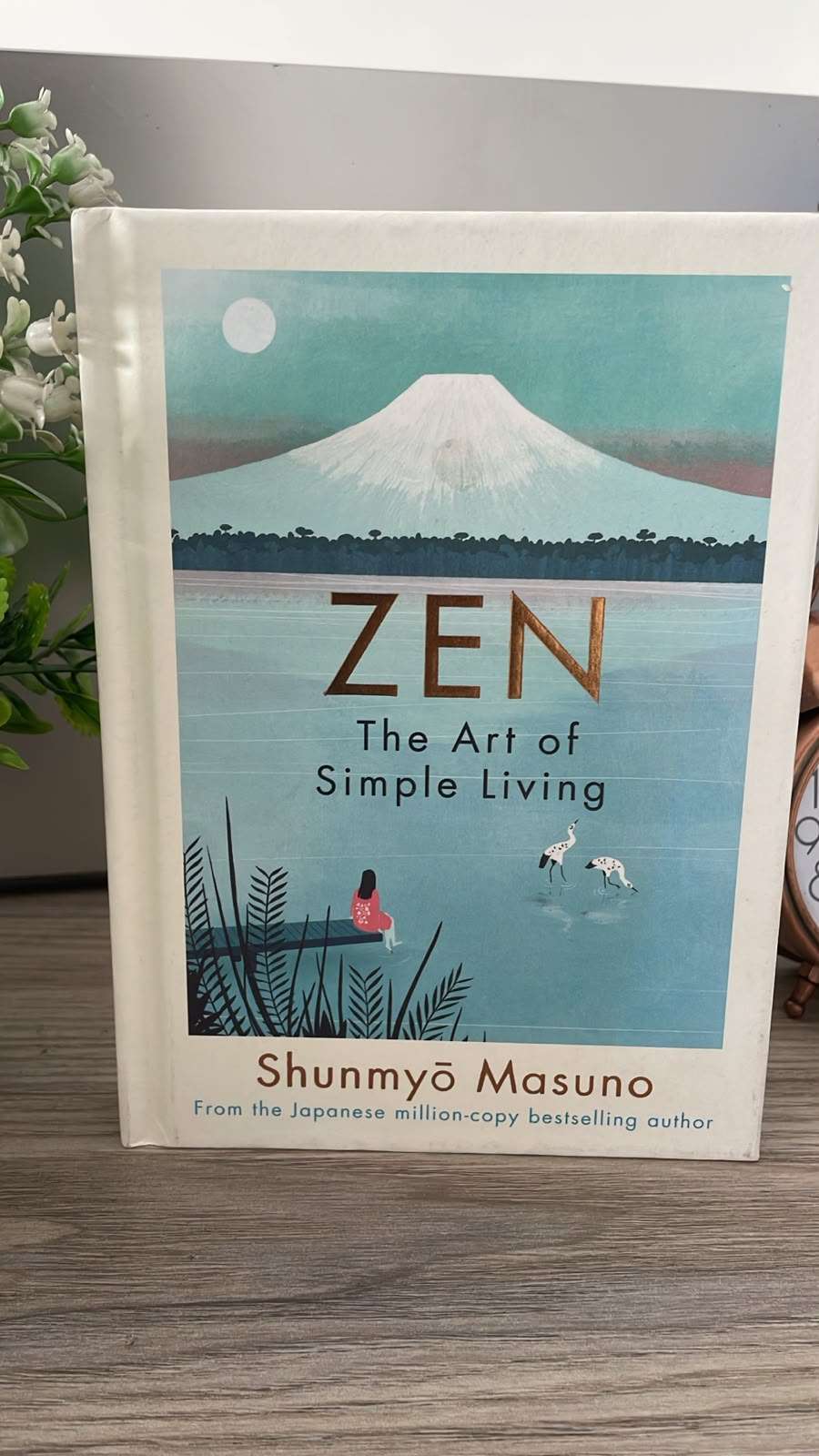
Zen: The Art of Simple Living by Shunmyo Masuno
Zen: The Art of Simple Living by Shunmyo Masuno is an internationally bestselling guide to finding greater calm, clarity, and fulfilment through small changes in everyday life. Written by a renowned Japanese Zen Buddhist priest, the book transforms centuries of Zen wisdom into 100 clear and practical lessons.
Each lesson offers a simple practice that readers can apply without dramatically changing their lifestyle. Suggestions include arranging the home more simply, lining up shoes after taking them off, breathing deeply, planting a flower, watching the sunset, worrying less about circumstances beyond one’s control, and spending a little time doing nothing.
Rather than presenting Zen as an abstract philosophy, Shunmyo Masuno demonstrates how it can influence the way people organise their surroundings, use their time, communicate with others, and appreciate the present moment.
This beautifully illustrated hardback edition is translated by Allison Markin Powell and features artwork by Harry and Zanna Goldhawk.
One Hundred Practical Zen Lessons
Zen: The Art of Simple Living contains 100 concise lessons designed to be explored one at a time. Readers can follow the suggested one-lesson-a-day format and complete the book over 100 days, or open it whenever they need a quiet moment of reflection.
The practices are intentionally manageable. They do not require expensive equipment, specialist training, or a complete change of routine.
The book explores ideas such as:
- Breathing deeply before reacting
- Creating order in the home
- Paying greater attention while eating
- Spending time in nature
- Appreciating everyday encounters
- Reducing unnecessary mental clutter
- Accepting change
- Letting go of what cannot be controlled
- Finding satisfaction in what one already has
- Making space for stillness
The aim is not to build a perfect lifestyle. Instead, Masuno encourages readers to notice how small actions can influence their state of mind.
Bringing Zen into Everyday Life
Zen can sometimes appear distant from the pressures of modern work, family obligations, technology, and constant communication. Masuno bridges this gap by connecting traditional wisdom with ordinary activities.
Something as simple as arranging shoes neatly can become a practice in order and attention. Putting down a fork between bites can encourage slower, more grateful eating. Watching the sunset can turn an ordinary evening into a moment worth appreciating.
These lessons invite readers to become more conscious of actions they often perform automatically. By paying attention, a routine task can become an opportunity to pause and reset.
Simplifying Your Surroundings
A recurring idea in the book is that physical surroundings can influence mental clarity. A crowded or disorganised space may continually demand attention, while a calmer environment can make it easier to think.
Masuno does not insist that readers discard all their possessions or create an empty home. His approach is more closely connected with intention: consider what belongs in a space, arrange it carefully, and appreciate what remains.
Readers may be encouraged to:
- Clean one area with full attention
- Place belongings in their proper location
- Remove unnecessary visual distractions
- Treat household tasks as meaningful practices
- Create a small place for quiet reflection
- Introduce a flower or natural element
- Appreciate empty space
The result is a more thoughtful relationship with the home rather than a temporary tidying project.
Creating Mental Space
Modern life often fills the mind with unfinished tasks, notifications, comparisons, worries, and imagined future problems. Zen: The Art of Simple Living encourages readers to create moments when this constant mental activity can settle.
The suggested practices include careful breathing, zazen meditation, time in nature, and brief pauses without entertainment or distraction.
These habits may help readers observe their thoughts without immediately reacting to every one. The objective is not to force the mind to become completely empty, but to develop a calmer relationship with its activity.
The book is not a replacement for professional mental-health care. Readers experiencing persistent anxiety, depression, or serious distress should seek support from an appropriately qualified professional.
Appreciating the Present Moment
Many of Masuno’s lessons encourage attention to what is happening now. People frequently revisit past mistakes or imagine future problems while overlooking the experience directly in front of them.
Simple actions—eating carefully, observing a plant, listening fully during a conversation, or noticing the evening sky—can bring attention back to the present.
The book explores the Japanese concept of ichi-go ichi-e, which can be understood as recognising that each encounter is unique and may never occur in exactly the same way again.
This perspective encourages readers to treat ordinary conversations and shared moments with greater care.
Finding Contentment with Enough
Another important idea is chisoku, commonly associated with knowing or recognising sufficiency. It encourages people to appreciate what they have rather than continually measuring happiness against the next possession, achievement, or comparison.
This does not mean abandoning ambition or refusing positive change. It means recognising that constant dissatisfaction can continue even after circumstances improve.
Masuno invites readers to consider whether fulfilment might come partly from appreciating the life already available to them.
Learning from Nature
As a Zen garden designer, Shunmyo Masuno frequently draws attention to nature. Planting a flower, walking outdoors, observing the sunset, or noticing seasonal change can become part of a Zen practice.
Nature demonstrates that change is continuous. Plants grow, bloom, fade, and return in new forms. Weather shifts, light changes, and no day is exactly repeated.
These observations can help readers develop patience and accept that change is a normal part of life.
Even someone without a garden can engage with this idea by caring for a small plant, watching the sky, sitting near a window, or walking through a local green space.
Improving Daily Relationships
Simple living is not presented only as a matter of organising possessions or creating private calm. The book also considers how readers interact with other people.
Zen-inspired communication may involve:
- Listening without preparing an immediate reply
- Pausing before responding in anger
- Treating each meeting as meaningful
- Showing gratitude
- Avoiding unnecessary comparisons
- Respecting different perspectives
- Offering full attention
- Reducing the need to prove oneself
Practices such as gassho—bringing the palms together as an expression of respect—illustrate the value of approaching interactions with humility.
Readers can apply the underlying principle even if they do not adopt every traditional form.
A Flexible Daily Reading Practice
Each lesson is brief enough to read during a morning routine, lunch break, commute, or before bedtime. This makes the book accessible to people who may not have time for long chapters.
One effective approach is:
- Read one lesson slowly.
- Consider how it relates to your current life.
- Choose one small action to try.
- Notice the effect without demanding an immediate transformation.
- Return to the lesson later if it remains relevant.
Readers may also keep a journal to record which practices feel useful. Some suggestions may produce an immediate shift, while others may become more meaningful over time.
Beautifully Illustrated Hardback Edition
The UK hardback edition features illustrations by Harry and Zanna Goldhawk. The artwork complements the reflective tone and makes the book attractive to read, revisit, or display.
Its compact dimensions make it comfortable to hold and suitable for a bedside table, desk, or quiet reading space. The individual lessons and illustrated presentation also make it easy to open the book for a few minutes without losing track of a complicated argument.
Who Should Read Zen: The Art of Simple Living?
This book is suitable for:
- Readers interested in Zen Buddhism
- People seeking a calmer daily routine
- Anyone feeling overwhelmed by modern busyness
- Readers interested in mindfulness
- People simplifying their homes and schedules
- Those exploring Japanese philosophy and culture
- Readers interested in intentional living
- Beginners curious about meditation
- Anyone seeking a thoughtful personal-development gift
- Readers who prefer concise, practical lessons
No previous knowledge of Buddhism or meditation is required.
About Shunmyo Masuno
Shunmyo Masuno is the head priest of a 450-year-old Zen Buddhist temple in Japan. He is also an award-winning Zen garden designer and a professor of environmental design at a leading Japanese art school.
His work brings together Zen practice, architecture, landscaping, and the thoughtful use of space. He has designed gardens for clients around the world and lectured internationally.
In Zen: The Art of Simple Living, Masuno applies the same principles of attention, simplicity, balance, and purposeful space to everyday life.
About the Translation and Illustrations
The English translation is by Allison Markin Powell, whose work makes Masuno’s concise lessons accessible to English-language readers.
The UK hardback edition is illustrated by Harry and Zanna Goldhawk. Their nature-inspired artwork complements the book’s themes of stillness, beauty, and connection with the natural world.
The synopsis, author information, and edition specifications are confirmed by the official Penguin UK publication page.
Book Links
Search for Zen: The Art of Simple Living at Book Lounge Sri Lanka:
Zen: The Art of Simple Living – Book Lounge Search
View the official publication information:
Zen: The Art of Simple Living – Penguin UK
Small Changes for a Calmer Life
Zen: The Art of Simple Living offers an accessible path into Zen through 100 practical, manageable lessons. Rather than asking readers to escape modern life, Shunmyo Masuno shows how familiar actions can be performed with greater attention and purpose.
Its concise structure, thoughtful illustrations, and emphasis on small daily practices make it a book to read slowly and revisit whenever life begins to feel unnecessarily complicated.





Reviews
There are no reviews yet.