


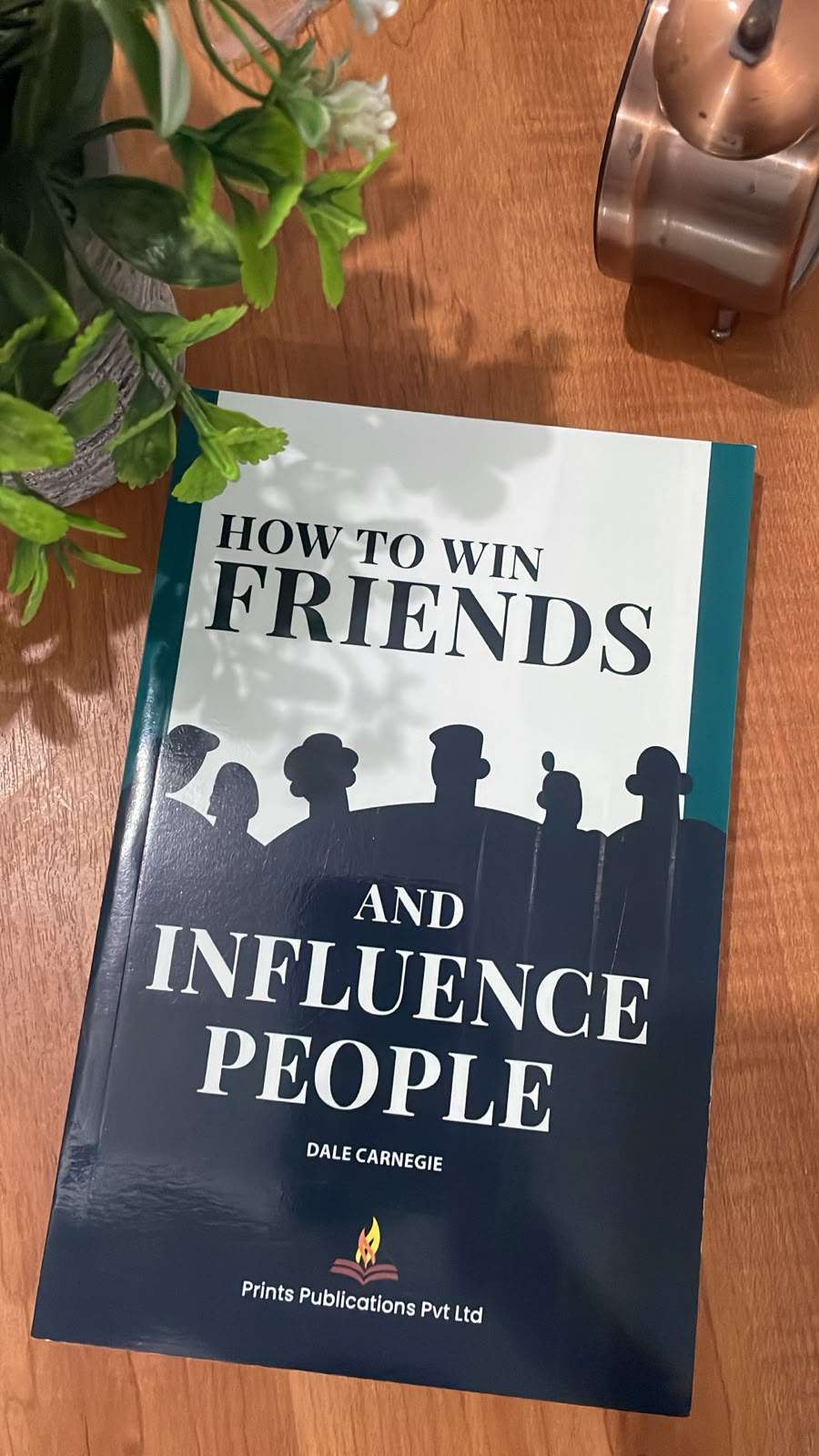








Description
A Practical Guide to Building Strong Relationships and Influence
How to Win Friends and Influence People is a classic personal growth and communication book that explains how to create meaningful connections, influence others positively, and navigate social and professional situations effectively. Rather than relying on manipulation or shortcuts, Carnegie presents influence as a skill that can be learned, practiced, and improved. The central idea is that successful relationships and influence are built on understanding, respect, empathy, and honest communication, not on force or superficial charm.
Begin With Self-Awareness and Attitude
One of the earliest lessons Carnegie emphasizes is the importance of self-awareness and attitude. Many interpersonal problems arise from egotism, criticism, or lack of empathy. Carnegie explains that before effectively influencing others, individuals must:
- Recognize their own habits in communication
- Identify negative patterns like criticizing or complaining
- Cultivate a positive and sincere approach toward others
By improving one’s attitude and self-presentation, interactions naturally become more constructive and rewarding.
The Core Principles Explained
The book organizes its guidance into practical principles for everyday interactions. These principles focus on relationship-building and persuasion in both personal and professional life. Readers learn how to:
- Avoid criticism and condemnation — Criticism breeds resentment; empathy fosters cooperation.
- Give honest and sincere appreciation — Recognizing others’ efforts motivates them genuinely.
- Arouse an eager want — Influence works best when aligned with others’ desires rather than your own agenda.
- Become genuinely interested in others — People respond positively when they feel valued.
- Smile and remember names — Small gestures convey respect and create connection.
- Encourage others to talk about themselves — Listening builds trust and rapport.
- Talk in terms of others’ interests — Communication is more effective when it resonates with the listener.
- Make others feel important sincerely — Authentic recognition strengthens bonds.
Because the structure is principle-based, Carnegie’s book feels practical and actionable rather than theoretical.
Communication and Emotional Intelligence
A major strength of the book is its focus on emotional intelligence. Many conflicts and missed opportunities occur because people misunderstand motivations or fail to connect emotionally. Carnegie emphasizes:
- Listening actively to understand rather than to respond
- Showing genuine curiosity about others’ perspectives
- Avoiding arguments and instead guiding conversations toward positive outcomes
These techniques help readers influence without coercion and strengthen relationships through empathy rather than force.
Handling Conflict and Persuasion
No relationship is without challenge. Carnegie teaches that:
- Avoiding criticism and confronting people gently encourages collaboration
- Presenting ideas in a way that appeals to others’ interests improves receptiveness
- Acknowledging mistakes builds credibility and softens potential tension
By using these methods, disagreements are transformed into constructive dialogue, and influence grows naturally.
Relevance in Modern Life
Even decades after its first publication, Carnegie’s lessons remain highly relevant:
- Professional networking, career advancement, and teamwork benefit from relationship skills
- Social media and modern communication amplify the need for empathy and tact
- Influence is most effective when sincere rather than performative
Readers are reminded that human connection is timeless, and simple, respectful practices consistently yield better outcomes than manipulation or shortcuts.
Who Should Read This Book
This book is ideal for:
- Professionals seeking better communication and leadership skills
- Students and early-career individuals aiming to build social influence
- Anyone wanting to strengthen personal and professional relationships
- Readers interested in emotional intelligence and self-improvement
The principles apply across work, social settings, and family life.
Lasting Impact
After reading How to Win Friends and Influence People, many readers notice tangible improvements in their interactions:
- Conversations feel smoother and more positive
- People respond more openly to ideas and suggestions
- Influence is gained through respect and empathy, not pressure or force
Ultimately, Carnegie teaches that lasting relationships and influence grow from understanding, sincerity, and consistent effort, not shortcuts or manipulation.
Here are the direct links you asked for How to Win Friends and Influence People by Dale Carnegie:
Book Lounge Link (Non‑Fiction Purchase)
How to Win Friends and Influence People by Dale Carnegie on Book Lounge (Sri Lanka):
https://booklounge.lk/how-to-win-friends-and-influence-people-by-dale-carnegie/ (The Book Lounge)
Wikipedia Link (Official Book Page)
How to Win Friends and Influence People (Wikipedia):
https://en.wikipedia.org/wiki/How_to_Win_Friends_and_Influence_People (Wikipedia)





Reviews
There are no reviews yet.